 Films That Matter
Pit Stop
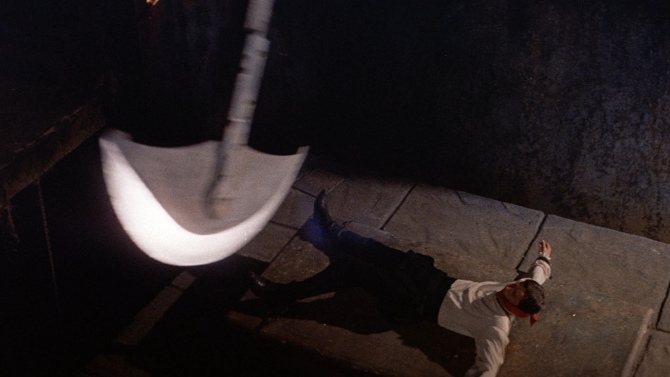
After Roger Corman’s major success with House of Usher (1960), he promptly turned to adapting another Edgar Allan Poe story to start a franchise of sorts, with The Pit and the Pendulum (1961) being an even bigger win... with it making over two million dollars on a modest budget of only three hundred thousand. Getting Vincent Price (House of Wax; Laura) back after House of Usher’s critical and commercial winnings, this time he plays Nicholas Medina, a tortured soul living in a tomb of a castle with his servants after his gorgeous wife Elizabeth (Barbara Steele – Black Sunday; The Horrible Dr. Hichcock) has seemingly died of a massive heart attack brought on by fright. Feeling as if he is truly cursed, he resides in the same place that his sadistic Spanish Inquisition father once tortured his victims, where his mother and uncle died, and now where his wife has met her untimely end. It has become so bad that even Nicholas’ sister Catherine (Luana Anders) has returned home to try and ease his sorrows.
-
Stocking Stuffer
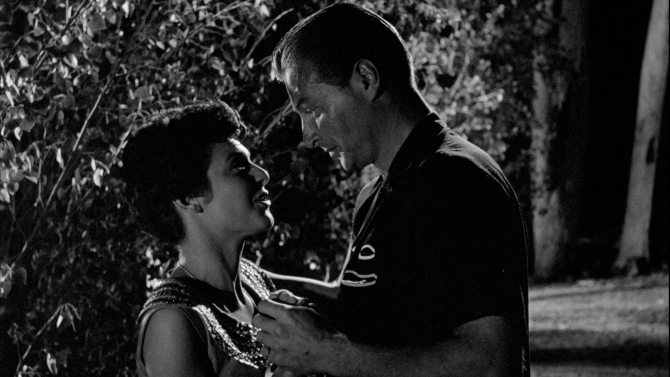
The Girl in Black StockingsNovember 30, 2021Wow – what a tagline: “One will die tonight! The girl on the loose, the smart secretary... they’re too teasing...too tempting...too easy a target for a crazed killer!”. 1957's The Girl in Black Stockings, coming from famed producer and sometime director Howard W. Koch, is a B budget film noir that really demonstrates its influence as a precursor to the gialli and slasher films that would follow some fifteen or so years later. Nearly entirely set in one location, welcome to the small town of Kanab, Utah... a population of three thousand that houses within it the relaxing Parry Lodge – a perfect place for those looking to escape their stressful lives. Run by a brother and sister, Edmund Parry (Ron Randell) is a clench jawed cynic (likely stemming from the fact he is a quadriplegic), often spouting cheerful lines like, “I’d like to get so drunk I’d look in a mirror and spit in my own face”, while Julia (Marie Windsor – The Killing) is everything to him but wife (but that doesn’t mean she’s not jealous when a woman shows him any attention).
-
Death, Deadlines, and Dawn
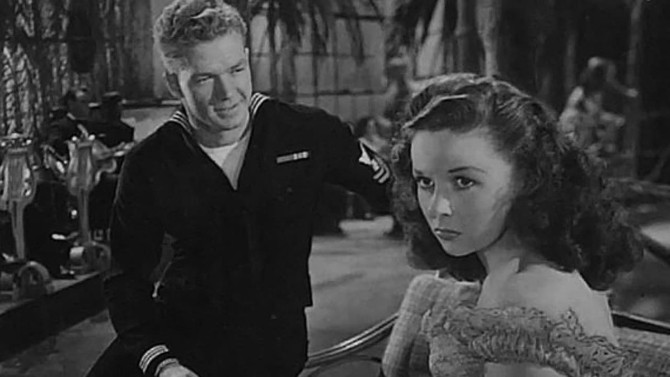
Deadline at DawnNovember 25, 2021Sometimes the heat makes us go a little crazy. Likewise, alcohol can have a similar effect... pair them both together, and all bets are off. Transporting us into the dog days of summer in the City That Never Sleeps, Deadline at Dawn (1946), directed by Harold Clurman (the only feature made by the legendary stage director), is full of drunken danger. With perspiration dripping from every pore, baby-face Navy sailor Alex Winkler (Bill Williams) finds himself waking from a nasty bender at a New York City newsstand. . . if that wasn’t bad enough, he discovers a wad of cash that isn’t his and a faint memory of stealing it from loose femme Edna Bartelli (Lola Lane), a slinky blackmailer who’s definitely on the fatale side.
-
Dial 1119 For Murder
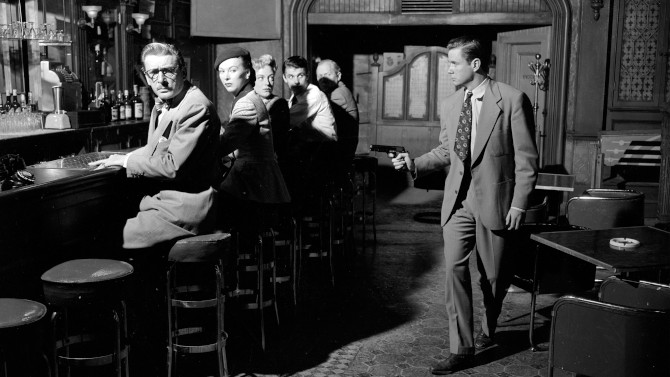
Dial 1119November 18, 2021The heat can make us all go a little bit crazy sometimes... but what happens when the thermometer is ready to pop and you’ve just escaped from the insane asylum? A confined, claustrophobic, sweltering film noir, 1950's Dial 1119, directed by Gerald Mayer (son of Louis B. Mayer), makes you feel the heat. Young, baby faced Gunther Wyckoff (Marshall Thompson) isn’t what he looks, he is, for lack of a better term, bonkers. Having already killed numerous people, it was police psychologist Dr. John Faron (Sam Levene), who was able to save his life from the electric chair.
-
Just Deserts
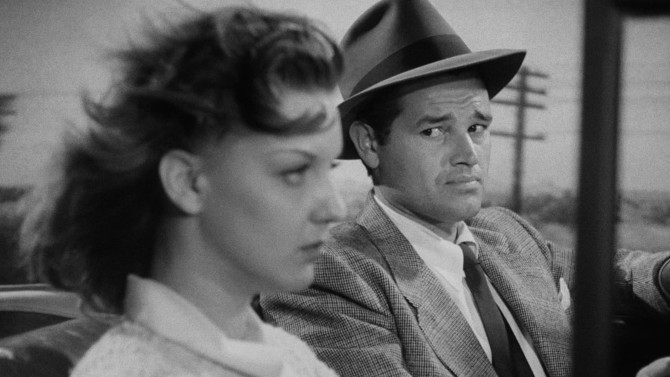
DetourNovember 12, 2021You know you’ve got a budgetary problem when you find yourself on Poverty Row. For those of you who do not know, this was the slang term used for a group of low budget Hollywood B movie studios that existed in the City of Angels from the 20s to 50s. Transcending these financial constraints to make a quality film noir, director Edgar G. Ulmer used all the proverbial tricks in the book to develop Detour (1945). Told in a most unique way, a quasi-soliloquy narration transitions to nightmarish flashbacks as Al Roberts (Tom Neal) recounts his fatefully nihilistic tale (you might never see a more downtrodden visage). A cynical man, even before his girlfriend (closing in on fiancée), Sue Harvey (Claudia Drake), decides to leave him to make her own breaks in Hollywood, he is the prototypical down on his luck protagonist. It’s not like he doesn’t have a skill – a piano virtuoso, he can only find a job tinkling the ivories at a crummy nightclub in fog strewn NYC (fog was a useful tool for low budget productions that didn’t have the money for sets).
-
Stranger Danger
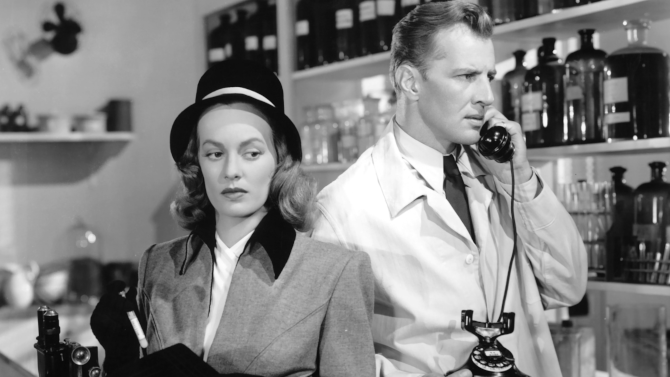
Danger SignalNovember 8, 2021A young woman’s cold dead body lays on a bed – an apparent suicide (there is a note); a man taking the wedding ring off her hand, then stealing money from her purse; he hops out of the window with his luggage, tweaking his leg in the process... this is the dark and intoxicating opening to 1945's Danger Signal, directed by Robert Florey. Based upon a novel of the same name by Phyllis Bottome, the above mentioned man is Ronnie Mason (Zachary Scott), he’s as smooth as silk, as silken as velvet, as velvety as velour... in other words, he’s a slick chameleon bluebeard that women should be wary of (but never are).
-
He Who Must Not Be Named
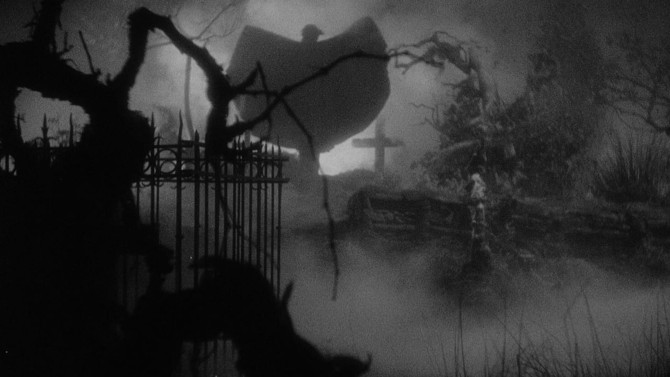
The Return of the VampireOctober 12, 2021It has long been lamented that Bela Lugosi only donned the cape once as Universal’s Dracula (excluding the much later comedy Abbott and Costello Meet Frankenstein), whereas their two other most famous creatures, the Frankenstein Monster and Wolf Man, were brought back to life a number of times by Boris Karloff and Lon Chaney Jr. respectively. Instead, for budgetary reasons, they cut Lugosi out of the sequel (Dracula’s Daughter – reviewed here on Filmizon this month), eventually giving the role to other actors (Chaney Jr. and John Carradine) until he finally returned to the role in 1948 in the above mentioned comedy. Yet, to say there is no true sequel to Dracula is not completely true. Columbia Pictures, looking to capitalize on the horror craze, aimed at producing a sequel to the Universal product. . . after being threatened with a lawsuit, they went ahead anyway – simply changing the Dracula name. Titled The Return of the Vampire (1943), B movie specialist Lew Landers was put in charge of directing the low budget fare.