 Films That Matter
Pit Stop
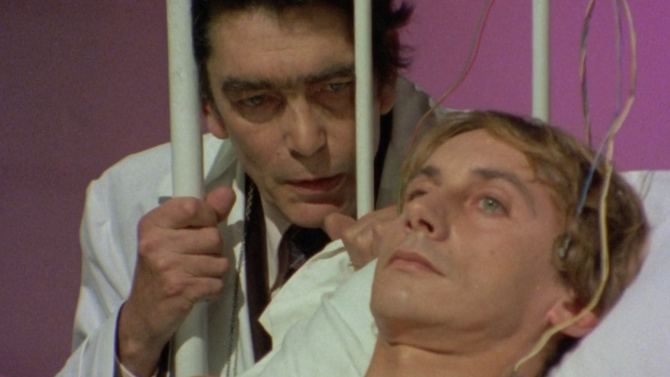
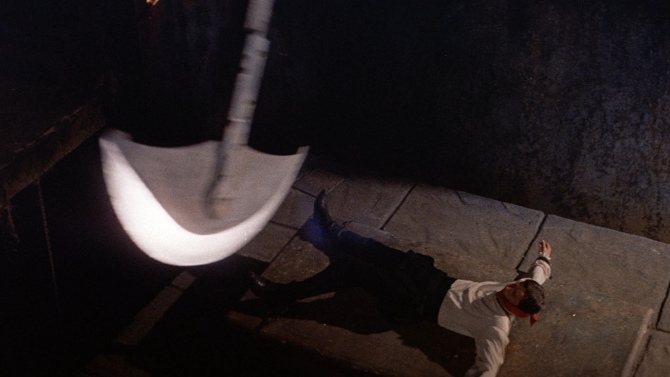
After Roger Corman’s major success with House of Usher (1960), he promptly turned to adapting another Edgar Allan Poe story to start a franchise of sorts, with The Pit and the Pendulum (1961) being an even bigger win... with it making over two million dollars on a modest budget of only three hundred thousand. Getting Vincent Price (House of Wax; Laura) back after House of Usher’s critical and commercial winnings, this time he plays Nicholas Medina, a tortured soul living in a tomb of a castle with his servants after his gorgeous wife Elizabeth (Barbara Steele – Black Sunday; The Horrible Dr. Hichcock) has seemingly died of a massive heart attack brought on by fright. Feeling as if he is truly cursed, he resides in the same place that his sadistic Spanish Inquisition father once tortured his victims, where his mother and uncle died, and now where his wife has met her untimely end. It has become so bad that even Nicholas’ sister Catherine (Luana Anders) has returned home to try and ease his sorrows.
-
A Law Unto Themselves
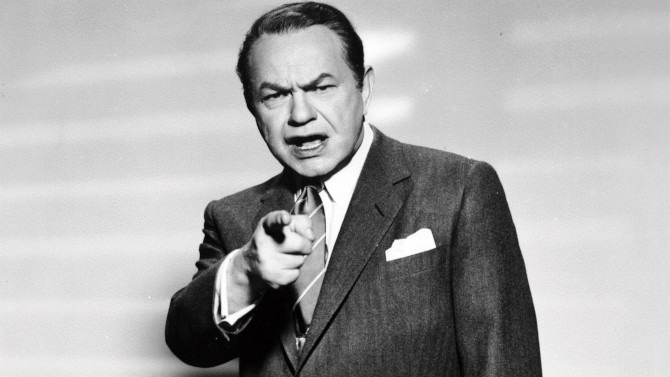
IllegalNovember 27, 2024The front door to an apartment swings open... an unseen figure walks through the living area and approaches a beautiful blonde woman wearing a robe as she walks around the bathroom... he then deliberately empties the barrel of his revolver into her – this is the jarring cold opening to the film noir Illegal (1955), and one thing is for sure, it knows how to grab your attention. Funnily enough, this was the third adaptation of the 1929 play “The Mouthpiece” by Frank J. Collins, following Mouthpiece (1932) and The Man Who Talked Too Much (1940) – and they say movies are remade too much today. Flash to Victor Scott (Edward G. Robinson), a district attorney who is wise to all the angles and is graced with a silver tongue. With an unyielding desire to win (he got it from growing up and fighting his way out of the slums), he argues every case like it is his last.
-
Stealers Wheel
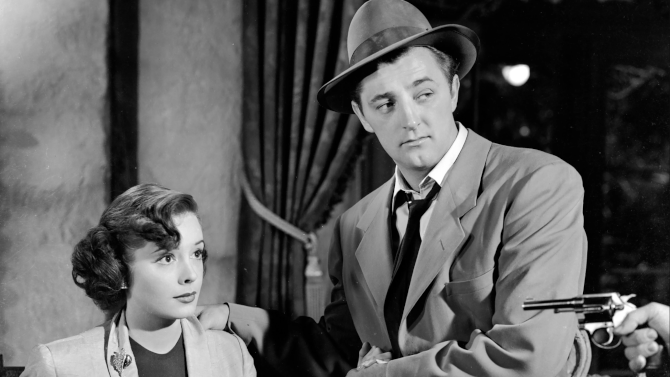
The Big StealNovember 20, 2024A film noir with some eccentricities, The Big Steal (1949), directed by then third time film maker Don Siegel (who would go on to make such greats as Invasion of the Body Snatchers, Dirty Harry, and Escape from Alcatraz), plays like a long chase within a longer chase, while the meeting between gent and femme is something akin to a will they/won’t they screwball comedy. The usually laconic Lt. Duke Halliday (Robert Mitchum) is in quite the conundrum, as he has been robbed of a U.S. Army payroll totaling a whopping three hundred grand by swindler Jim Fiske (Patric Knowles). On the lam in Mexico (a rather rare noir location, also think Ride the Pink Horse and Touch of Evil), Halliday is on his trail... but the problem is, so is his superior – Captain Vincent Blake (William Bendix), who, of course, thinks it was actually the Lieutenant who ran off with the money.
-
Easy Street?
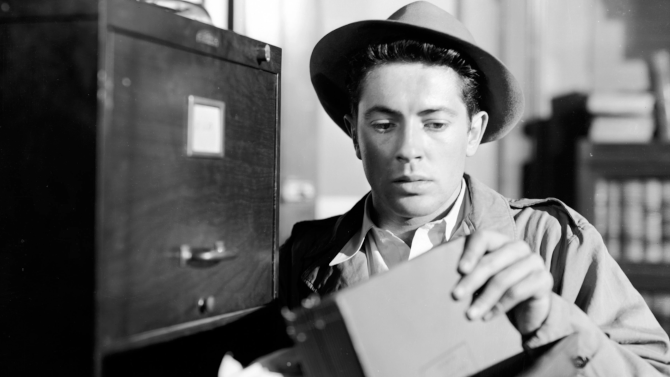
Side StreetNovember 13, 2024Looking for the easy way out... it’s often a motif of the film noir. Taking the idea to its seemingly inevitable conclusion, director Anthony Mann (Desperate) definitely drives the concept down what seems to be every Side Street (1949) in The Big Apple in this tale of go on, take the money and run. Joe Norson (Farley Granger) is anticipating the birth of his first child with wife Ellen Norson (Cathy O’Donnell). The acting pair grace the screen together for the second and final time following They Live by Night from the previous year... funnily enough, it almost plays as a ‘what could have been’ second chance for that couple.
-
Amateur Dick
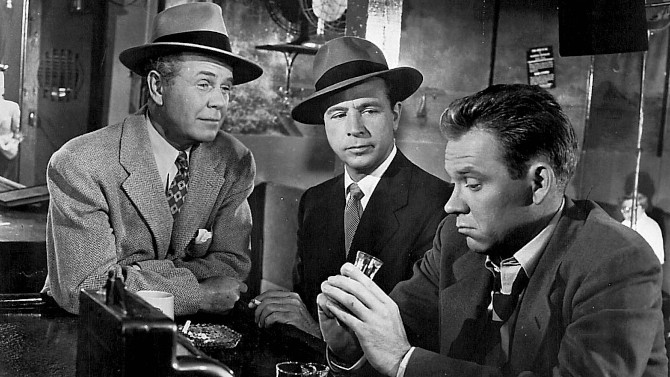
Cry DangerNovember 4, 2024If jailed for false pretenses, when you finally get out of prison, what would you do? The premise of the engaging film noir thriller Cry Danger (1951), made by former child star and first time director Robert Parrish (it is also said Dick Powell was quite involved in the film’s directing), one thing’s for sure, it’s about as hard boiled as you can get. Dick Powell (Murder, My Sweet) plays understandably rough around the edges Rocky Mulloy – a man who was falsely fingered in an armed robbery case that led to a murder.
-
Voodoo, and Zombies, and Ghosts, Oh My
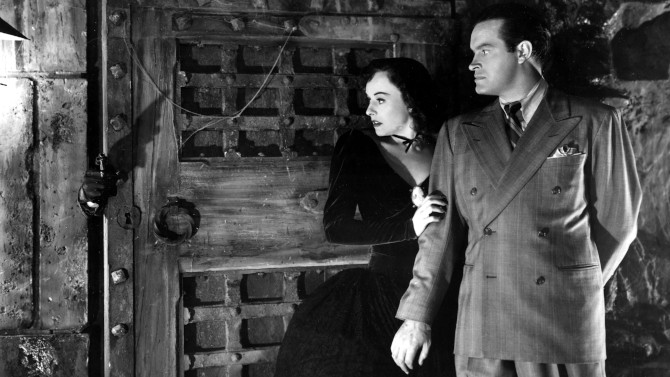
The Ghost BreakersOctober 31, 2024Beating the famed comedy duo of Abbott and Costello to the horror comedy circuit both one and two years prior to their 1941 classic Hold That Ghost, Bob Hope released The Cat and the Canary in 1939, following it up in quick succession (just eight months later) with The Ghost Breakers in 1940 – it was originally a play written by Paul Dickey and Charles W. Goddard (there are also two silent films from 1914 and 1922 based on it that are thought to be lost – the former being directed by Cecil B. DeMille). Directed by George Marshall, the mystery infused horror comedy follows a socialite, Mary Carter (Paulette Goddard), who has learned on a stormy New York night that she has inherited a supposedly haunted castle on a secluded Cuban isle ominously named Black.
-
Off Pat
 PatrickPatrick Still LivesOctober 15, 2024
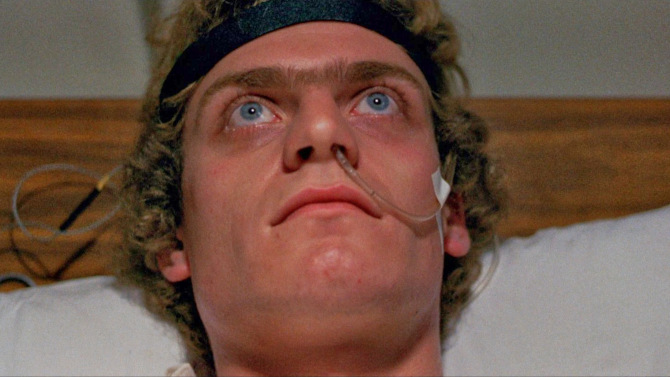
Though only coming out some seven years into the growing number of low budget Australian exploitation pictures being made – now known as Ozploitation, Patrick (1978) was one of the first to bring outside attention onto these Down Under flicks. A bomb in its homeland but gaining traction in thirty foreign markets (including its all important success in the United States), this Richard Franklin (Psycho II) venture helped put Ozploitation on the map... something fully achieved the next year when Mad Max burst onto the scene.