 Films That Matter
Pit Stop
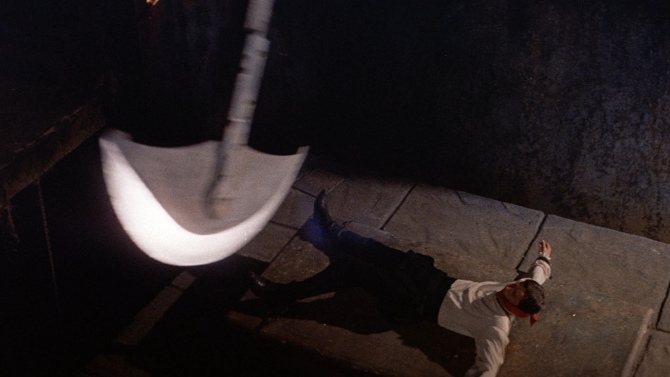
After Roger Corman’s major success with House of Usher (1960), he promptly turned to adapting another Edgar Allan Poe story to start a franchise of sorts, with The Pit and the Pendulum (1961) being an even bigger win... with it making over two million dollars on a modest budget of only three hundred thousand. Getting Vincent Price (House of Wax; Laura) back after House of Usher’s critical and commercial winnings, this time he plays Nicholas Medina, a tortured soul living in a tomb of a castle with his servants after his gorgeous wife Elizabeth (Barbara Steele – Black Sunday; The Horrible Dr. Hichcock) has seemingly died of a massive heart attack brought on by fright. Feeling as if he is truly cursed, he resides in the same place that his sadistic Spanish Inquisition father once tortured his victims, where his mother and uncle died, and now where his wife has met her untimely end. It has become so bad that even Nicholas’ sister Catherine (Luana Anders) has returned home to try and ease his sorrows.
-
Tempest FugID
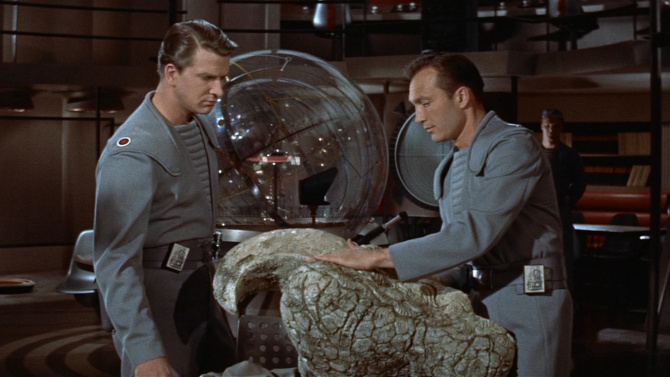
Forbidden PlanetApril 21, 2026hough today’s feature is immediately sited as a science fiction classic, Fred M. Wilcox’s Forbidden Planet (1956) is perhaps just as well remembered for its majestic original robot and pinup infused movie poster design (that is still, to this day, a costly collectible)... though the art is quite misleading when you know what the movie is actually about. Following a narrative loosely inspired by William Shakespeare’s “The Tempest”, which, for those who do not know, is about a man forced to live stranded upon a magical island with his daughter, until he causes a shipwreck that brings with it possible rescue (and a man who may fall in love with his daughter)... this futuristic feature follows a somewhat similar sci-fi blueprint.
-
Fit or Myth
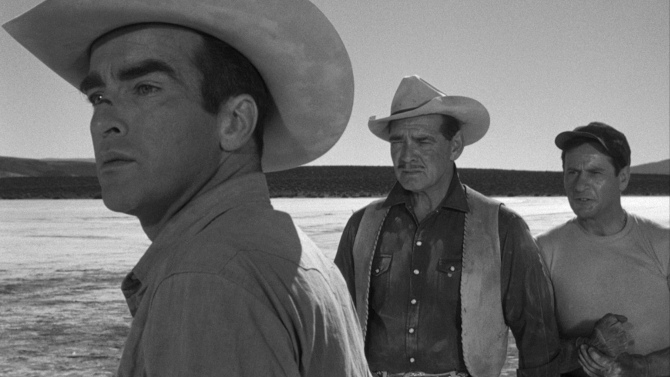
The MisfitsApril 18, 2026With a most impeccable cast, you would think the modern set western drama The Misfits (1961), directed by John Huston (The Asphalt Jungle), would be best remembered for its acting... though sadly it’s remembered for the tragic deaths soon thereafter of its three main cast members – Marilyn Monroe, Clark Gable, and Montgomery Clift. Written by Marilyn Monroe’s then husband (but soon to be ex) Arthur Miller (the famed playwright of “Death of a Salesman”), the Reno area set story follows the aptly named misfits, including recent divorcée Roslyn Taber (Monroe – River of No Return; The Seven Year Itch), a lonely aging man’s man of a cowboy in Gay Langland (Gable – Gone with the Wind; It Happened One Night), aged divorced landlady Isabelle Steers (Thelma Ritter – Miracle on 34th Street; A Letter to Three Wives), and widowed tow truck driver Guido Delinni (Eli Wallach – The Magnificent Seven; Seven Thieves) – and they all have one thing in common... abject loneliness.
-
Flash – Saviour of the Universe
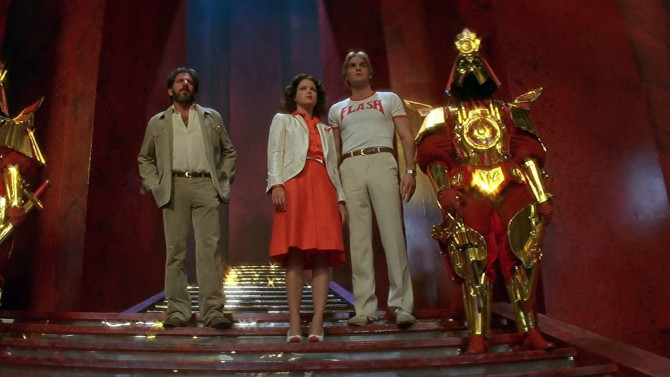
Flash GordonMarch 23, 2026An over the top, campy kitsch cult classic that plays like a wildly fun rock opera, Flash Gordon (1980), directed by Mike Hodges, and based on the Alex Raymond comic strip first published in 1934, is perhaps most intriguing for attracting the rock band Queen to compose and perform the theme song and score with the help of orchestral scorer Howard Blake (though much of his work was cut in favour of Brian May). Produced by the famed Dino De Laurentiis, this would be his third and final creation of a former comic strip, with the first two being Barbarella and Danger: Diabolik, both released in 1968
-
Hey Tony!
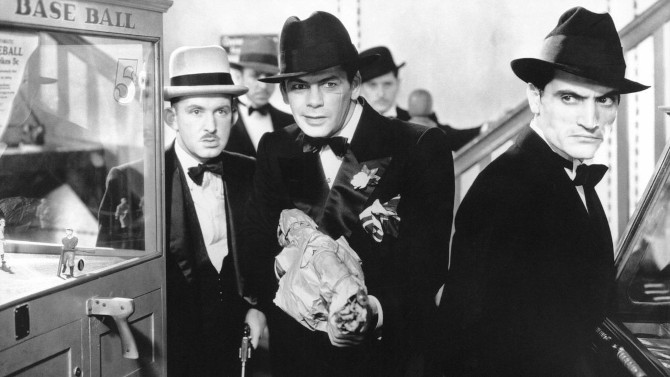
ScarfaceMarch 19, 2026A rare Pre-Code film that still echoes through the lineage of movies to this day, influencing the gangster genre is the Howard Hughes produced, Howard Hawks directed, Ben Hecht written Scarface (1932) – with its elements playing an integral part in setting up the archetypal template for generations to come (just think of the works of Martin Scorsese, Brian De Palma and Francis Ford Coppola four, five, and six decades later). Ripped from the headlines at the time, this fast paced and snappy gem doesn’t feel like it’s made in 1932, the limitations of the early ‘talkie’ era hardly noticeable. The camera gracefully moves around, be it reenacting the movement of a Tommy gun or introducing us to the players in a room.
-
Western Union
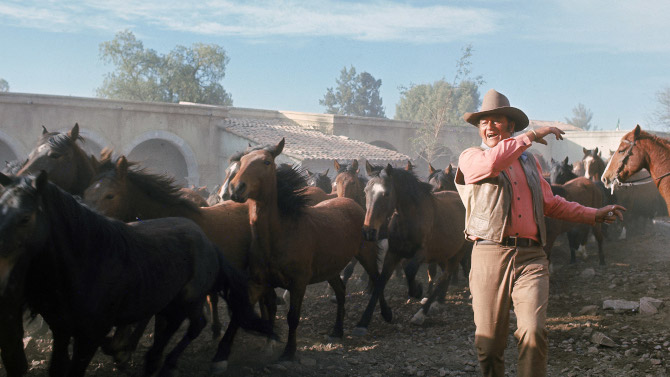
The UndefeatedMarch 16, 2026I’ve said it here on Filmizon before, and I’ll say it here once again... 1969 is arguably the best year for westerns. On top of rather avant-garde boundary pushers like Butch Cassidy and the Sundance Kid, 100 Rifles, Paint Your Wagon, and others, there were also a slew of more traditional style features from the genre, including the movie reviewed here today, The Undefeated (1969) – which has often been a bit overshadowed by another John Wayne starring western that was released the same year, True Grit. Directed by Andrew V. McLaglen, the story is set in a rather interesting period – just as the American Civil War has come to an end. Swapping between two intersecting stories, Union Col. John Henry Thomas (Wayne – Arizona; The Quiet Man) has stepped away from his military role, taking his few remaining men west to gather some wild horses to sell before heading home
-

Imperfect Fit
Spite MarriageMarch 9, 2026In 1928, after falling under some financial pressure, Buster Keaton moved away from his own independent productions and merged things with MGM... a most profitable decision, yet a choice that he later called the, “ worst mistake of his career”. Going from the creative genius behind his own projects to a cog in the studio system with limited creative control over his projects, it went well enough on their first feature, The Cameraman (reviewed here on Filmizon), but with their next effort, Spite Marriage (1929), sadly that freedom was mostly gone. Directed by Edward Sedgwick, with a star like Keaton there is still some magic here, though that feeling of spontaneity, charm, and warmth feels confined within the structured, more efficient MGM production.