 Films That Matter
Pit Stop
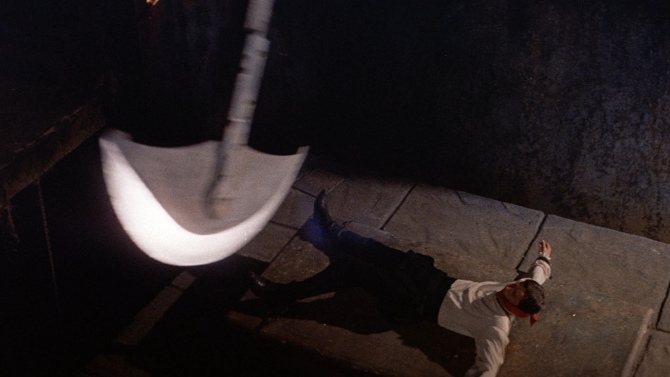
After Roger Corman’s major success with House of Usher (1960), he promptly turned to adapting another Edgar Allan Poe story to start a franchise of sorts, with The Pit and the Pendulum (1961) being an even bigger win... with it making over two million dollars on a modest budget of only three hundred thousand. Getting Vincent Price (House of Wax; Laura) back after House of Usher’s critical and commercial winnings, this time he plays Nicholas Medina, a tortured soul living in a tomb of a castle with his servants after his gorgeous wife Elizabeth (Barbara Steele – Black Sunday; The Horrible Dr. Hichcock) has seemingly died of a massive heart attack brought on by fright. Feeling as if he is truly cursed, he resides in the same place that his sadistic Spanish Inquisition father once tortured his victims, where his mother and uncle died, and now where his wife has met her untimely end. It has become so bad that even Nicholas’ sister Catherine (Luana Anders) has returned home to try and ease his sorrows.
-
Pointing the Finger
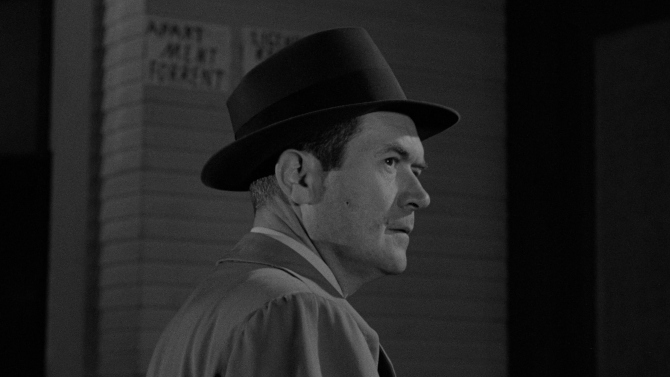
Finger ManNovember 11, 2025Christmas Eve – usually a day of family togetherness, holy happiness and plenty of joy... that is, unless you’ve been picked up by the coppers and they’re putting the mighty squeeze on you. Directed by Harold D. Schuster, the 1955 crime thriller film noir Fingerman (sometimes spelled Finger Man) finds a longtime mid level thug with good street cred given a less than envious gift for the holidays – the chance to put a sting on one of the most dangerous criminal bosses thriving on rackets in at least eleven different States. Voice-over narrated by our stuck between a rock and a hard place protagonist, Casey Martin (Frank Lovejoy – In a Lonely Place; The Hitch-Hiker), he has recently been nabbed by the Treasury Agency (A.K.A. the T-Men), with their boss, Mr. Burns (Hugh Sanders), giving him his one and only choice – help them grab one Dutch Becker (Forrest Tucker) – a wealthy criminal mastermind who has his dirty paws in everything from illegal alcohol and gambling, to night clubs and prostitution.
-
Crash and Burn Out?
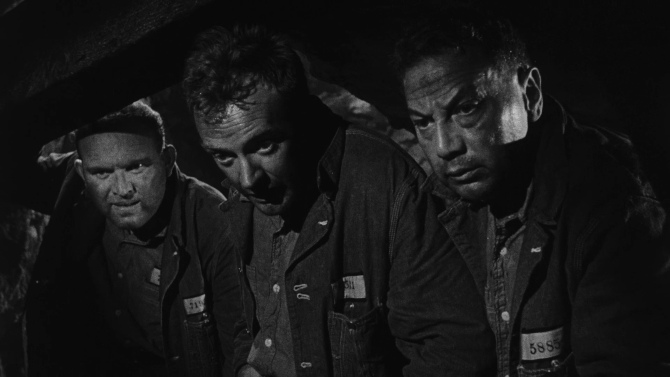
CrashoutNovember 7, 2025Starting out with a riotous jailbreak, the 1955 film noir Crashout, directed by Lewis R. Foster, finds six of the grittiest criminals working together to make a lengthy trip to get their hands on a briefcase full of cold hard cash. Led by the man with the plan and a slug in his back (courtesy of the jailbreak), Van Morgan Duff (William Bendix – The Big Steal; Who Done It?), rules the escapees with an iron fist... it helps that he is the only person who knows where the money is hidden.
-
Ymir Fear in Roma
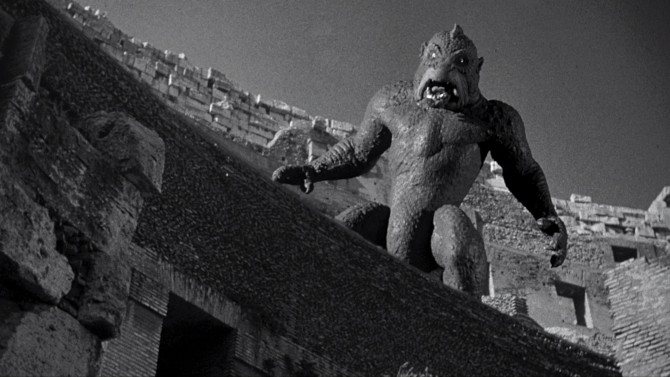
20 Million Miles to EarthOctober 23, 2025Despite not being written or directed by the famed special effects expert Ray Harryhausen, that latter honour going to Nathan Juran instead, there is no denying that the magic man’s hands are all over this horror infused sci-fi monster bash. Spawning the unique concept originally titled as The Giant Ymir, while also suggesting it be set in Rome, Italy instead of the United States (why you may ask... he simply always wanted to vacation there), whilst also being in charge of the stop-motion animation that makes this feature succeed, the final product eventually became known as 20 Million Miles to Earth (1957). A strong warning of the fears of moving too quickly into ‘futuristic’ ways, which is clearly a callback to ample anxiety revolving around the atomic bomb... which, with it, could bring possible nuclear annihilation, here we have the result of space exploration of the planet Venus.
-
The House of Husher
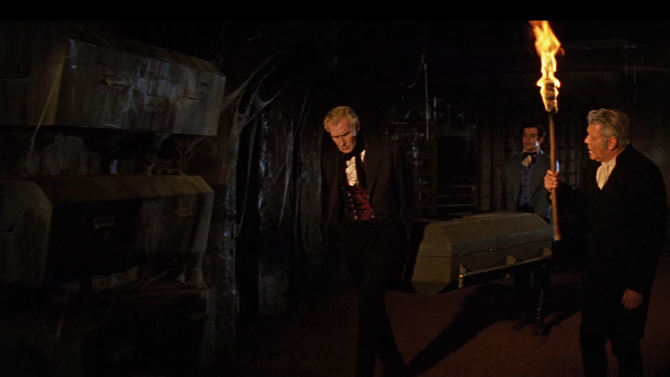
House of UsherOctober 20, 2025The first of Edgar Allan Poe’s famed horror stories to come to life at American International Pictures with Roger Corman at the helm and Vincent Price in the starring role, House of Usher (1960), was a huge success... spawning numerous gothic Poe adaptations that would bring the team back together in the near future. With Price taking on the role of the titular Roderick Usher, the man is an utter emotional mess, belying his impeccably manicured appearance. Severely sensitive to noise, light, and taste, he demands hushed voices, minimal natural or candle light at all times, and bland gruel as the meal of choice.
-
Peek-A-Boo
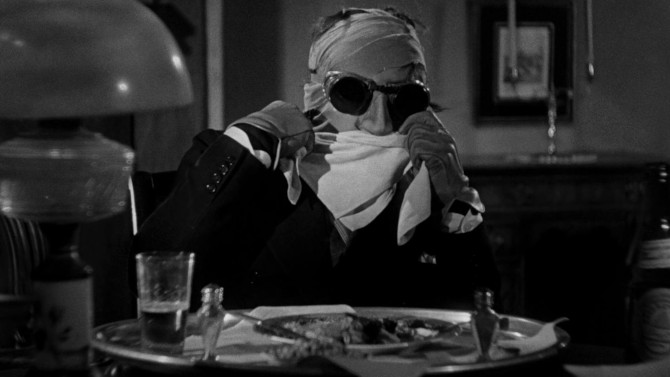
The Invisible ManOctober 10, 2025For one of the soon to be illustrious monsters for their slate of horror movies, Universal turned to the writing of H.G. Wells, bringing to life his novel The Invisible Man (1933), with the director of 1931's Frankenstein, James Whale, given another opportunity to envision one of their fiends for cinematic life. Combining technical precision, maniacal madness, and more than a touch of Whale’s famed black comedy, the classic tale follows an on the run Doctor, Jack Griffin (basically just Claude Rains’ masterful voice doing all the work... though he wasn’t the original choice – Frankenstein stars Boris Karloff and Colin Clive both said no), who finds his way to a tiny British village.
-
Hammer Hunter
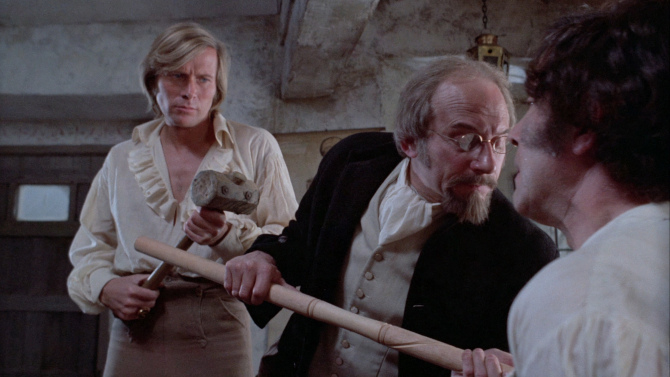
Captain Kronos: Vampire HunterSeptember 28, 2025A somewhat surprising take from Hammer Film Productions, especially considering how many rather traditional Dracula centred vampire horror movies they made throughout the years, 1974's Captain Kronos: Vampire Hunter, written and directed by Brian Clemens, breaks the mold... or perhaps it stakes the mold. Set in a rather vague time period – most likely somewhere within the 18th-19th centuries, Clemens builds a world in which many varieties of vampires exist. With a cold open showing a rural village and countryside being afflicted by an unknown caped creature who is sucking the age and beauty out of its young women, the town’s doctor, Marcus (John Carson), has the good sense to send a message to his old friend Captain Kronos (Horst Janson), who, along with his trusty sidekick Professor Hieronymus Grost (John Cater) – who unfortunately has been born with a hunchback, as well as recently rescued Carla (Caroline Munro) – who was sentenced to the stocks for dancing on the Sabbath, this ragtag triumvirate becomes the team to hunt such evil things.