 Films That Matter
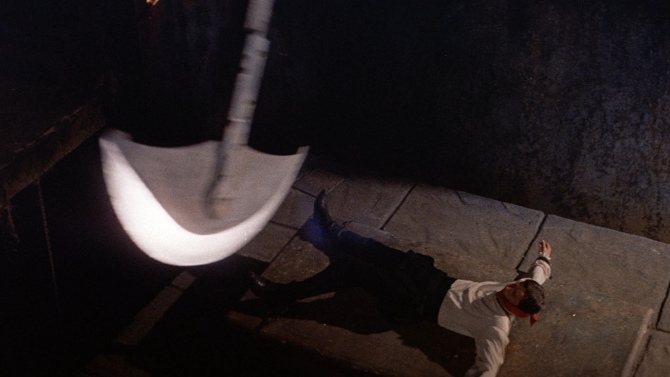
Pit Stop
After Roger Corman’s major success with House of Usher (1960), he promptly turned to adapting another Edgar Allan Poe story to start a franchise of sorts, with The Pit and the Pendulum (1961) being an even bigger win... with it making over two million dollars on a modest budget of only three hundred thousand. Getting Vincent Price (House of Wax; Laura) back after House of Usher’s critical and commercial winnings, this time he plays Nicholas Medina, a tortured soul living in a tomb of a castle with his servants after his gorgeous wife Elizabeth (Barbara Steele – Black Sunday; The Horrible Dr. Hichcock) has seemingly died of a massive heart attack brought on by fright. Feeling as if he is truly cursed, he resides in the same place that his sadistic Spanish Inquisition father once tortured his victims, where his mother and uncle died, and now where his wife has met her untimely end. It has become so bad that even Nicholas’ sister Catherine (Luana Anders) has returned home to try and ease his sorrows.
-
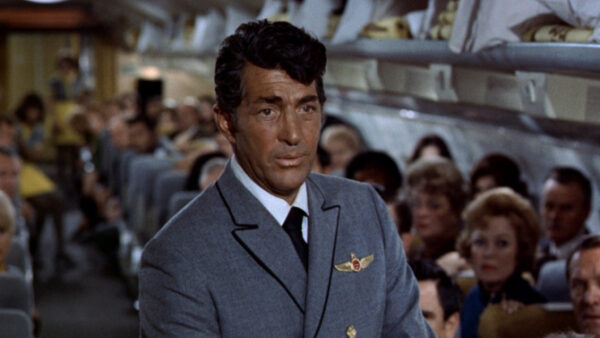
The Takeoff of a Renewed Genre
AirportJuly 27, 2026If you’re looking for one of the most wildly intense nights of chaos set on film, then Airport (1970), co-written and directed by George Seaton (Miracle on 34th Street) is in the running for that honour. Often deemed a disaster movie with plenty of drama, moments of action, tinges of comedy (see above), as well as some obvious thrills, it’s a mixed bag of sorts, as it’s got an impressively massive cast, clever use of split screen to keep the narrative moving along (it might remind some of the popular 2000s tv show 24), and throw a wild number of ideas at the screen to create one frantic evening effect, yet its languid pacing holds some of these elements back from being a more memorable disaster thriller. In fact, star Burt Lancaster even called it “a piece of junk”.
-
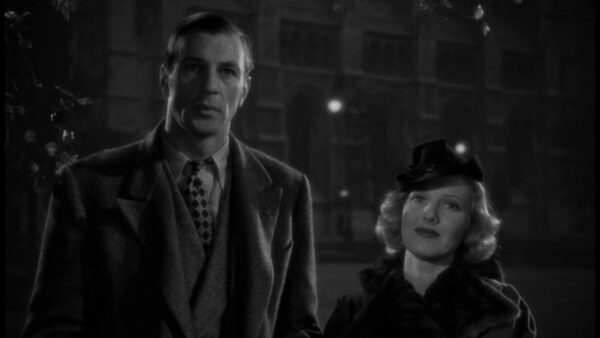
Giving is Receiving
Mr. Deeds Goes to TownJuly 20, 2026After a middling success with Broadway Bill (1934), Frank Capra wanted to return to the gargantuan success he had with his film released earlier that year, the rare Academy Award winner of the ‘Big Five’, It Happened One Night. Turning pen to paper with his then go to writer Robert Riskin, they worked on developing a tale based upon Clarence Budington’s short story “Opera Hat” – which was turned into serial form in The American Magazine, and it soon became the director’s biggest box office success yet, Mr. Deeds Goes to Town (1936). Certainly part of why Frank Capra’s work would become known as ‘Capracorn’, this feature thrives thanks to its Great Depression setting (which was obviously still a major problem at the time), sweetly sentimental charm, and its belief in a humanist outlook.
-
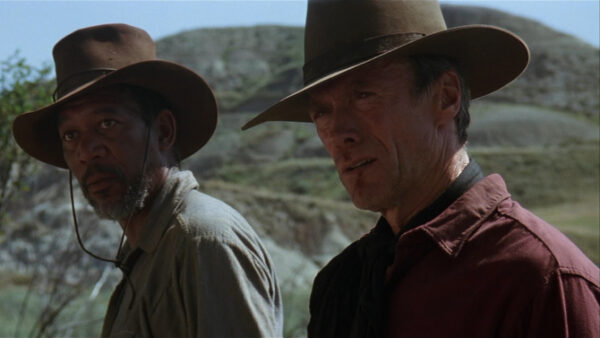
Closing the Book
UnforgivenJune 18, 2026A revisionist feature that in many ways is the closing bookend to the classic western, Clint Eastwood directs and stars in (notably his last picture in the genre he helped make famous again) 1992's Academy Award Best Picture winner Unforgiven. Throwing the traditional rhythm out the door, David Webb Peoples writes a tale set at the end of the Wild West where in every characters’ mind, they are the ‘good’ guy. Centred around a town called Big Whiskey, Wyoming, Sheriff ‘Little Bill’ Daggett (Gene Hackman – The Replacements) runs the town with an iron fist – banning any guns in the place (if they don’t listen, he makes an example of them). Also of note, the lawman, though not a great craftsman, is trying to build his own home.
-
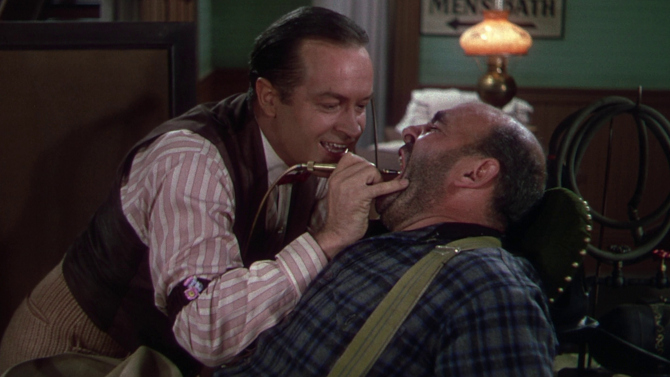
By the Skin of Your Teeth
The PalefaceMay 26, 2026Originally meant to be a satire... though of a film very few have ever seen nowadays, the Norman Z. McLeod western comedy The Paleface (1948), written by Frank Tashlin about 1929's Virginian, infuriated the man in how it was directed (as a more generic spoof of the western)... but funnily enough, despite the screenwriter’s opinion, until Blazing Saddles (1974) came out, it was the highest grossing western parody of all-time and spawned a sequel in Son of Paleface (1952), while it was also remade as the Don Knotts vehicle The Shakiest Gun in the West (1968). After government agents tasked with tracking down an illegal gun smuggling ring turn up dead, the infamous Calamity Jane (Jane Russell) is secretly broken out of jail by Gov. Johnson (Charles Trowbridge) with the hope that she will take a pardon for going undercover to get to the bottom of this rebel-rousing (similar to rabble-rousing) gang in the frontier land.
-
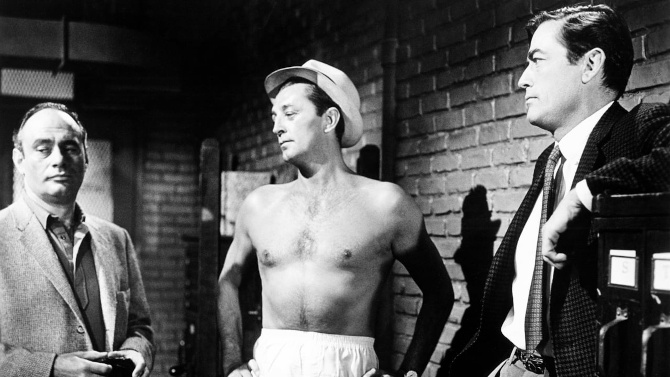
Fear Factor
Cape FearMay 23, 2026Sometimes, even the immediacy of a mesmeric score setting the mood for what is to come tells the viewer that they are likely in for something really special. Case in point, Bernard Herrmann’s intense opening composition for 1962's Cape Fear, directed by J. Lee Thompson (Happy Birthday to Me). Produced by and starring Gregory Peck (To Kill a Mockingbird; On the Beach), he plays small town attorney Sam Bowden – a well respected family man within the quaint community in Georgia. Soon to be met with a harbinger of much danger, Max Cady (Robert Mitchum – Out of the Past; Where Danger Lives) – who was put behind bars by the soft spoken lawyer eight years ago after he testified at his trial, has made it quite clear that Sam’s wife Peggy (Polly Bergen) and daughter Nancy (Lori Martin) are in just as much danger, if not more.
-
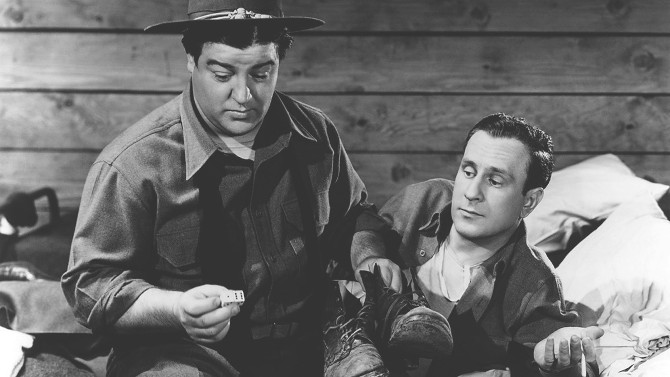
Bang For Your Buck
Buck PrivatesMay 15, 2026elebrating its 85th anniversary this year, Arthur Lubin’s Buck Privates started Bud Abbott and Lou Costello on their path to superstardom. Though they had already gained some fame on the vaudeville and burlesque comedy circuits, as well as gathering some traction on the radio (and lest we forget their small roles in their first film, One Night in the Tropics, the year before), things would be wholly different soon after. Combining their very different talents as the perfect straight and funny men (their longtime writer and ideas man John Grant came along for the ride – and would be involved on most of their future movies), it also didn’t hurt that cinema goers found plenty of comedic fun in its topical premise as tensions grew around the fears of the lengthening World War II – making Universal the most money it had ever earned up until that point (four million dollars – a lot of cash when tickets were between ten cents and a quarter depending on the location).