 Films That Matter
Pit Stop
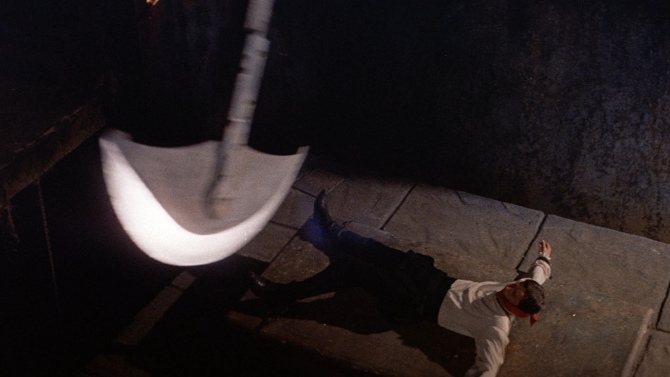
After Roger Corman’s major success with House of Usher (1960), he promptly turned to adapting another Edgar Allan Poe story to start a franchise of sorts, with The Pit and the Pendulum (1961) being an even bigger win... with it making over two million dollars on a modest budget of only three hundred thousand. Getting Vincent Price (House of Wax; Laura) back after House of Usher’s critical and commercial winnings, this time he plays Nicholas Medina, a tortured soul living in a tomb of a castle with his servants after his gorgeous wife Elizabeth (Barbara Steele – Black Sunday; The Horrible Dr. Hichcock) has seemingly died of a massive heart attack brought on by fright. Feeling as if he is truly cursed, he resides in the same place that his sadistic Spanish Inquisition father once tortured his victims, where his mother and uncle died, and now where his wife has met her untimely end. It has become so bad that even Nicholas’ sister Catherine (Luana Anders) has returned home to try and ease his sorrows.
-
Not the Same Old Song and Dance
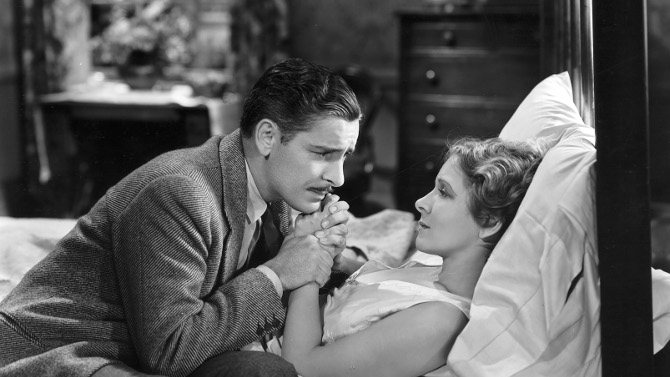
ArrowsmithApril 17, 2019An early talkie from iconic director John Ford (Stagecoach; The Quiet Man; The Searchers), 1931's Arrowsmith is no western (despite arrow being in the title), rather, it takes a sweeping look at the life of Dr. Martin Arrowsmith (Ronald Colman – in a Clark Gable-like performance), from an opening scene in his childhood to his work as a researcher in New York – where he develops a vaccine that he administers during a plague. Earning four Academy Award nominations, namely Best Picture, Writing-Adapted, Cinematography, and Art Direction, the filmmaker’s skill is immediately evident – especially impressive as this is an early talkie – where most directors struggled to bring the style from the silent era forward due to new challenges (overly sensitive microphones, stagnant camera work used to show the characters as they speak, etc. . .).
-
Ernest Falls in Love
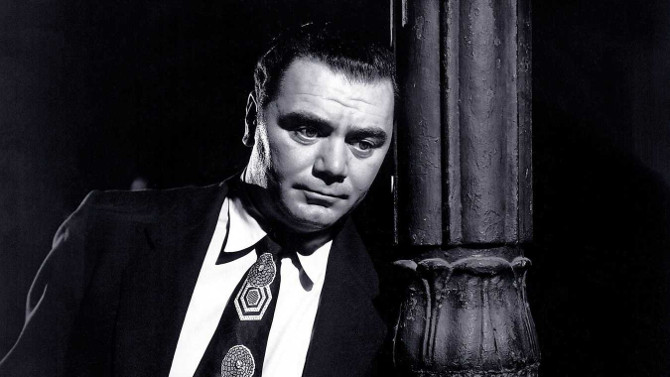
MartyApril 9, 2019Taking the world by storm, 1955's Marty, a simple, heartfelt, honest, and poignant story of one man’s Saturday night (and the following Sunday), won both the Palme D’Or at the Cannes Film Festival (the first year the award was named thusly) and Best Picture at the Academy Awards – the first, and to date, only motion picture to win both coveted prizes (though Billy Wilder’s 1946 film noir The Lost Weekend also won the two top prizes, though at that time, the Cannes Award was known as the Grand Prix du Festival International du Film). It was also a major box office sensation. Following thirty-four year old butcher Marty Piletti (Ernest Borgnine – acting since 1951, he had his first big break in 1953's From Here to Eternity), he is an everyman – a warm, caring, short man who is a little heavy round the middle. . . in his mid thirties, he is the last in his large Italian-American family to remain unmarried.
-

I Love You, A Bushel and a Peck
To Kill a MockingbirdApril 5, 2019Arguably one of the greatest adaptations of all-time, 1962's To Kill a Mockingbird is a masterclass in writing (Horton Foote won the Oscar for Best Adapted Screenplay), direction (Robert Mulligan), cinematography (Russell Harlan), and, something not always talked about, casting. You would think that one of the most iconic films to have ever come out of Hollywood would have had an easy time being made. . . yet, Universal really had no interest in making the movie (lacking action, a love story and a typical Hollywood ending, they felt it may feel bland on the screen) – that is, until Gregory Peck fell in love with the piece and signed on to do it (oh, how star power changes a studio’s perspective on things).
-
Lougennaire’s Disease
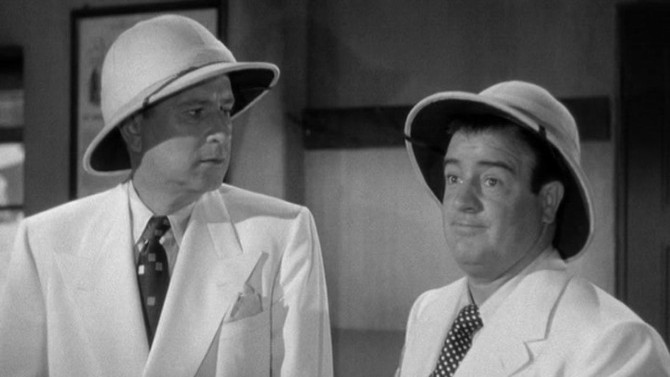
Abbott and Costello in the Foreign LegionMarch 26, 2019What do boxing promoters have to do in the Middle East? Other than throwing a he-jab or two (I know, I know, a touch lame), absolutely nothing, unless you are caught up in another one of Bud and Lou’s zany misadventures. . . namely, Abbott and Costello in the Foreign Legion (1950). Directed by Charles Lamont (his first of eight features with the comedy team –the efficient filmmaker was not overly excited to head these simple projects) and written by frequent A&C screenwriters’ John Grant (every one except Lost in Alaska and Dance With Me, Henry), Martin Ragaway and Leonard Stern (both wrote three), the story finds two boxing promoters, Bud Jones (Bud Abbott) and Lou Hotchkiss (Lou Costello) – a rare time the pair used their first names, losing control of one of their star wrestlers, Prince Abdullah (William ‘Wee Willie’ Davis) – who is infuriated that he is slated to lose his next match, returning home to Algiers instead of taking the loss (but not before roughing up poor Lou – who did all of his own wresting stunts in the film – leading to a wrenched arm socket and a stretched tendon).
-
Star Pick with Guy Lafleur
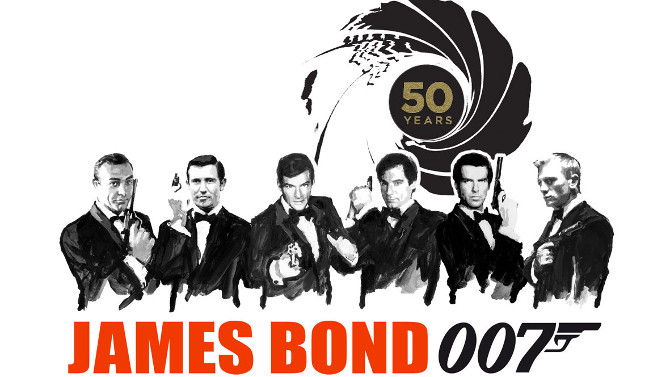
 A Legend Fleur Your Ice OnlyJames Bond FranchiseMarch 14, 2019
What is there to say about a legend like Guy Lafleur? One of the greatest National Hockey League players ever to feature in the game, he is synonymous with being one of the Montreal Canadiens’ holy triumvirate – along with Jean Béliveau and Maurice Richard. Transcendent of culture and language, in English he is known as “The Flower”, in French, “Le Démon Blond”, in either tongue, people would simply chant Guy!!! Immediately recognizable with his flowing blond locks, it always seemed like no one could touch the man as he flew down the ice (in a time when many players were still not wearing helmets – himself included).
-
Busta Move
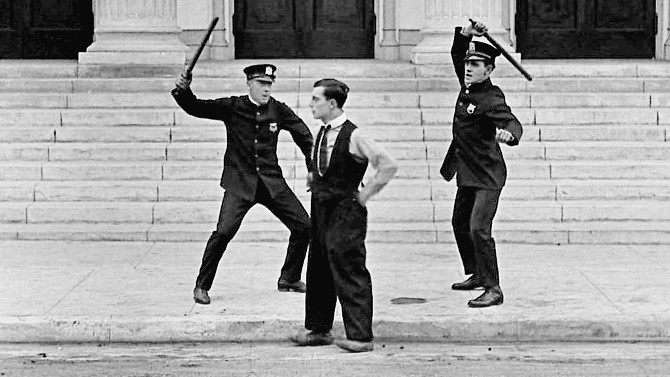
CopsFebruary 10, 2019A tale of visual trickery, rotten luck, and arguably, the bleakest of Buster Keaton’s shorts, Cops (1922) finds The Great Stone Face losing the girl (she is unwilling to even think of dating the man until he makes something of himself) – so, he heads out into the streets of Los Angeles (actually filmed on them) to do just that. Shot during the third trial of his good friend Rosco “Fatty” Arbuckle (charged with manslaughter), it is perhaps evident that the comic actor is not at his most cheerful. After making a few mistakes – Keaton’s use of the space onscreen and the items cleverly placed within it always awes and amazes, he accidentally purchases a cop’s furniture from a street scammer who has spotted that he has some dough (he also buys a horse and carriage that is not actually for sale). . . trotting away with the furniture in tow, he finds himself amidst a police officers’ parade and has the rotten luck of having an anarchist’s bomb land on the vehicle – completely unaware of what it is, he lights his cigarette with it, tossing it aside as it explodes (this idea very well could have come from fellow comedian Harold Lloyd, who, three years earlier, thought it would be funny to pose for photos as he lit a cigarette from the fuse of a bomb – it ended up being real. . . and the man lost his thumb, index finger, and a portion of his palm, it also left him partially blind for more than half a year).