 Films That Matter
Pit Stop
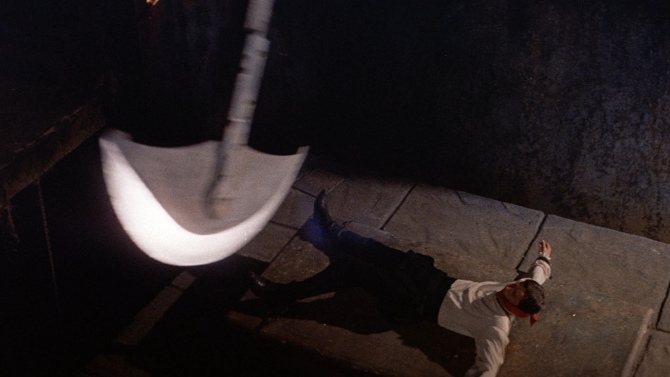
After Roger Corman’s major success with House of Usher (1960), he promptly turned to adapting another Edgar Allan Poe story to start a franchise of sorts, with The Pit and the Pendulum (1961) being an even bigger win... with it making over two million dollars on a modest budget of only three hundred thousand. Getting Vincent Price (House of Wax; Laura) back after House of Usher’s critical and commercial winnings, this time he plays Nicholas Medina, a tortured soul living in a tomb of a castle with his servants after his gorgeous wife Elizabeth (Barbara Steele – Black Sunday; The Horrible Dr. Hichcock) has seemingly died of a massive heart attack brought on by fright. Feeling as if he is truly cursed, he resides in the same place that his sadistic Spanish Inquisition father once tortured his victims, where his mother and uncle died, and now where his wife has met her untimely end. It has become so bad that even Nicholas’ sister Catherine (Luana Anders) has returned home to try and ease his sorrows.
-
On the Road to Mystery Street
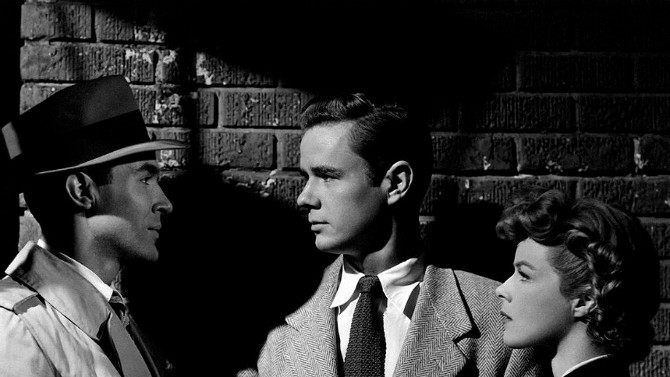
Mystery StreetNovember 20, 2018A film noir that would fit right into the fabric of twenty-first century television, Mystery Street, directed by John Sturges (The Magnificent Seven), is like an extended episode of CSI (or Criminal Minds), circa 1950 – a novel idea for the time. One of the first movies to be shot on location in Boston, in a way, it is a two pronged tale – demonstrating old-school investigative police work by State Police Lieutenant Peter Morales (Ricardo Montalban) and the avant-garde use of forensics by a Harvard doctor by the name of McAdoo (Bruce Bennett).
-
Post-War Noir
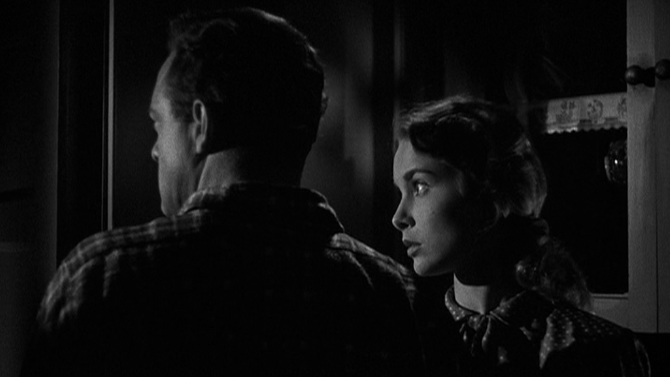
Act of ViolenceNovember 9, 2018A perfect example of ‘you can’t outrun your past, present or future’, 1949's Act of Violence, directed by Fred Zinnemann (High Noon; From Here to Eternity), starts with quite the hook: a man, limp noticeable, hurriedly, and with purpose, makes his way through a city in the clutches of the glum night, eventually entering a room that holds a deadly object – a gun. . . hopping onto a bus, it does not bode well. With a deliberate, unyielding presence, Joe Parkson (Robert Ryan – for another one of his great film noirs, see The Set-Up) is the thing of nightmares. . . a stalking figure in trench coat and fedora – the Michael Myers of the noir genre. Ryan, with his lined face, imposing size, and disturbed demeanor, is an ominous heavy – the enigmatic grunt opening a phone book and circling the name of one Frank R. Enley (Van Heflin).
-
Inside Outsiders
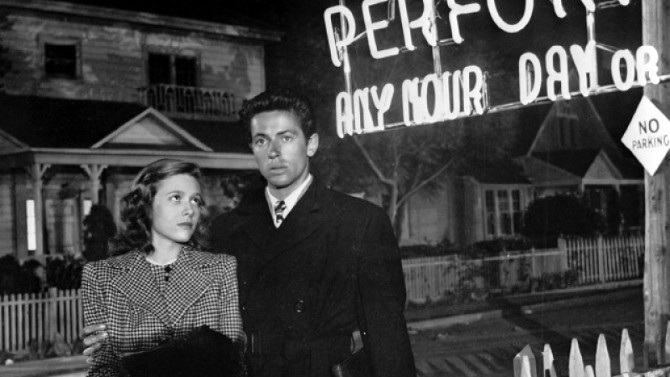
They Live by NightNovember 4, 2018Taking noir genre tropes and flipping them on their heads, Nicholas Ray’s They Live by Night (1948) challenges the city setting, the cynical detective, the sultry femme fatale, and at every turn, finds a clever way to surprise and intrigue. An intimate look at the lives of outsiders (a Nicholas Ray speciality – think In a Lonely Place; Rebel Without a Cause), three individuals have escaped the confines of prison. . . guys who would easily be picked out of a lineup: one-eyed Chickamaw (Howard Da Silva) – a sinister man, quick to anger when his missing socket is mentioned; monstrous T-Dub (Jay C. Flippen) – though he seems sensible, there is a violent streak hidden just below the face only a mother could love; and baby-faced Bowie (Farley Granger) – the meek getaway driver of the gang.
-
Gold, Frankenstein and Mirth (Don’t Forget the Wolf Man)
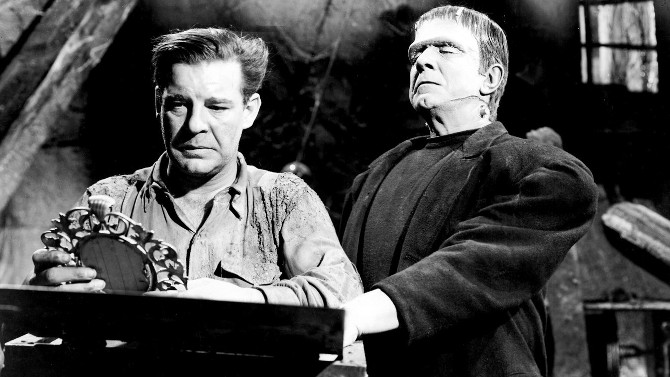
Frankenstein Meets the Wolf ManOctober 26, 2018The first of the Universal monster movie crossovers (which is celebrating its 75th anniversary this 2018), 1943's Frankenstein Meets the Wolf Man comes as the fourth sequel in the bolt-necked monster franchise, and a direct sequel to the tortured Lawrence Talbot feature, a man who was bitten by a werewolf and is now himself inflicted. Written by The Wolf Man scribe Curt Siodmak (and directed by Roy William Neill – a frequent 1940's Sherlock Holmes director), the screenwriter continues his tale of the tormented Talbot (Lon Chaney Jr. reprising his role) – cursed with the pentagram, the mark means that he is forever a pursued man (symbolic of the Star of David during World War 2, Siodmak, a German Jewish man, wrote the Wolf Man as a conduit for the horrid tale of his peoples’ torture, pain and death), a man who has supposedly been dead for four years.
-
A Fly in the Ointment
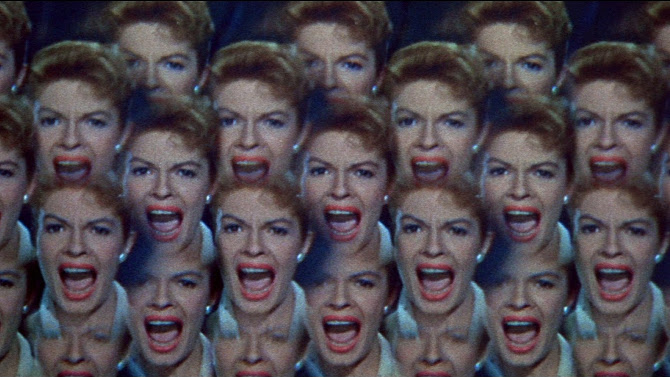
The FlyOctober 19, 2018We’ve all had it happen before. . . an experiment goes awry – a recipe doesn’t turn out (and the cake somehow turns green), or we simply think ‘the old Mentos in a bottle of Coke trick’ is just a myth, but you’ve likely never had a day quite like scientist André Delambre (David Hedison – the only actor to play Felix Leiter in two James Bond flicks), a moment that will change his life forever – so, without further ado, I present to you 1958's: The Fly. Written by James Clavell (based upon a short story by George Langelaan) and directed by Kurt Neumann, the story is set in exotic Montreal, the french speaking Canadian city that is one of the oldest continuously inhabited locations in North America. It is here that a wealthy industrialist family is seemingly struck by a more than unusual tragedy – André Delambre has been found dead, head and arm obliterated by a hydraulic press. . . further adding to the mystery, his loving wife Hélène (Patricia Owens) is seen running from the scene of the crime.
-
Buster Boo
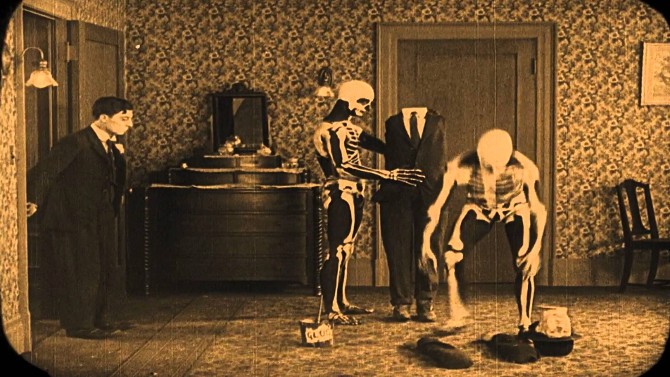
The Haunted HouseOctober 5, 2018Though not one of Buster Keaton’s most iconic shorts, 1921's The Haunted House is, at its best, like one of those uber-fun Scooby-Doo, Where Are You? chase scenes – ghosts, skeletons, demons and other unexpected spooks flitting in and out of rooms and doorways, dodging, ducking, dipping, chasing, and ultimately, scaring our jarred, though still somehow stone-faced, hero. Where it struggles slightly is its setup. Keaton is a clerk, a hard working employee at a small time bank. The larger than life money manager (behemoth Joe Roberts) has hatched a plan to rob said bank, his team of thieves looking to a crumbling old home, long rumoured to be haunted, as their hidy-hole – preparing for the cops or any other unlucky trespasser, they have booby-trapped the long since abandoned abode while also gathering white sheets to act as ghosts, building on its infamous reputation. After a glue gag that kind of falls flat, Keaton is spotted by the owner with guns in hand (after having chased off the robbers) – it looking like he is the criminal mastermind. . . fleeing, he hopes to find respite in the haunted house.