 Films That Matter
Pit Stop
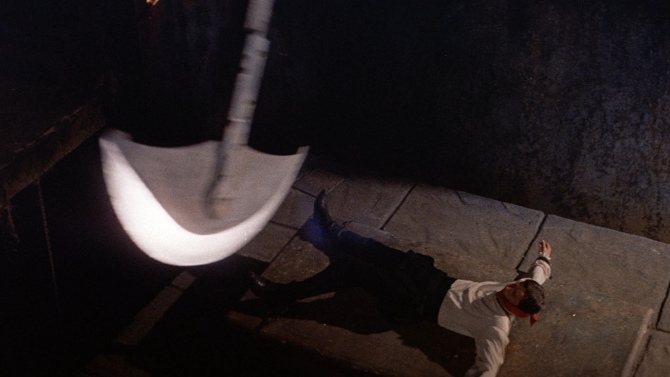
After Roger Corman’s major success with House of Usher (1960), he promptly turned to adapting another Edgar Allan Poe story to start a franchise of sorts, with The Pit and the Pendulum (1961) being an even bigger win... with it making over two million dollars on a modest budget of only three hundred thousand. Getting Vincent Price (House of Wax; Laura) back after House of Usher’s critical and commercial winnings, this time he plays Nicholas Medina, a tortured soul living in a tomb of a castle with his servants after his gorgeous wife Elizabeth (Barbara Steele – Black Sunday; The Horrible Dr. Hichcock) has seemingly died of a massive heart attack brought on by fright. Feeling as if he is truly cursed, he resides in the same place that his sadistic Spanish Inquisition father once tortured his victims, where his mother and uncle died, and now where his wife has met her untimely end. It has become so bad that even Nicholas’ sister Catherine (Luana Anders) has returned home to try and ease his sorrows.
-
Star Pick with John Carpenter
 WingmanOnly Angels Have WingsMay 8, 2018
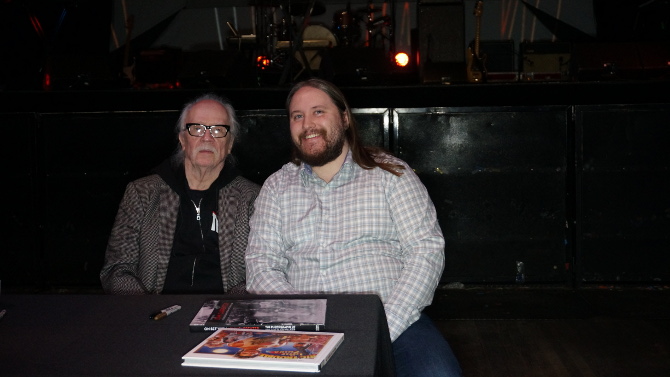
What is there to say about an icon like John Carpenter? An auteur with the skill to make dynamic features with a minuscule budget, his film Halloween majorly influenced the slasher sub-genre (along with gialli, and other movies such as Peeping Tom, Psycho, The Texas Chainsaw Massacre and Black Christmas). One of the most prolific horror filmmakers since the 1970s, he followed up the October 31st related motion picture with titles like The Fog, The Thing, Christine, They Live, amongst many others, whilst he has branched out into other genres with films like Assault on Precinct 13 (action), Escape From New York and its sequel Escape From L.A. (sci-fi action), Starman (a sci-fi romance), and Big Trouble in Little China (an action adventure comedy).
-
Muzzle Tov
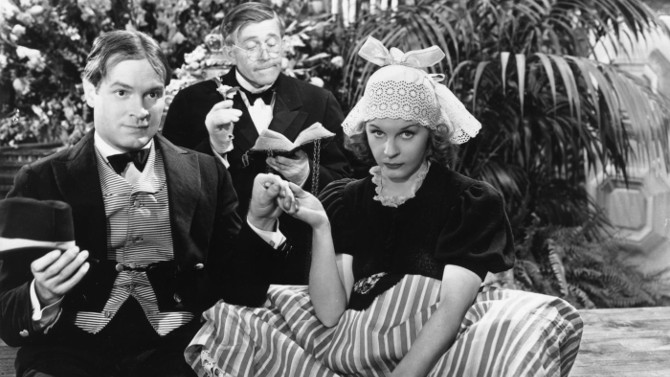
Never Say DieMay 4, 2018A rich, hypochondriac of a man, John Kidley (Bob Hope), haunted by a Black Widow (a murderous, marry-a-wealthy-husband-a-year type woman, not a spider), Juno Marko (Gale Sondergaard), flees her side, making his way to a beautiful health-resort-centred town called Bad Gaswasser, Switzerland, hoping that the hidden locale, nestled amongst the picturesque Alps, will help him with his supposed condition, and, more importantly, in avoiding the persistent dame – hence the 1939 film’s title, Never Say Die. Now, of course, the quote offered at the opening is spoken by Kidley, and it references his perceived awful luck. And, to be honest, Ms. Marko is quite the woman. . . having ditched her most recent beau (she witnessed him slipping and falling off the Matterhorn from mere inches behind him – wink wink, nudge nudge), Kidley is her next mark, and it does not take her long to track the wealthy gent down once again. Here is a piece of witty dialogue from the film, emphasizing their rather amusing predicament:
-
Friday Night Frights
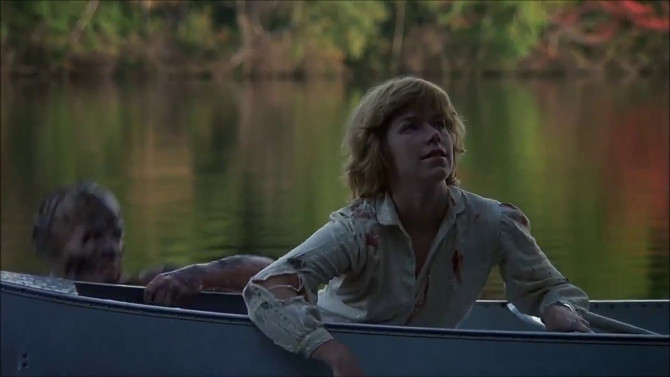
Friday the 13thApril 29, 2018In a mere seven year span, three of the most iconic horror spooks of all-time were created: Michael Myers in Halloween (1978), Jason Voorhees in Friday the 13th (1980) and Freddy Krueger in A Nightmare on Elm Street (1984). Each has spawned a nearly inordinate amount of sequels and remakes: not including the original, nine (and soon to be ten), eleven, and eight, respectively. . . with one of those being a crossover – 2003's Freddy vs. Jason. It is somewhat reminiscent of the creative juices that were flowing in the horror craze of the 1930s and 1940s, when original, folkloric, and literary monsters became the stuff of Hollywood legend – think Dracula, The Invisible Man, Frankenstein, The Wolfman. . . and later (in the 50s), the Creature from the Black Lagoon (all of these films also produced a bevy of sequels). With Halloween already having been reviewed this past Halloween and A Nightmare on Elm Street being planned for this upcoming October (a perfect time to celebrate its thirty-fifth anniversary), Friday the 13th is on the chopping block today. Part of the slasher subgenre, it was released in the period’s Golden Age – 1978-1984, following in the wake of John Carpenter’s successful low-budget horror film.
-
Sarong Side of the Tracks
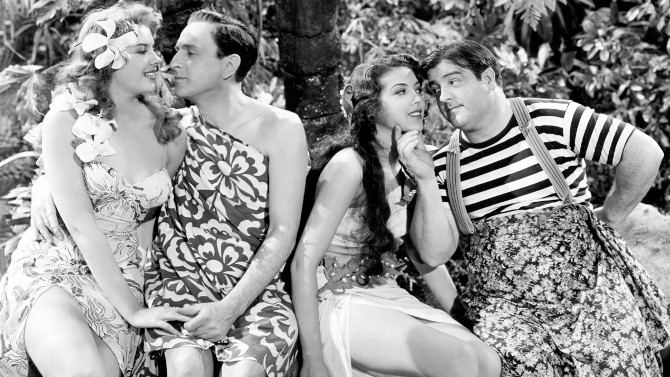
Pardon My SarongApril 15, 2018Less of a critique than an observation, movies have clearly become freer in many respects – violence, nudity and profanity can now be littered throughout the narrative. . . yet, the twenty-first century has brought with it a more politically correct outlook, and stories are impeded in this very different respect (unlike films during the Motion Picture Production Code and after – which, for many reasons, were able to be more politically incorrect, for lack of a better term). Case and point, Abbott and Costello’s Pardon My Sarong, directed by Erle C. Kenton (Island of Lost Souls; Who Done It?). The piece of dialogue in question finds the comedic duo discussing marriage –
-
Polish to Perfection
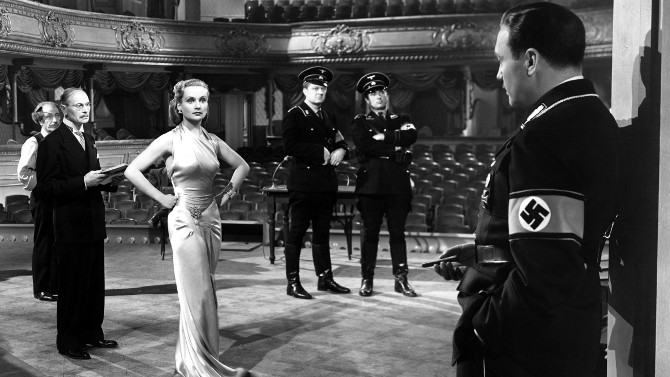
To Be or Not to BeApril 13, 2018To Be or Not to Be walks a complicated tightrope – released in 1942, the World War II set comedy, even by today’s standards, could be called politically incorrect. Satirizing the horrible situation over in Europe (specifically Poland), co-adapter and director Ernst Lubitsch knew, like Charlie Chaplin before him (The Great Dictator), that it was vital to be able to laugh in the face of Hitler and the Nazis, both alleviating the tension of audiences back home with humour while also bringing the Axis power down a notch, highlighting their absurdly ridiculous doctrine and beliefs. A play, or should I say plays within a play, the story follows an acting troupe in Poland managed by producer/director Dobosh (Charles Halton). Starring the husband and wife team of Joseph (Jack Benny) and Maria Tura (Carole Lombard), they are currently bringing Shakespeare’s “Hamlet” to life. Preparing for their next play during the day, “Gestapo” is a satire revolving around Hitler and his cronies, comedy coming from the extensive use of “Heil Hitler”, an inquisition of a young child who the Nazis are worried will not talk, and a joke about how “They named a brandy after Napoleon, they made a herring out of Bismarck, and the Fuhrer is going to end up as a piece of cheese!”. Of course, Maria wants to wear a fashionable dress in a concentration camp scene much to the chagrin of Dobosh, though Greenberg (Felix Bressart), the lowly Jewish actor who desperately hopes of playing Shylock one day, suggests, “It’ll get a terrific laugh” – his go-to catch phrase. Other problems arise, with Dobosh equally unimpressed by Bronski’s (Tom Dugan) Hitler, saying, “I don’t know. . . it’s not convincing. To me, he’s just a man with a little mustache”, to which the makeup man replies, “But so is Hitler” – a line that really hits home.
-
The Marlowe Man
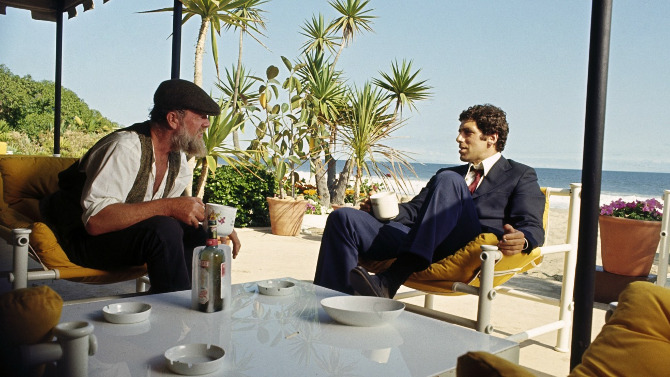
The Long GoodbyeApril 6, 2018Tackling Raymond Chandler’s1953 novel “The Long Goodbye” (which features detective Philip Marlowe) in a unique way, director Robert Altman decided to, “call him Rip Van Marlowe, and we took the position that he had been asleep for twenty years, woke up, and Elliott [Gould] just wandered through that film. . . and that was our idea – that he was wandering through this landscape, the film trying to invoke the morals of a previous time into this early seventies.” Set exactly twenty years after the novel’s release date, detective Philip Marlowe (Gould) awakes in the middle of the night from a deep sleep – voice raspy, five o’clock shadow quickly moving onto six. . . a man in an endless stupor. His retro suits, skinny ties and constant smoking are out of place, much like his 1948 Cabriolet Lincoln Continental Convertible – a gent who is undoubtably from another time (even his salary closely resembles what a detective would make in the late 40s or early 50s).