 Films That Matter
Pit Stop
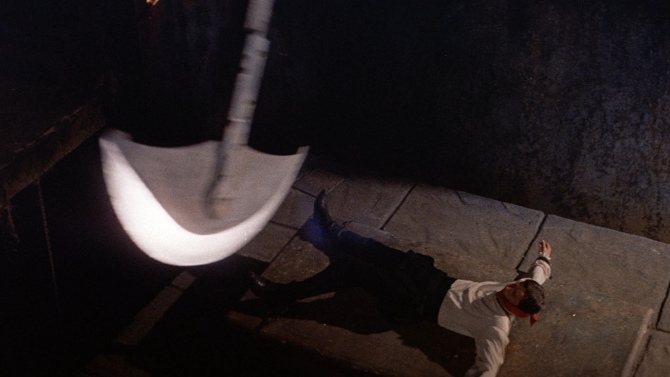
After Roger Corman’s major success with House of Usher (1960), he promptly turned to adapting another Edgar Allan Poe story to start a franchise of sorts, with The Pit and the Pendulum (1961) being an even bigger win... with it making over two million dollars on a modest budget of only three hundred thousand. Getting Vincent Price (House of Wax; Laura) back after House of Usher’s critical and commercial winnings, this time he plays Nicholas Medina, a tortured soul living in a tomb of a castle with his servants after his gorgeous wife Elizabeth (Barbara Steele – Black Sunday; The Horrible Dr. Hichcock) has seemingly died of a massive heart attack brought on by fright. Feeling as if he is truly cursed, he resides in the same place that his sadistic Spanish Inquisition father once tortured his victims, where his mother and uncle died, and now where his wife has met her untimely end. It has become so bad that even Nicholas’ sister Catherine (Luana Anders) has returned home to try and ease his sorrows.
-
Hell Hath No Fury. . .
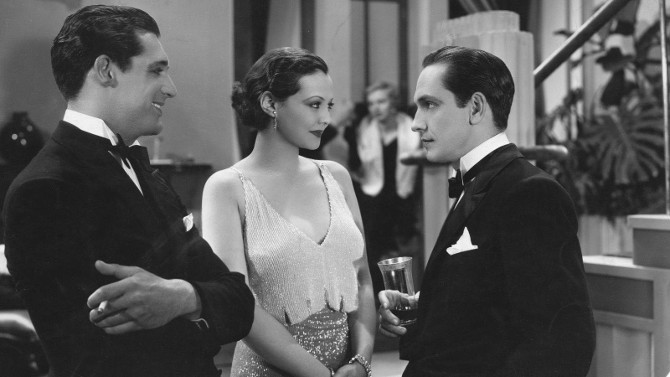
Merrily We Go to HellMarch 26, 2018In this era of female empowerment, a name from the past that must be highlighted is Dorothy Arzner. Starting as a typist in the film business for director William C. de Mille (the older brother of Cecil), less than a year later, she had worked her way up to screenwriter, soon after, promoted to editor. Editing star Rudolph Valentino’s Blood and Sand, her impressive skill was immediately evident. Continuing to do stellar work, she eventually threatened to move from Paramount to rival Columbia if not given a directorial job, the studio conceding in 1927. The only major female director in Hollywood during its “Golden Age”, she was able to transition from silent films to talkies (the first female director to make one), and, while filming 1929's The Wild Party, is credited with essentially developing the first boom mike – some say it was to help star Clara Bow get over her fear of talking on camera, others to end her frustration of always having to hide a microphone in one spot on set. . . in any case, she had technicians rig a microphone onto a fishing rod, solving the problem (and, though she did not patent the idea, Edmund H. Hansen did one year later, she is credited with its invention).
-
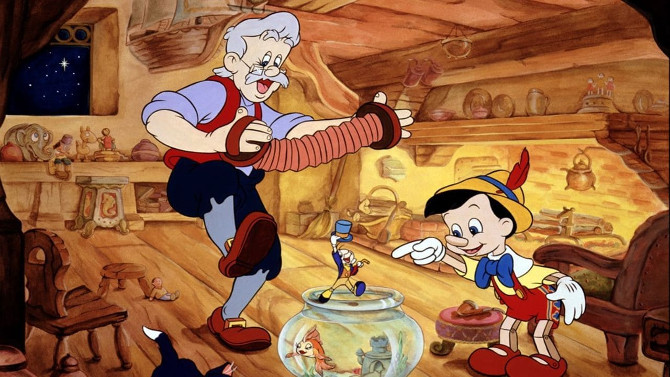
Puppet Master
PinocchioMarch 23, 2018Only the second feature film to be made by Disney (the first was Snow White and the Seven Dwarfs), Pinocchio, released in 1940, was, shockingly, a failure at the box office (partially due to distribution problems relating to World War II). . . though, after many re-releases, including the highly successful 1945 venture, it flourished. A complex and influential undertaking, it took five sequence directors (Norman Ferguson, T. Lee, Wilfred Jackson, Jack Kinney, and Bill Roberts), two supervising directors (Hamilton Luske and Ben Sharpsteen), and a mind-boggling seven writers (Ted Sears, Otto Englander, Webb Smith, William Cottrell, Joseph Sabo, Erdman Penner, and Aurelius Battaglia), as well as uncredited scribe Bill Peet to bring Carlo Lorenzini’s (better known by nom de plume Carlo Collodi) fairy tale, “The Adventures of Pinocchio”, to life.
-
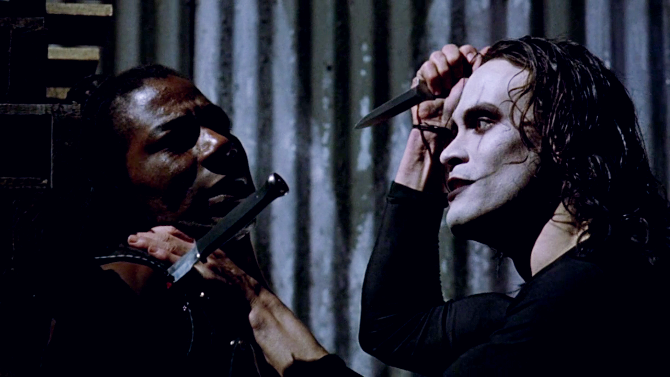
As the Crow Flies
The CrowMarch 18, 2018It’s funny how vivid our memories can be – clearly recalling moments from when we were kids. I can remember hearing of actor Brandon (son of Bruce) Lee’s death while shooting a movie, seeing photos of him plastered all over magazines and tv in his now iconic makeup. Making a connection soon after in my mind with Sting (not the singer of The Police, but rather, the wrestler – who soon after Lee’s death modelled his makeup on his character. . . as you can guess, I was into wresting at the time), his look and story stuck with me from the age of six until now, a heartbreaking tale of a fatal mistake made on set. Of course, the film I am referring to is The Crow, directed by Alex Proyas (Dark City) – a tale that is hard to separate from the depressing real life tragedy. Like some sort of eerie foreshadowing, its narrative follows Eric Draven (Lee), a man who has died after being stabbed, shot and thrown out of a window (Lee passed away after being shot by an improperly deactivated cartridge) – all of this after his fiancée has been raped and murdered.
-
Star Pick with Alex Trebek
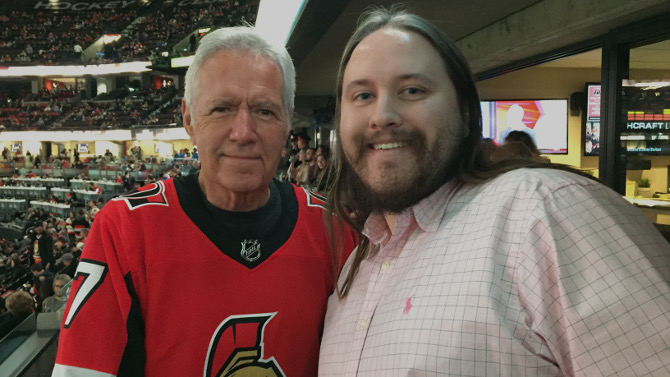 This is JeopardyHow Green Was My ValleyMarch 13, 2018
Sometimes, you need luck on your side. As you can probably imagine, many of the celebrity interviews I conduct are arranged well in advance. . . though, not always. A prime example of said luck, as I attended a National Hockey League game a few months back, I just happened to bump into the one and only Alex Trebek. A man who definitely does not need an introduction, he has hosted one of the most popular game shows in the history of television – Jeopardy, since its revival in 1984 (when it became a daily syndicated show). . . he has also emceed many others, including High Rollers and Classic Concentration, to name but a few. So popular in fact, Trebek was spoofed for years by Will Ferrell on Saturday Night Live (always the butt end of one of Darrell Hammond’s Sean Connery puns/gags about his mother).
-

When You Death Wish Upon a Star
Death WishMarch 6, 2018With a remake currently in theatres, it is the perfect time to revisit 1974's Death Wish. A film that was mostly panned by critics upon its release (a rare supporter was Roger Ebert), its raw form of vigilante justice captured the imagination of the American public – after all, it was an era when crime ran rampant in many urban metropolises. A pure example of a gritty, violent, anti-establishment exploitation piece, director Michael Winner (The Mechanic) introduces us to an architect named Paul Kersey (Charles Bronson – his star raised by this game-changing role), a happy man who is currently on vacation (in Hawaii) with his wife Joanna (Hope Lange).
-

Back Space
It Came from Outer SpaceFebruary 4, 2018To provide a reference point, 1953's It Came From Outer Space comes off like a mix between an episode of The Twilight Zone and Star Trek, a science fiction horror tale with a message at its heart. A prime example of the way in which horror movies transformed in the Atomic Age (the fear of nuclear annihilation on the collective consciousness throughout North America and around the world), yet with a unique twist, director Jack Arnold brings Ray Bradbury’s story (adapted into a screenplay by Harry Essex) to vivid life. After the title explodes onto the screen, we meet amateur astronomer John Putnam (Richard Carlson – Hold That Ghost; Creature From the Black Lagoon) and his teacher girlfriend, Ellen Fields (Barbara Rush – she won Most Promising Newcomer - Female, for this film at The Golden Globes), who spot a giant meteor that hits the desert close to his home.