 Films That Matter
Pit Stop
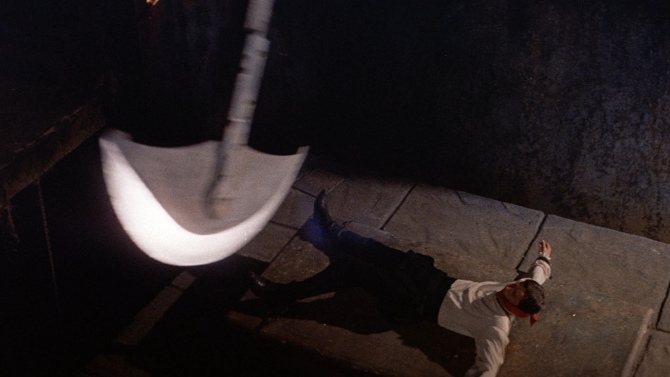
After Roger Corman’s major success with House of Usher (1960), he promptly turned to adapting another Edgar Allan Poe story to start a franchise of sorts, with The Pit and the Pendulum (1961) being an even bigger win... with it making over two million dollars on a modest budget of only three hundred thousand. Getting Vincent Price (House of Wax; Laura) back after House of Usher’s critical and commercial winnings, this time he plays Nicholas Medina, a tortured soul living in a tomb of a castle with his servants after his gorgeous wife Elizabeth (Barbara Steele – Black Sunday; The Horrible Dr. Hichcock) has seemingly died of a massive heart attack brought on by fright. Feeling as if he is truly cursed, he resides in the same place that his sadistic Spanish Inquisition father once tortured his victims, where his mother and uncle died, and now where his wife has met her untimely end. It has become so bad that even Nicholas’ sister Catherine (Luana Anders) has returned home to try and ease his sorrows.
-
Strike… You’re Out!!!
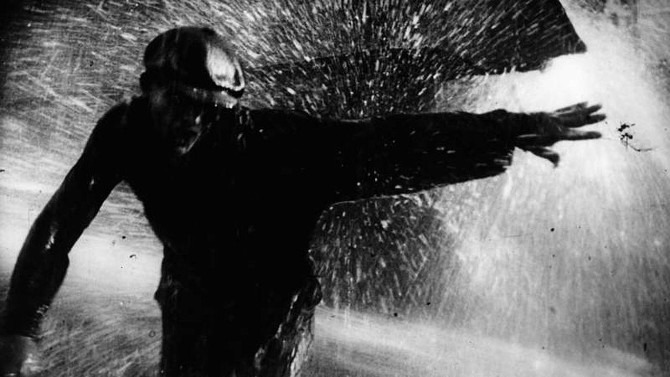
StrikeJanuary 28, 2018An influential and innovative director that is sadly unknown to multiple generations of movie enthusiasts is Russian filmmaker Sergei Eisenstein, who would have turned one hundred and twenty a couple of weeks ago on January 10th. Best known for Battleship Potemkin (a laudable feature that will be reviewed here in due course), those in the know also point to his first full length motion picture, Strike, as being a vital piece of film history (it is often cited along with Orson Welles’ Citizen Kane as being one of the most audacious and impressive efforts by a first time filmmaker). Released in 1925 (the same year as Potempkin), though set in 1903, the aptly named picture, told in six parts, looks at a factory workers’ strike in pre-Revolutionary Russia. A fascinating study of early socialism versus capitalism from the Soviet perspective, the workers are close to their tipping point. . . looking for better hours, higher pay, less work for the child labourers and other such things. With the elite sensing their waning drive, they warn their spies on the inside to keep both eyes open for civil unrest – each of these men have an animalistic nickname, their personas connected to the beast they have been named for.
-
Babysitting is Dangerous
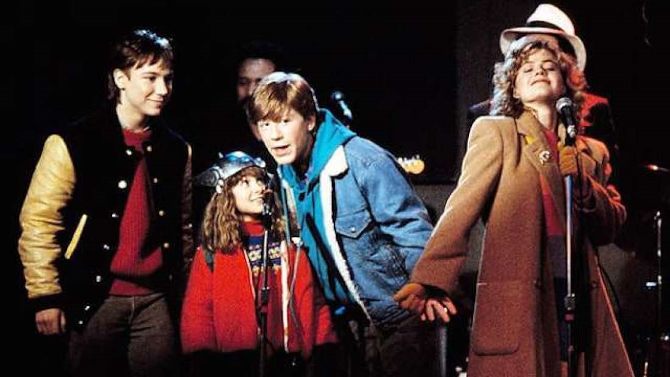
Adventures in BabysittingJanuary 16, 2018Going all the way back to Chris Columbus’s first directorial effort, 1987's Adventures in Babysitting is the way PG family films should be made, entertaining for both adults and kids, with just the right amount of edginess. Though incredulous, the entertaining narrative follows teenager Chris (Elisabeth Shue), who, after boyfriend Mike (Bradley Whitford) cancels on their anniversary dinner, grudgingly takes a job babysitting an adventurous eight year old, Sara (Maia Brewton), instead. Her older brother, 15 year old mild-mannered Brad (Keith Coogan), is supposed to be staying at his quirky buddy Daryl’s (Anthony Rapp), but after hearing that Chris is babysitting, sticks around.
-
What a Riot
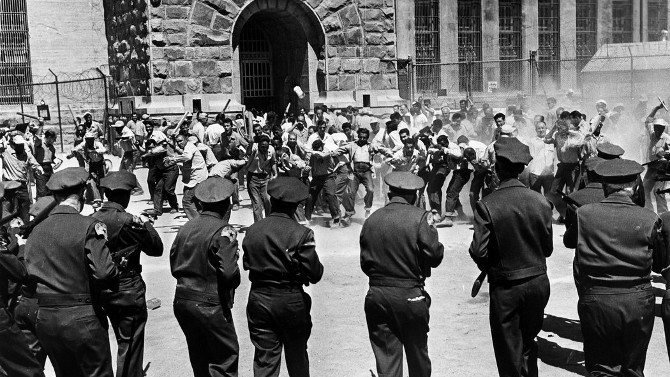
Riot in Cell Block 11January 14, 2018With a stellar cast, those behind 1954's Riot in Cell Block 11 did not take the approach of procuring the biggest names available, instead, they brought together a group of character actors that lived their parts – and all surrounded by real prisoners and guards, who played extras during production. Directed by Don Siegel (Invasion of the Body Snatchers; Dirty Harry), and produced by Walter Wanger (inspired to make the film after serving a four month prison sentence and being wholly unnerved – he was jailed for shooting his wife’s [Joan Bennett] agent, Jennings Lang, whom she was having an affair with – one bullet penetrated his hip, the other, his groin – clearly we know what he was aiming at), the team cast Neville Brand as a convicted murderer who heads up the riot (the former World War 2 combat soldier was the fourth most decorated American from the period), while his ‘Crazy’ second in command was developed by Leo Gordon (another convict who was shot in the gut during an armed robbery).
-
Morally Bankrupt
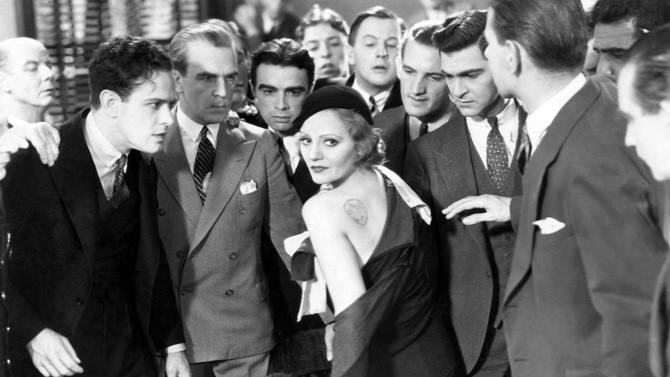
The CheatJanuary 12, 20181930's Hollywood films are rather intriguing. Though hit hard by the Great Depression (much like everywhere else), the escapism of movies still brought 60-75 million people into theatres each and every week (and, these numbers are for the worst times of the decade). The 30s also harkened in the era of the talkie – quickly putting an end to the silent film industry. The decade can also be split into two distinct periods: the five years before the Motion Picture Production Code (sometimes called the Hays Code) officially came into being (often referred to as the Pre-Code), and the five years after it was put into place – meaning that there was now a strict set of rules and regulations that were being strongly enforced. Both a curse and a blessing (many of the most talented directors found creative and visually clever ways to circumvent the Code – DeMille and Hitchcock are two that immediately come to mind), it did limit creative freedom in a major way, as sex, violence and language were severely censored – movies could no longer depict lacking morals (that is, unless the behaviour would be punished in the end).
-
Running Down a Dream
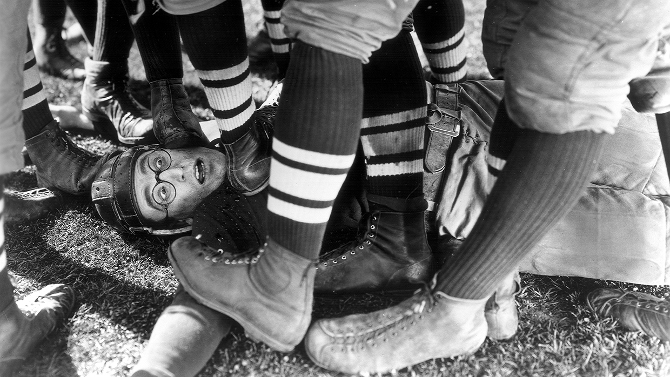
The FreshmanJanuary 7, 2018Setting out to film (firstly) the climactic football scene at the Rose Bowl (stadium) in Pasadena, California for his 1925 feature The Freshman, Harold Lloyd soon felt like he was lost – unable to sense the character and his feelings, not able to hit the right tone for his collegiate protagonist. Scrapping the work, he decided to return to Hollywood and shoot sequentially – a rarity for any motion picture. It was typical for Lloyd and his team to come up with the major set pieces first (a perfect example being the football sequence) – shooting it at the very beginning, but in this case, Lloyd felt like this format was better suited, as it would add depth and continuity as the actors grew into this very character driven story. Becoming a major spectacle (and Harold Lloyd’s highest grossing film), it spawned an immense number of college sports movie knock-offs that would dominate the theatre scene for the next several years (a prime example, Lloyd’s character is utterly inspired by a fictional college student found in a fake movie made up for this one titled “The College Hero” – two years later, The College Hero was released by Columbia Pictures). Following Lloyd’s Harold ‘Speedy’ Lamb (notice his nickname is the title of his 1928 New York set picture), the teen is heading off to Tate University – a school that is football crazy. While en route, he meets a shy, sweet hearted ingenue named Peggy (Jobyna Ralston) – timid love at first sight.
-
Poison Pen Letter
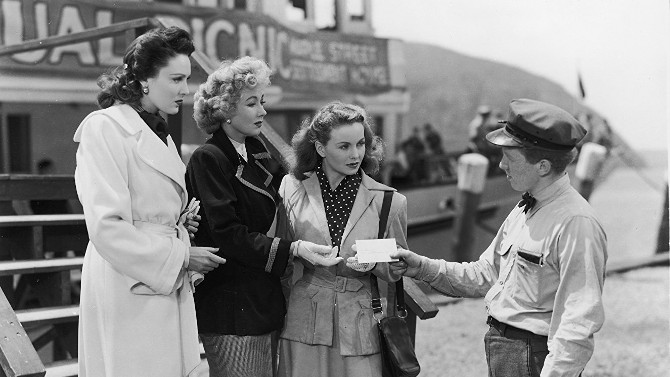
A Letter to Three WivesDecember 13, 2017As three volunteering women rush aboard a river-boat that takes children from underprivileged families on an annual daytrip, they receive an unexpected letter from one of their friends explaining that she has left their quaint little city behind with one of their beloved husbands in tow, putting each into a state of crisis. This is the suspenseful hook for the 1949 romantic drama A Letter to Three Wives, written and directed by Joseph L. Mankiewicz. The letter writer is voice over narrator Addie Ross (Oscar winner Celeste Holm) – the sultry, well connected dame is never shown, and the husband she has run off with is also left in the dark until almost the very end. Doing their duty as good citizens, Deborah Bishop (Jeanne Crain), Lora Mae Hollingsway (Linda Darnell), and Rita Phipps (Ann Sothern), three longtime friends, take the kids on the cruise and stop off to have a picnic, each flashing back (at a moment when they are not busy) to a time in which their significant other may have shown their true colours in regards to Addie.