 Films That Matter
Pit Stop
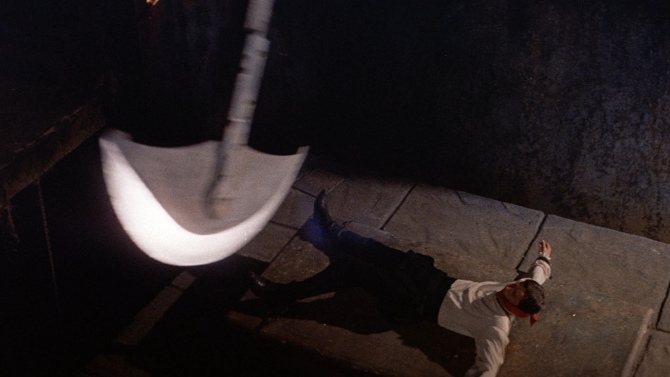
After Roger Corman’s major success with House of Usher (1960), he promptly turned to adapting another Edgar Allan Poe story to start a franchise of sorts, with The Pit and the Pendulum (1961) being an even bigger win... with it making over two million dollars on a modest budget of only three hundred thousand. Getting Vincent Price (House of Wax; Laura) back after House of Usher’s critical and commercial winnings, this time he plays Nicholas Medina, a tortured soul living in a tomb of a castle with his servants after his gorgeous wife Elizabeth (Barbara Steele – Black Sunday; The Horrible Dr. Hichcock) has seemingly died of a massive heart attack brought on by fright. Feeling as if he is truly cursed, he resides in the same place that his sadistic Spanish Inquisition father once tortured his victims, where his mother and uncle died, and now where his wife has met her untimely end. It has become so bad that even Nicholas’ sister Catherine (Luana Anders) has returned home to try and ease his sorrows.
-
A Boy and His Champ
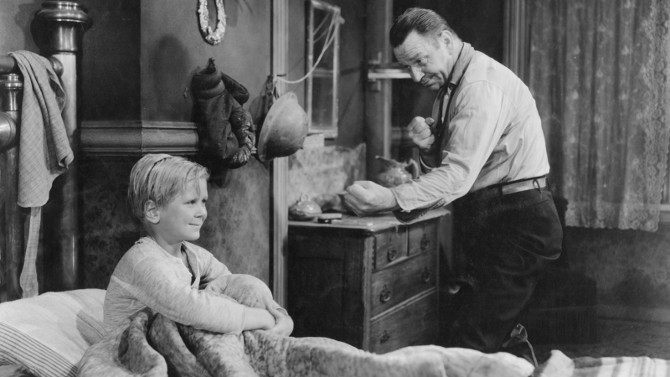
The ChampJune 16, 2017The story of a down-and-out boxer and his adorable son, 1931's The Champ, directed by King Vidor, is a tale of struggle and hardship as well as family, love and hope. The former champ, Andy Purcell (Wallace Beery – he won the Academy Award for Best Actor in a Leading Role in a rare tie with Frederic March), is for all intents and purposes, washed up. Though he is in the midst of training for his next bout, he continuously self-sabotages by turning to alcohol and then follows it up by playing dice, tossing the little money he has left away. His only saving grace is his young son, Dink (Jackie Cooper, one of The Little Rascals of the early sound era who went on to play Perry White in the first three Superman movies starring Christopher Reeve) – a child well beyond his years. A combination of tiny tramp and wise adult, he cares for his father like no one else. Trying to steer him away from booze and focus his wayward vision, he has a middling effect. Though his pleas reach his father, they do not stay his hand for long. The story is, in many ways, told through Dink’s eyes. The son of The Champ is usually followed by his trusty sidekick Jonah (Jesse Scott) and a plethora of other impoverished youths.
-
Star Pick with John Stocker
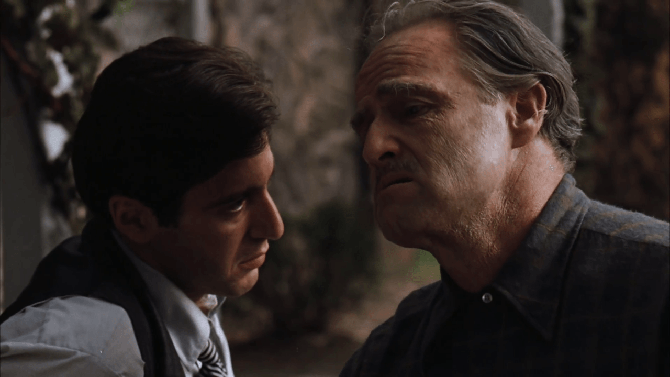
 The VoiceThe GodfatherMay 26, 2017
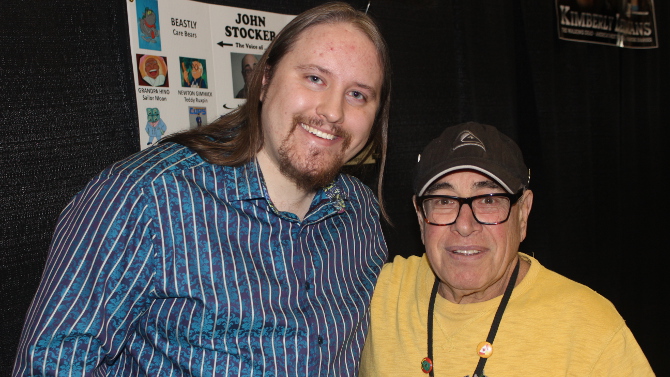
Anyone who grew up in the 1980s to mid 90s will fondly recall the wide array of quality animated shows that graced the television screen. The Teenage Mutant Ninja Turtles, Rupert and Dragon Ball Z may come to mind, perhaps the only three shows that acclaimed voice actor, and today’s Star Pick John Stocker, did not do a voice on in this era of superlative children’s programming. Working since the 1960s, Stocker has been an integral part of the animated field for more than forty years. With one hundred and thirty seven acting credits alone, the sometimes voice director has an illustrious pedigree, to say the least. Beginning with perhaps his most acclaimed turn, henchman Mr. Beastly in The Care Bears, he gave the character a maniacal laugh for the ages, along with a rich, textured voice that brings to life the entertaining yet clumsy hijinks of the never successful villain who had a good heart deep down.
-

A Whole New ‘West’World
WestworldMay 21, 2017Many of you have probably heard of, and may be watching, HBO’s stellar hit show, Westworld. An intriguing premise to say the least, quite a few people do not realize that it is actually based on a 1973 movie of the same name, written and directed by famed novelist Michael Crichton – his first foray into the world of film making. Set in the not so distant future, this sci fi flick is infused with a classic western twist, as guests head to an amusement park to live out their fantasies in one of three worlds (Roman World, Medieval World and of course, Westworld). With a hint of being a precursor to a dystopic world, we are introduced to our two leads, first time attendee Peter Martin (Richard Benjamin) and his more experienced friend – at least, in relation to the very realistic park, John Blane (James Brolin), in a spacious, futuristic plane on their way to the locale.
-
Star Pick with Rod Blackhurst
 Tow the LineThe Thin Red LineMay 16, 2017
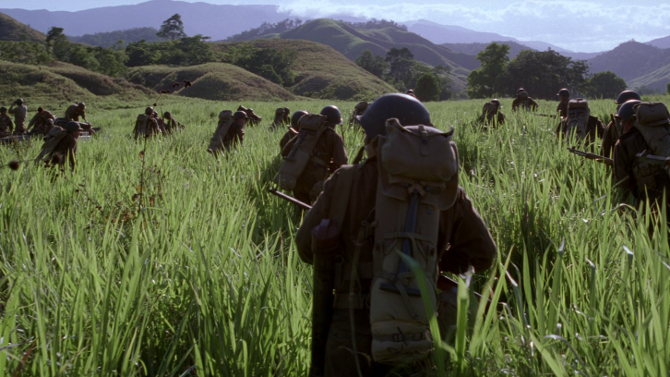
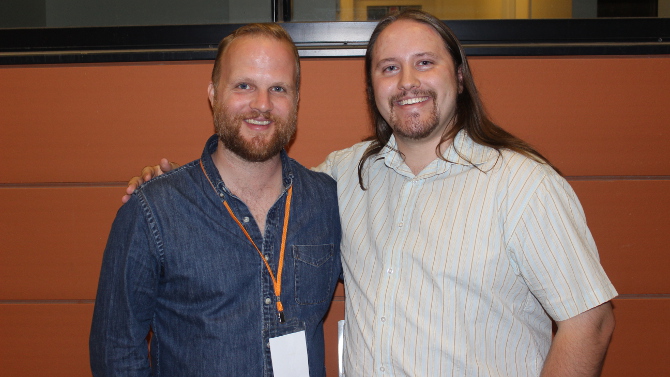
Pulling its title from the novel (written by James Jones) that it is based on, Terence Malick’s 1998 film, The Thin Red Line, which was nominated for seven Academy Awards, brings together a who’s who ensemble cast to tell the tale of an intense World War 2 story set in the Pacific Theatre, specifically, the Guadalcanal Campaign. Over the past several weeks you have read about the filmmakers behind the Tribeca Audience Award winning movie, Here Alone – first, producer Noah Lang, and secondly screenwriter David Ebeltoft. Today’s Star Pick will feature the motion picture’s director, Rod Blackhurst. An up and coming director in the business, he has had great success from the beginning. The first time I came across some of his work, funnily enough, was by accident.
-
A Double Dose of Hilarity
 Grips, Grunts and GroansDizzy DoctorsMay 12, 2017
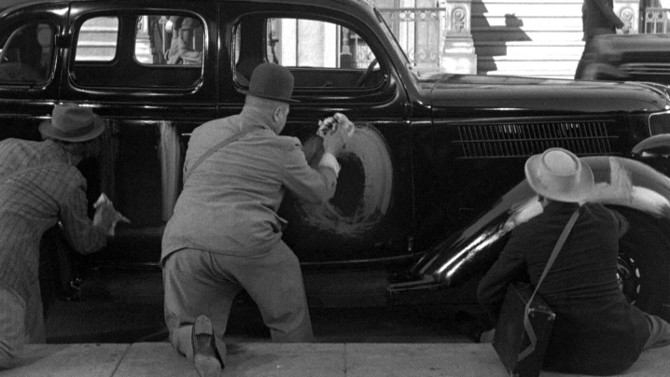
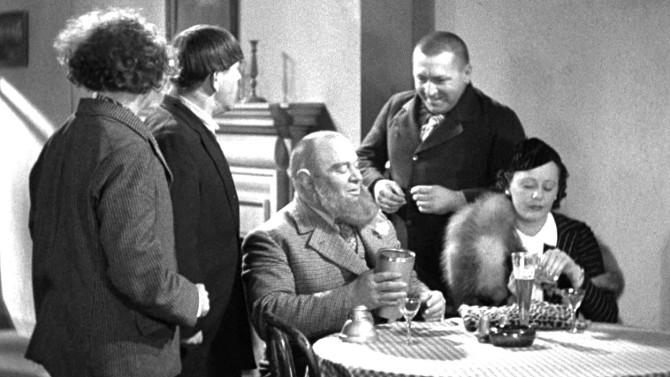
Gaining prominence during The Great Depression, it is no secret why the silly, farcical slapstick comedy of The Three Stooges was a hit with audiences – as their crazy antics onscreen were able to give those watching a short respite from their complicated, downtrodden lives. Signing on with Columbia in 1933, the trio of nyuksters we all now know (Larry, Curly and Moe) became ‘short film’ icons in 1934 (prior to this, it was Ted Healy and His Stooges), continuously developing new projects (sometimes with Shemp or others) until their last in 1970 (their stint at Columbia ended in 1959 with their 190th feature) – an impressive run to say the least. Their first short of 1937 (and twentieth overall), Grips, Grunts and Groans (a very Stoogey title) finds the impoverished triumvirate riding the rails. Fleeing after getting the better of a pair of railroad police, they find themselves in a wrestling and boxing club, somehow befriending a behemoth named Ivan Bustoff (Harrison Greene). Run by the mob, the gangsters have placed a whopping bet on their wrestler.
-
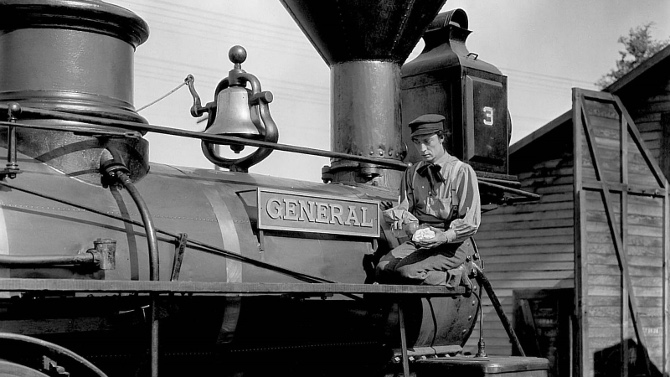
I Like Trains. . . In General
The GeneralMay 9, 2017The General, often considered to be Buster Keaton’s magnum opus (and for good reason – thankfully it was re-evaluated after its initial release, which was not kind), also falls into the realm of being one of the most important train and Civil War films ever produced. To those who do not know the motion picture, they will likely believe that the title refers to the military designation, though it is actually the name of the train the story revolves around. Basically an intricately plotted, lengthy chase, Keaton co-wrote and co-directed the story along with Clyde Bruckman, it being based upon a famous, true Civil War happening, ‘The Great Locomotive Chase’ (also known as Andrews’ Raid). Keaton takes on the role of Johnnie Gray, a train engineer living in Georgia just as the bloody 1861 hostilities boil over. In love with only two things, his beloved locomotive and an angelic, brown haired woman, Annabelle Lee (Marion Mack), he is told by his love that he too must enlist (like her father and brother). The first in line, they reject him, seeing his present job as being of the utmost importance for the South.