 Films That Matter
Pit Stop
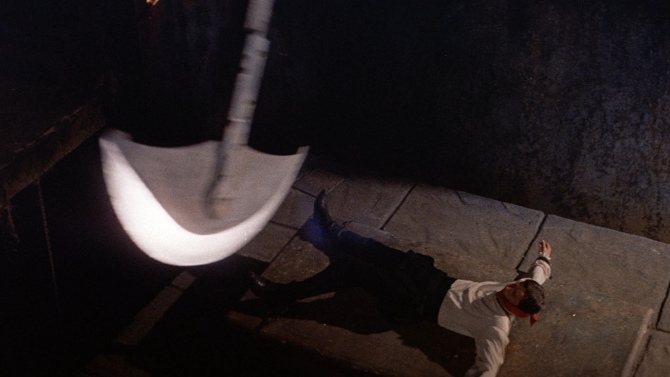
After Roger Corman’s major success with House of Usher (1960), he promptly turned to adapting another Edgar Allan Poe story to start a franchise of sorts, with The Pit and the Pendulum (1961) being an even bigger win... with it making over two million dollars on a modest budget of only three hundred thousand. Getting Vincent Price (House of Wax; Laura) back after House of Usher’s critical and commercial winnings, this time he plays Nicholas Medina, a tortured soul living in a tomb of a castle with his servants after his gorgeous wife Elizabeth (Barbara Steele – Black Sunday; The Horrible Dr. Hichcock) has seemingly died of a massive heart attack brought on by fright. Feeling as if he is truly cursed, he resides in the same place that his sadistic Spanish Inquisition father once tortured his victims, where his mother and uncle died, and now where his wife has met her untimely end. It has become so bad that even Nicholas’ sister Catherine (Luana Anders) has returned home to try and ease his sorrows.
-
War, What is it Good For?
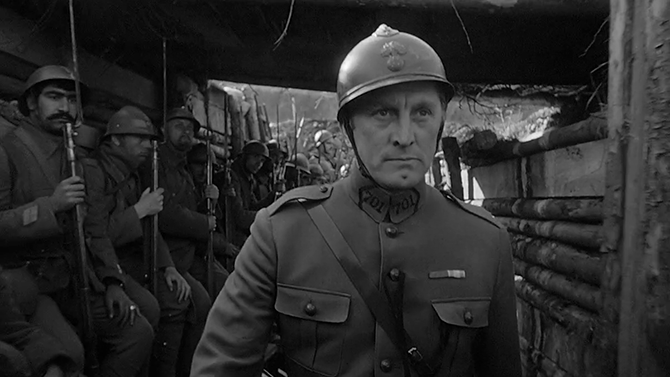
Paths of GloryMarch 2, 2014Stanley Kubrick, one of the great directors of the 20th Century, was a unique artist who was able to experiment with many different genres throughout his four plus decades of work. From film noir to horror, Kubrick’s movies were varied so that no two were similar, other than perhaps in theme. Of his 13 motion pictures, only two were war based, with the 1987 Vietnam narrative Full Metal Jacket being one of his most iconic. Yet, I am going to talk about his earlier anti-war film, the 1957 classic Paths of Glory.
-

Cuckoo’s Nest a Classic Film
One Flew Over the Cuckoo's NestFebruary 23, 2014We are now less than one week away from the Academy Awards and I thought it would be a good time to visit one of the biggest Oscar winning movies of the 1970's – the classic 1975 motion picture One Flew Over the Cuckoo’s Nest – which took home five of the biggest prizes; namely, Best Picture (a young Michael Douglas won for producing the movie), Best Actor in a Leading Role, Best Actress in a Leading Role, Best Director and Best Adapted Screenplay.
-
‘Misery’ Anything But for Film Audiences
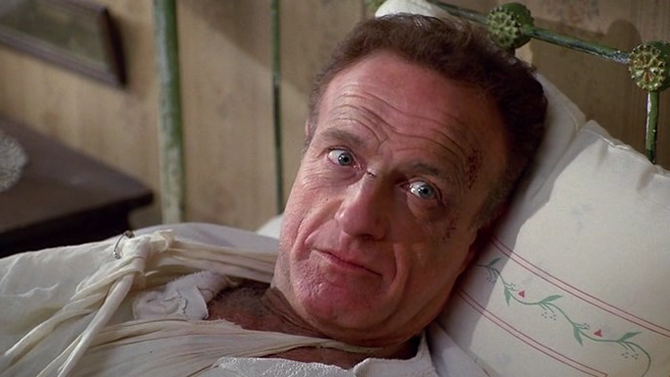
MiseryFebruary 17, 2014After looking at an Academy Award winning picture in Casablanca and a best actor in a leading role in Philip Seymour Hoffman in Capote, it is time to look at a female lead that has taken home the big prize. This will also be the first movie that I have looked at that is an adaptation of one of horror maestro Stephen King’s novels. As those of you who watch a lot of movies will know, Stephen King’s creations usually turn out one of two ways on film – an absolute train wreck or an entertaining and very strong effort; this movie falls into the latter category. By this point, some of you may have already figured out that I am reviewing the 1990 dramatic thriller Misery.
-
Safety Last! Talent First
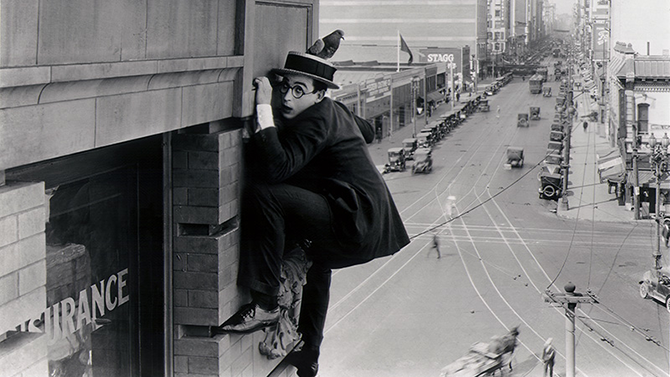
Safety Last!January 14, 2014This week I’m bringing us back ninety-one years to 1923. The silent era was dominated by a few comic juggernauts. Even to this day, the names of Charlie Chaplin and Buster Keaton are synonymous with their great silent films featuring brilliant physical comedy. One name that has almost been lost to time though is Harold Lloyd, who completed the triumvirate of powerhouse comedians in the 1920's.
-
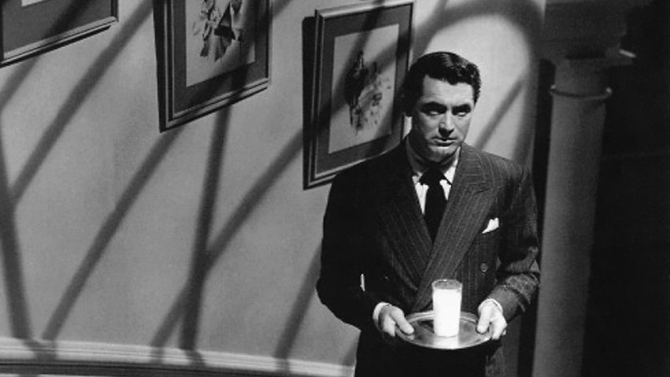
Fontaine Shined Bright
SuspicionDecember 30, 2013This is the second week in a row that I have had to begin with the sad news of another death of a film legend. Joan Fontaine, the actress who gained fame for playing threatened wives to possibly dangerous husbands in the early 1940s, passed away at the age of 96 last week.
-
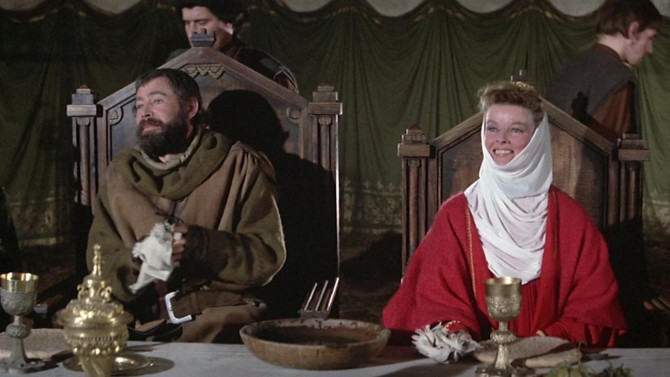
A Royal Pain
The Lion in WinterDecember 23, 2013My plan for this week was to write a review on the Christmas classic It’s A Wonderful Life, but after the passing of legendary Irish born actor Peter O’Toole, who is best known for his amazing portrayal of T.E. Lawrence in the epic Lawrence of Arabia, I thought it would be fitting to turn my gaze to another darker Christmas movie, the 1968 historical drama The Lion In Winter, directed by Anthony Harvey.