 Films That Matter
A Lawyer, a Mortician, and a Professor Walk Into a Morgue...
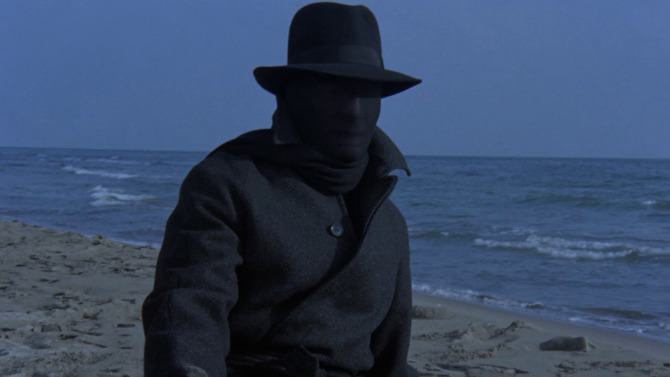
One of the trends of the gialli, when possible, was for the film making team to attract a formerly successful Hollywood star who had aged out of his heyday a bit... think The Pyjama Girl Case who nabbed Ray Milland, The Cat O’Nine Tails starring Karl Malden, or The Killer Is On the Phone featuring Joseph Cotten... and, with today’s example, Farley Granger leading So Sweet, So Dead (1972). Directed by Roberto Bianchi Montero, the feature, which is also known as the less subtle The Slasher ... Is the Sex Maniac! follows a small city detective, Inspector Capuana (a mustached Granger – They Live by Night; Side Street), who has recently moved to a larger locale in southern Italy.
-
A Lawyer, a Mortician, and a Professor Walk Into a Morgue…
So Sweet, So DeadMarch 2, 2026One of the trends of the gialli, when possible, was for the film making team to attract a formerly successful Hollywood star who had aged out of his heyday a bit... think The Pyjama Girl Case who nabbed Ray Milland, The Cat O’Nine Tails starring Karl Malden, or The Killer Is On the Phone featuring Joseph Cotten... and, with today’s example, Farley Granger leading So Sweet, So Dead (1972). Directed by Roberto Bianchi Montero, the feature, which is also known as the less subtle The Slasher ... Is the Sex Maniac! follows a small city detective, Inspector Capuana (a mustached Granger – They Live by Night; Side Street), who has recently moved to a larger locale in southern Italy.
-
Cat Scratch Fever
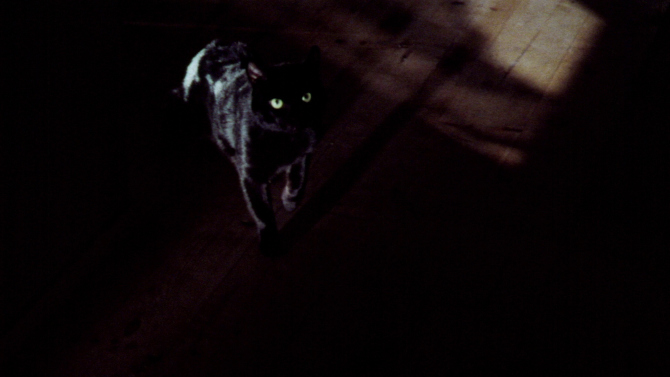
The Crimes of the Black CatFebruary 7, 2026You know you’re in for a doozy of a caper when you’ve got dead bodies piling up, a mysterious black cat wandering around (with all that revolves around the creature and its unlucky curses), a disappearing wicker basket (simply suspicious), and a seemingly occultist person wandering around whilst wearing a striking white cape... remember what George Costanza once said in the comedy Seinfeld – “I bet you he is mixed up in this. I don't trust men in capes”. Without further ado, we look at co-writer/director Sergio Pastore’s Italian giallo The Crimes of the Black Cat (1972) – sometimes also known as Seven Shawls of Yellow Silk. Clearly influenced by Dario Argento’s 1970 hit The Bird with the Crystal Plumage, and part of the massive gialli boom that happened soon after, things start off in Copenhagen, Denmark (it was actually shot there)
-
A Plague o’ Both Your Houses!
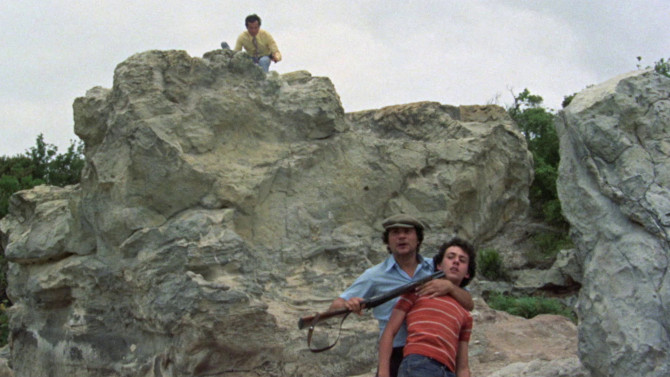
Cry of a ProstituteNovember 21, 2025What at first would seem to be your prototypical poliziotteschi (an Italian sub-genre infusing action and crime), Cry of a Prostitute (1974) – its more subtle titles: Love Kills and Guns of the Big Shots), directed by gritty film maker Andrea Bianchi (Strip Nude for Your Killer; Burial Ground: The Nights of Terror), actually holds more in common with the classic spaghetti western. Taking inspiration from Shakespeare’s Capulets and Montagues, the real life Hatfields and McCoys, and perhaps most importantly, films like Sergio Leone’s A Fistful of Dollars (1964), you’ll probably note that each reference relates to two feuding families... which is the main element of the story here.
-
Venice Flytrap
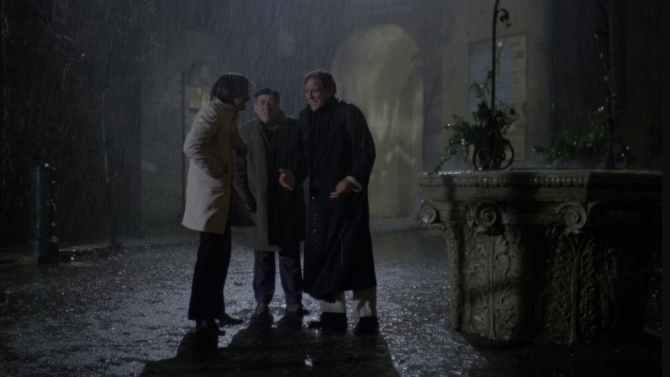
The Bloodstained ShadowOctober 12, 2025A giallo murder mystery released well after the craze of the early 1970s, The Bloodstained Shadow (1978), co-written and directed by Antonio Bido (Watch Me When I Kill), has more suspects than you may even be able to keep track of. Utilizing its sizeable cast to keep its twisty turns in the shadows, we flash forward some twenty years after a brutal unsolved strangling on the small island of Murano – which rests on the edge of Venice, as professor Stefano D’Archangelo (Lino Capolicchio) returns home for a calming visit after years away in the big city... it just so happens that a fetching artist, Sandra Sellani (Stefania Casini – Suspiria), is also returning home on the same train after being away for some time.
-
Bite the Bullet
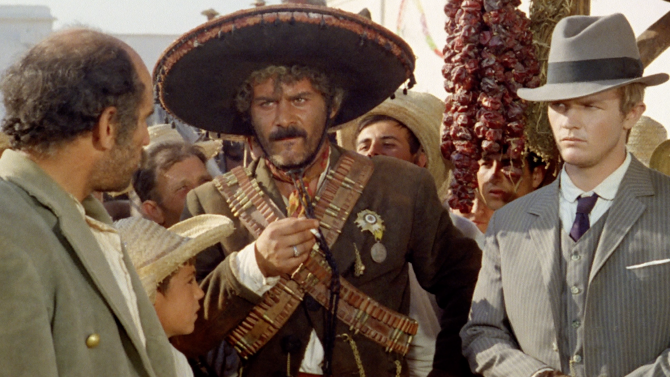
A Bullet for the GeneralSeptember 21, 2025A Spaghetti Western set during the chaotic time period of the Mexican Revolution (1910-1920), 1967's A Bullet for the General (sometimes known by its original Italian title Quién sabe?, in English – Who Knows?), directed by Damiano Damiani, is a lesser known gem found within the subgenre best known for titles like The Good, The Bad and The Ugly, Once Upon a Time in the West, and Django. Written by Franco Solinas – the famed Marxist political writer who a year earlier scribed The Battle of Algiers, his screenplay is filled with the tension, violent action, and the politics of this historical time period... and, to add a layer on top of a layer, this film is considered the first Zapata Western – a subgenre of the Spaghetti Western that delves into this era in Mexico, usually juxtaposing the themes of intense revolution with cold hard cash.
-
Super Chan Fan 3
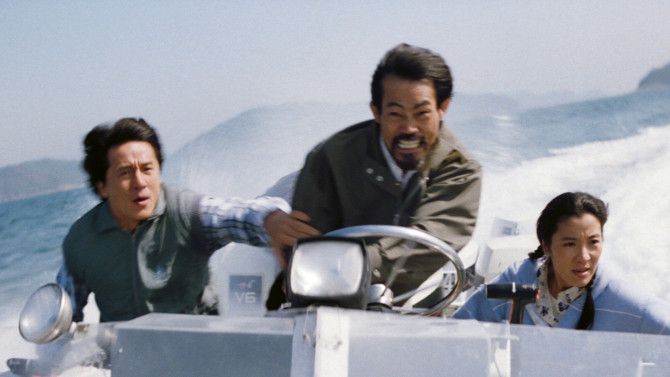
SupercopJuly 2, 2025There is no doubt that Tom Cruise has taken up much of the action attention over the past couple years with his possible finale of the Mission: Impossible franchise... which was released earlier this summer. Yet, there is another action franchise that also deserves some viewership –Jackie Chan’s Police Story, which started in 1985 and most recently hit theatres in 2013 (though there is talk of another one in the works). With parts one and two already reviewed here on Filmizon.com, here goes number three – which is sometimes called Police Story3: Supercop, but in North America is usually referred to simply as Supercop (1992). Directed by Stanley Tong – his first of six directorial collaborations with Jackie Chan, the star returns once more as Insp. Chan Ka Kui, this time often being referenced as the titular Supercop. Grudgingly sent by his longtime friend and boss ‘Uncle’ Bill Wong (Bill Tung) from his home in Hong Kong over to mainland China to help run a dangerous undercover sting on an underground drug smuggling operation, he must also leave behind his longtime girlfriend May (Maggie Cheung) for at least a month.