 Films That Matter
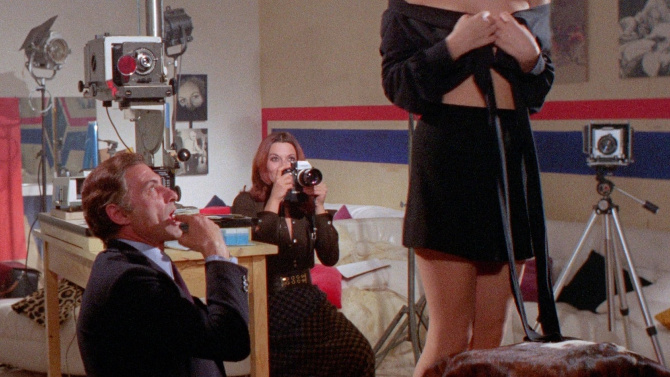
A Deadly Good Time
A slightly more obscure giallo released during the heyday of the craze, co-writer/director Silvio Amadio’s Smile Before Death (1972) is a psychological mystery thriller that certainly pushes the boundaries of the already boundary-pushing Italian genre. Amadio starts with a wild opener, as wealthy Dorothy Emerson (Zora Gheorgieva) is found brutally murdered by an unknown assailant... with it promptly being classified as a suicide by the incompetent police, this then turns into a slow burner of sorts.
-
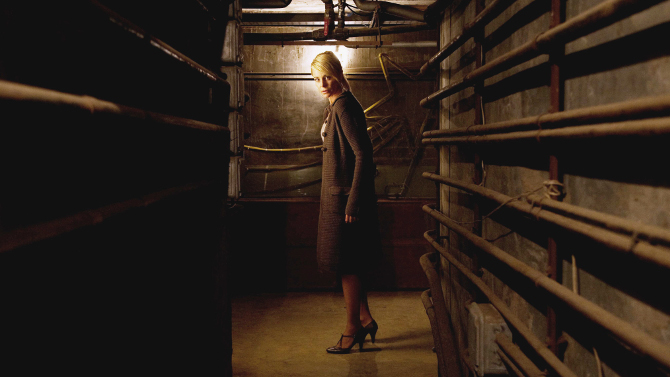
Shine a Light
Julia's EyesJune 3, 2016Our eyes are the windows to the world. They are one of our most vital senses, and losing our vision is, in turn, probably one of every persons’ biggest fears. That is why the Spanish horror thriller Julia’s Eyes is one of the spookiest film concepts to come out in recent history. Written by Oriol Paulo and Guillem Morales (who also directs the picture), the visionary tale twists and turns as our protagonist, Julia Levin
-
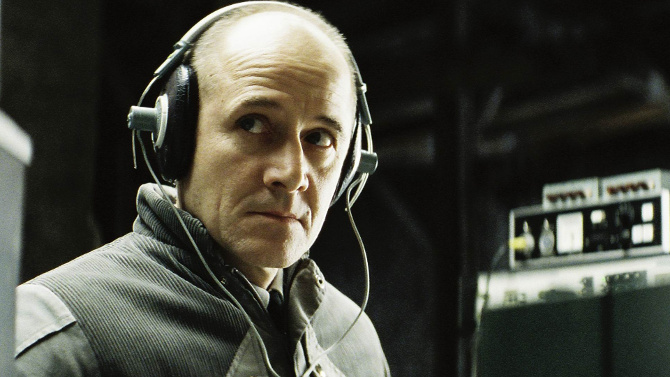
Are You Listening?
The Lives of OthersApril 17, 2016As viewers, we act as voyeurs, observing the intricacies of the character’s lives – their actions, interactions, relationships, affairs and countless other physical or mental manoeuvres. Films can act as therapy and relief, or can cause self-reflection, disgust or numerous other emotions depending on how we react to what we are scrutinizing on the screen. It may resemble something we have done in our own lives or could illustrate a seedy side of life that we have never even contemplated. A number of directors have cleverly infused their stories around the concept of voyeurism, adding a deeper level to our viewership, to great effect. The first filmmaker to come to mind is Alfred Hitchcock, who masterfully concocted Rear Window and Psycho around these themes, though there are countless other examples: Michael Powell’s Peeping Tom, Peter Weir’s The Truman Show and Stanley Kubrick’s Eyes Wide Shut are merely three more that fall within this category. A European motion picture that once again delves into this intriguing topic is Florian Henckel von Donnersmarck’s 2006 movie The Lives of Others.
-

A Journey of Discovery
IdaMarch 6, 2016The Academy Award Best Foreign Language Film from 2015 transports us back to 1960's Poland, where a young nun named Ida (also the name of the movie) will soon be taking her vows. Prior to doing so, the inexperienced girl takes a trip to visit the only family she has left living, an aunt named Wanda that she has never met.
-

The Break-In Breaks Out
The Break-InDecember 16, 2015As I sat in the dark theatre waiting for the projector to light up the New York State premiere of The Break-In, a Swedish film written and directed by Marcus Ovnell, I had two things running through my mind . . . and both related to my high hopes for the film. The first was that I had attended a panel discussion featuring Ovnell and Nathan Jacobs (writer/director of Killing Poe) on the continuing influence of Edgar Allen Poe on the world of film. The panel provided a nuanced discussion on the two movies (while also making sure to provide no spoilers of the upcoming showing of either film) and being that I am a gargantuan Poe fan, this had me enthused for the premiere. The second was that I have yet to see a poor film or television show come out of Scandinavia over the past several years (whether it is the Girl With the Dragon Tattoo trilogy, Jo Nesbo’s Headhunters or television series such as Wallander and Borgen, to name of few).
-

Eye Opening Experience
The Corpse of Anna FritzDecember 6, 2015The last ten years or so have been an extremely exciting time for horror and thriller films coming out of Spanish speaking countries. Whether a classic from Guillermo del Toro (The Devil’s Backbone, Pan’s Labyrinth), or other greats such as J.A. Bayona’s The Orphanage, Guillem Morales’ Julia’s Eyes or Oriol Paulo’s The Body – to name but a few, these films introduce interesting, unique, original or classic ideas and offer a scary spin on the horror/thriller genre. The Corpse of Anna Fritz adds to this golden age of Spanish language horror thrillers (with a warning that this one pushes the limits more than some of the others).
-
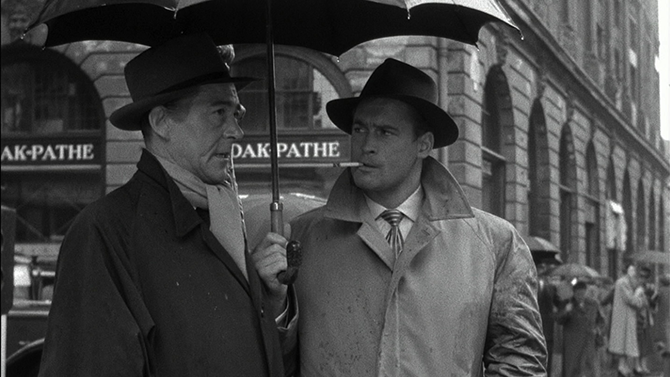
Rififi a Classic Crime Film
RififiApril 6, 2014Most scripts and movies are formed in one complete package, focusing on continuity, flow and character development as well as a definite beginning, middle and end. Yet some films are formed out of something different – a single shot, concept or idea that one then develops a picture around. It does not always work, but when it does, it is cinematic gold. This is the case for the 1955 French crime caper Rififi (originally titled Du Rififi Chez Les Hommes).