 Films That Matter
A Deadly Good Time
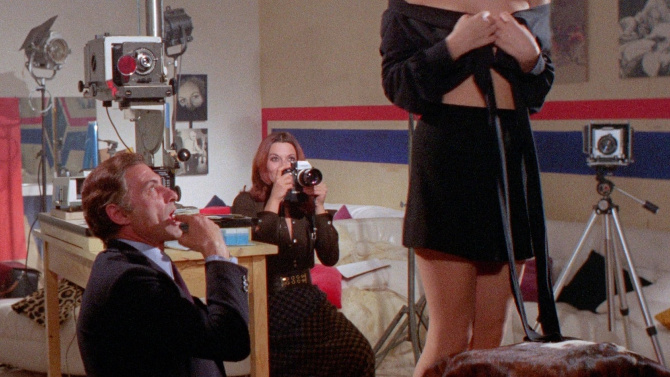
A slightly more obscure giallo released during the heyday of the craze, co-writer/director Silvio Amadio’s Smile Before Death (1972) is a psychological mystery thriller that certainly pushes the boundaries of the already boundary-pushing Italian genre. Amadio starts with a wild opener, as wealthy Dorothy Emerson (Zora Gheorgieva) is found brutally murdered by an unknown assailant... with it promptly being classified as a suicide by the incompetent police, this then turns into a slow burner of sorts.
-

Coming of Age
Call Me by Your NameFebruary 15, 2018The third and final part of filmmaker Luca Guadagnino’s thematic ‘Desire’ trilogy (following 2015's A Bigger Splash and 2009's I Am Love), 2017's Call Me by Your Name once again challenges its audience with themes of love (sometimes first) and loss, desire, sexuality and so much more. Nominated for four Academy Awards this 2018 (including Best Picture), the story, set in 1983, follows seventeen year old Elio (Timothée Chalamet – nominated for Best Actor in a Leading Role), a whip smart, though somewhat aloof and self-conscious teen who is spending the summer with his family in Northern Italy – he is a voracious reader and talented musician (a near prodigy). His father, Mr. Perlman (Michael Stuhlbarg), is an archaeology professor who has invited a graduate student, Oliver (Armie Hammer), to aid him as a research assistant.
-
Fatal Femme
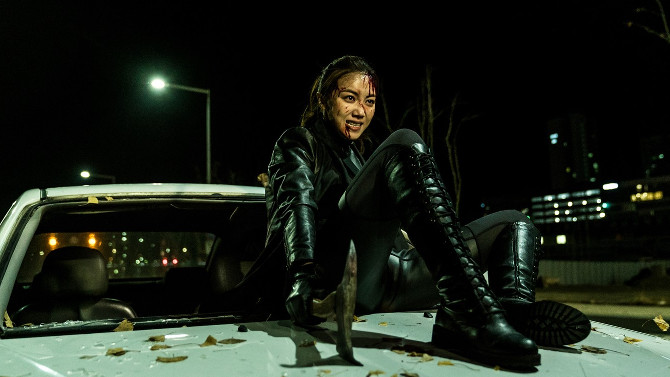
The VillainessJanuary 5, 2018Coming off like a combination of Oldboy, The Raid: Redemption, La Femme Nikita, Kill Bill, and the Jason Bourne franchise, 2017's The Villainess, a South Korean film co-written and directed by Byung-gil Jung, is an action packed adrenaline ride that carves out an interesting angle within the genre. Opening with a mostly first person action sequence, it is intensely claustrophobic, showing a supremely talented killing machine of a woman carving her way through a narrow hallway only to find herself in a room packed with another ominous group of villains. Setting the tone from the very beginning, the viewer quickly understands that there is a grace to the way the camera moves (a dynamic visual panache that is all the more impressive when you realize a good portion of it is done without computer generated effects) – though it is a very bloody flair to be sure.
-
Mais Oui. . . Parapluie
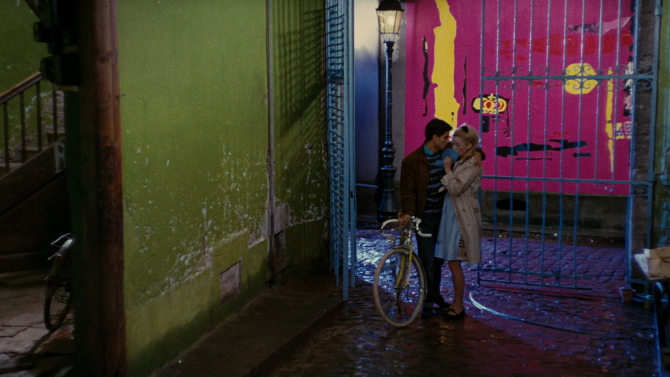
The Umbrellas of CherbourgDecember 3, 2017Landing somewhere in between French New Wave, older classic French features and the grand Hollywood musical, Jacques Demy’s 1964 colourful kaleidoscopic romantic drama, The Umbrellas of Cherbourg, is most definitely not your typical movie musical. Firstly, there is no dancing (a standard in musicals), rather, Demy orchestrates many lengthy choreographed takes with his camera – it adding the graceful movement that would usually be asked of the actors. But, more importantly, and at greater risk, every single line of dialogue in Cherbourg is sung. Perhaps a bit daunting to movie audiences, it does, in some ways, make sense. I have never bought into the idea that people would just randomly break into song and dance at any given time. . . only a few films giving some sort of reason for this (see Singin’ in the Rain and La La Land), so it is more plausible, in this vividly toned movie landscape, that people naturally sing all the time – this means no distracting breaks between song and talk.
-
You Can Check Out… But You Can Never Leave
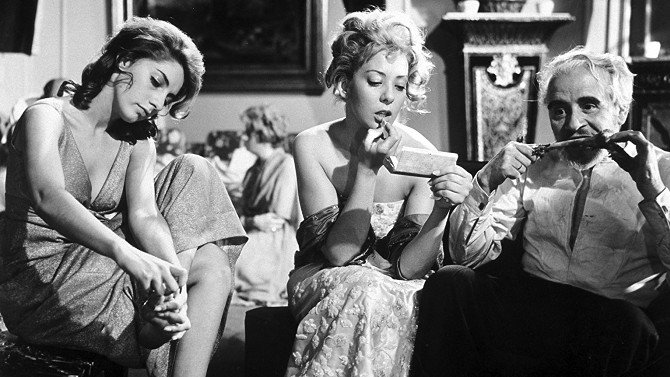
The Exterminating AngelDecember 1, 2017Most of you will have likely picked up on the abbreviated version of the quotation utilized above as the title. . . a reference to the seminal Eagles song ‘Hotel California’, which, in many ways, could be the title track of Luis Buñuel’s 1962 fantastical dramedy The Exterminating Angel. To further my point, look for the italicized text throughout the review, as it will be part of the classic rock tune. From the mind of the master of surrealism comes this, just another one of his mind-benders, a tale that follows a group of extravagant people who come together for a lavish dinner party. And, though the mansion is such a lovely place, the servants who have worked there obediently for many years almost instinctively decide to depart (despite their duties), as the guests arrive. Only the major-domo, that is, the head servant of the household, stays to help.
-
Clap for the Wolfguy
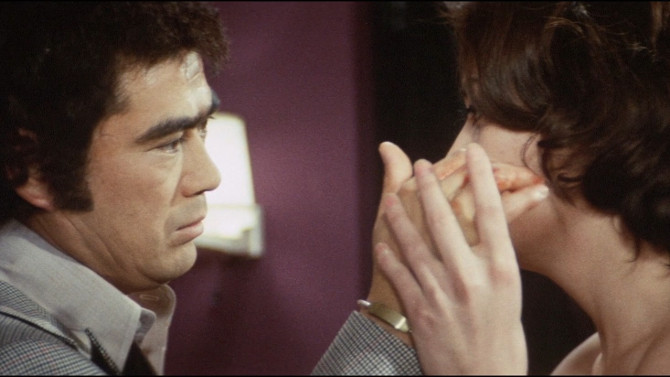
Wolf GuyOctober 17, 2017One of the weirdest mash-ups ever to grace the silver screen, 1975's Wolfguy: Enraged Lycanthrope fuses martial arts action, an investigative crime tale, political conspiracy, sci fi elements, and horror concepts within the box of a B movie exploitation piece. With a title like that, you can probably guess that it is a foreign film, translated to English from Japanese, in this case – these films are often labelled under J-horror. For those linguists out there, you will know that lycanthrope means a werewolf, and Akira Inugami (Shin'ichi “Sonny” Chiba) is the last survivor of a long line of these beasts – the rest of them hunted and killed by those afraid of anything outside of the norm. He uses his wolfish powers to investigate unusual crimes.
-
A Deadly Game of Cat and Mouse
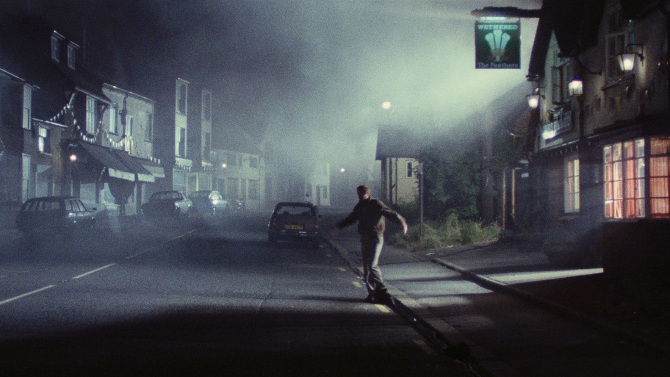
The Black CatJuly 25, 2017If thou darest, journey into the darkest depths of the supernatural gothic giallo thriller, Lucio Fulci’s 1981 horror feature The Black Cat, loosely based upon the Edgar Allan Poe short story that analyses the “spirit of PERVERSENESS” found deep within every human. A warning for those with a feline phobia, this can be seen as the Cujo of cat films. Available in either Italian or the English language, the meandering tale is absurd in a sense, but a whole lot of fun. For the first fifteen or so minutes, we are not exactly sure what is happening, yet Fulci develops an intoxicating aura. Set in the English countryside, it seems like a black cat, with eerie yellow eyes, is killing people in the quaint little village. Often showing the feline’s perspective, we swiftly stock its prey too, eyeing the next kill.