 Films That Matter
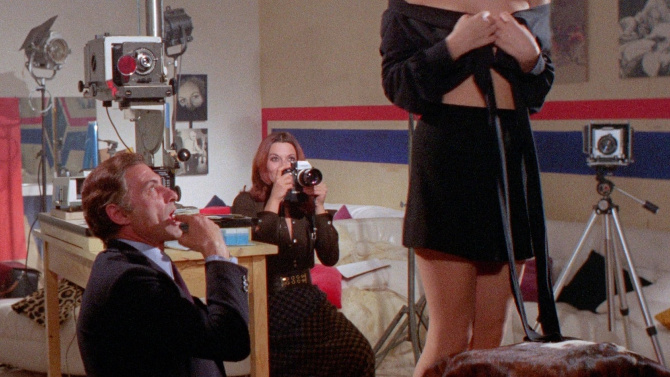
A Deadly Good Time
A slightly more obscure giallo released during the heyday of the craze, co-writer/director Silvio Amadio’s Smile Before Death (1972) is a psychological mystery thriller that certainly pushes the boundaries of the already boundary-pushing Italian genre. Amadio starts with a wild opener, as wealthy Dorothy Emerson (Zora Gheorgieva) is found brutally murdered by an unknown assailant... with it promptly being classified as a suicide by the incompetent police, this then turns into a slow burner of sorts.
-
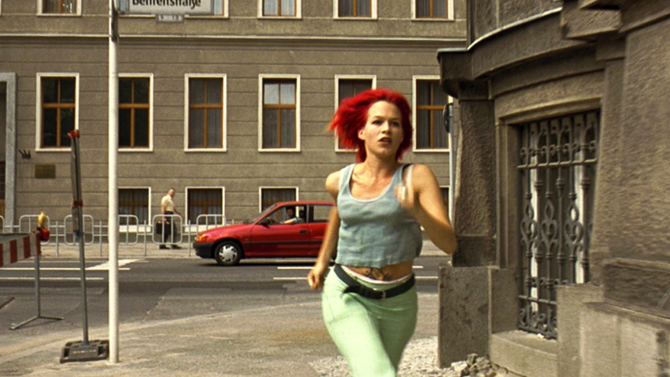
The Sands Run Through this Mind-Bender
Run Lola RunJuly 11, 2017Filmed with a frenetic flair to match its oh-so-frenetic storyline, writer/director Tom Tykwer has us sprinting along with the protagonist in his 1998 hit Run Lola Run. A unique, creative and somewhat out-there premise, this German motion picture is, in a way, reminiscent of Krzysztof Kieœlowski’s Polish film Blind Chance, which was reviewed on Filmizon.com back in June of 2016. Our mind is, simply put, amazing. We make decisions in a split second, and that moment can change our life just as quickly. Dealing with this idea, Tykwer introduces us to Lola (Franka Potente), whose just received a distressing call from her boyfriend Manni (Moritz Bleibtreu). A low-level criminal that is being tested by his boss, Lola was supposed to pick him up after his shady dealings. But, bad luck rears its ugly head (as her Moped is stolen) and Manni is forced to find his own way home. Sneaking onto the subway, he accidentally leaves the one hundred thousand German Deutsche Marks he is transporting on the train, after being nabbed for not purchasing a ticket. Witnessing a homeless man (Joachim Król) picking it up, he knows all is lost. Meeting his boss in only twenty minutes, he is desperate enough to threaten to rob a store just outside of the phone booth he is making the call from.
-
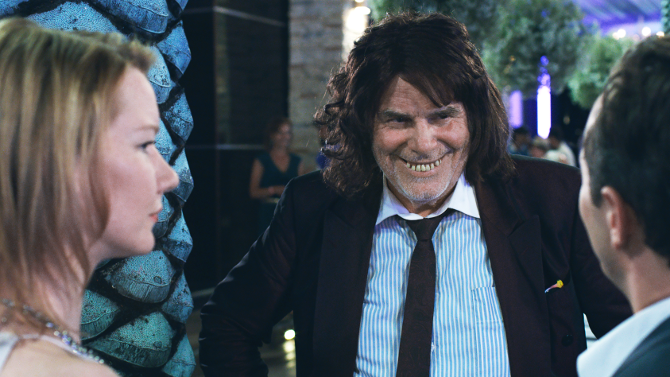
Persona Non Grata?
Toni ErdmannJune 25, 2017At its heart a story about a complex father/daughter relationship, with 2016's Toni Erdmann, writer/director Maren Ade charts her tale down a highly original course as the pair work out their many issues in the most unorthodox of ways. The German motion picture was nominated for Best Foreign Language Film at the Academy Awards this past year, with many seeing it as the outright favourite. . . it lost to the more politically relevant Iranian film The Salesman – Asghar Farhadi’s second win in this category. Winfried Conradi (Peter Simonischek) is an all-out kook – a prankster who loves playing games with everyone he meets. Like a child in a man’s body, we first meet Winfried as he receives a package from a courier. Claiming that it is his brother’s (and that he was just released from jail for putting bombs in the mail), he leaves, returning moments later with a new outfit and fake teeth, pretending to be his criminally eccentric sibling.
-
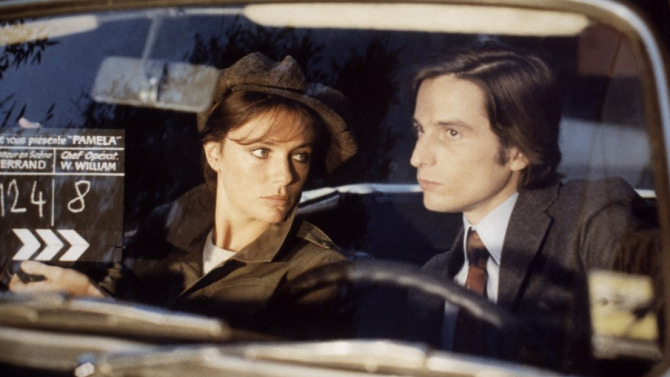
An Affair to Remember
Day for NightJune 9, 2017A very meta film about film making itself, François Truffaut’s 1973 romantic dramedy Day for Night transports us behind the scenes of a movie being made at the famed Victorine Studios in Nice, France (think classics like To Catch a Thief and Children of Paradise). The title itself is a reference to movie making, highlighting the term used when scenes are filmed during the day, only to make it look like they were done at night (by way of using filters). The Academy Award winner for Best Foreign Language Film in 1974, Truffaut casts himself as the movie’s director, Ferrand, who is currently filming the tragic, if clichéd, melodrama "Meet Pamela" – not likely to be the next classic.
-
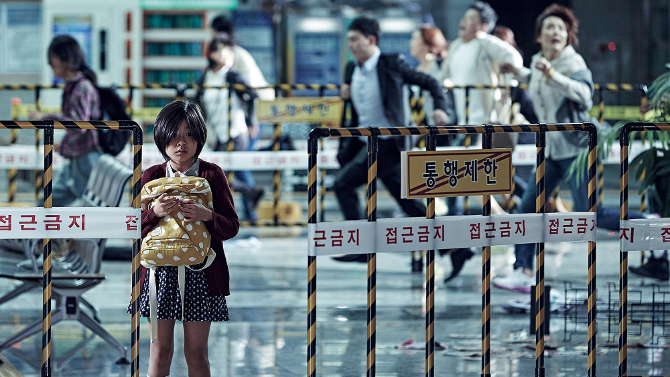
Seoul Train
Train to BusanMay 2, 2017Claustrophobia is a key component of the zombie horror sub-genre. Though the whole wide world may be the protagonist’s playground, there is something ultimately daunting about having millions (maybe billions) of the world’s population transformed into deadly infected corpses – each one drawn to those few still attempting to survive, encroaching on their oh-so-important space. This concept is pushed to its most tense breaking point in the 2016 South Korean horror film Train to Busan, co-written and directed by Sang-ho Yeon. As you may have guessed from the title, most of the story takes place on a confined, tightly packed train (a perfect setting for this type of flick). The narrative’s driving force is a father/daughter pair living in Seoul, Seok-woo (Yoo Gong) and Soo-an (Soo-an Kim). Having recently separated from his wife, the family is in disarray. It is a complicated matter in which Seok-woo, a self-centred individual, sees himself as a sort of selfless father and husband, working insane hours as a fund manager for the betterment of his family. His daughter (and wife – we must surmise), see him as a non-existent patriarch – selfish and caring about no one but himself.
-

Elle est Magnifique
ElleApril 4, 2017One of the most buzz-worthy performances of this past Awards season, Isabelle Huppert’s multi-dimensional turn as rape victim Michèle Leblanc in the French film Elle, directed by PaulVerhoeven, led to a wide array of nominations and wins, with her taking home the Golden Globe for Best Dramatic Performance but ultimately losing the Oscar to Emma Stone. The film also took home Best Foreign Language Film at the Globes. Beginning with the intense, jarring end of the horrific rape (the only witness, her less than helpful cat), Michèle (Huppert) doesn’t hysterically scream or phone the cops after her masked assailant has departed, but quietly cleans the mess left by the attack (and then herself) – simply returning to the normalcy of her life after doing the tasks.
-

The Handmaiden’s Tale
The HandmaidenMarch 31, 2017Director Chan-wook Park, a visual mastermind who concocted the intoxicating Stoker in 2013 (a loose remake of Alfred Hitchcock’s superb Shadow of a Doubt), his first, and to date, only English language film, follows it by putting his talents into making another striking, intricately plotted psychological mystery/thriller in The Handmaiden. Loosely based upon Sarah Waters’ novel "Fingersmith", the filmmaker moves the tale from Victorian era England to 1930s Korea – which is under Japanese colonial rule. Divided into three parts, he utilizes the technique to great effect, providing us with only part of the story each time. In many ways it’s like being given a puzzle with only the edges to start with, so we think we understand what is going on, as we have been given the outline, but only truly gain a stronger appreciation of its complexity and beauty when provided with the pieces that fill in the whole picture. Park’s unique style slowly divulges the true essence of this film by providing alternate angles, different perspectives, flashbacks and flash forwards (those essential remaining puzzle pieces).