 Films That Matter
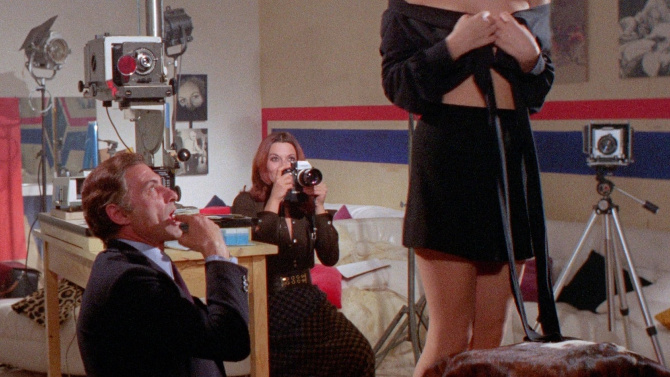
A Deadly Good Time
A slightly more obscure giallo released during the heyday of the craze, co-writer/director Silvio Amadio’s Smile Before Death (1972) is a psychological mystery thriller that certainly pushes the boundaries of the already boundary-pushing Italian genre. Amadio starts with a wild opener, as wealthy Dorothy Emerson (Zora Gheorgieva) is found brutally murdered by an unknown assailant... with it promptly being classified as a suicide by the incompetent police, this then turns into a slow burner of sorts.
-
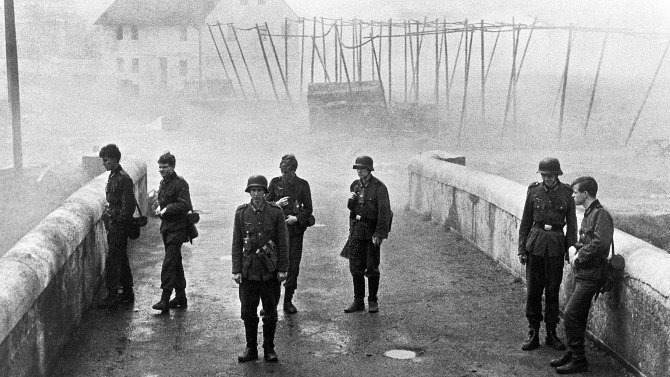
Bridge over Troubled Water
The BridgeMarch 24, 2017World War 2 films have long been an important staple of Hollywood movie making. Even from the early days of the conflict, filmmakers delved into the intense, worldwide happening, seeing the importance and relevance of showcasing such a heart wrenching, profound war that had astronomical consequences. Just think of Charlie Chaplin’s The Great Dictator or Michael Curtiz’s Casablanca as two premium examples. If there is one thing though that I have found frustrating, it is the cookie cutter way in which the Germans have been depicted – either as maniacal villains or as ludicrous buffoons. Though there are a few films, especially in the recent past, that have changed this trend, it has been a rarity to find a more nuanced perspective on the Second World War in relation to this aspect. Interestingly, in 1959 Austrian director Bernhard Wicki released a German feature titled The Bridge (in German, Die Brücke), the first anti-war film to come out of the country that lost the war. Revolving around a small group of teenagers, namely Hans (Folker Bohnet), Albert (Fritz Wepper), Walter (Michael Hinz), Jurgen (Frank Glaubrecht), Karl (Karl Michael Balzer), Klaus (Volker Lechtenbrink) and Sigi (Günther Hoffmann), they are a class full of schoolboys who are dealing with the universal aspects of being of that age – sometimes making things more than complicated. They struggle with their respective families, friends and girls, but also find camaraderie in their tightknit group. Living their lives as the intensifying war swirls just around their little city, and despite the horrendous happenings, we get the feeling that ‘boys will be boys’. When a bomb lands on the outskirts of town near a nice stone bridge, they unanimously decide that they are going to the edge of the river to investigate.
-
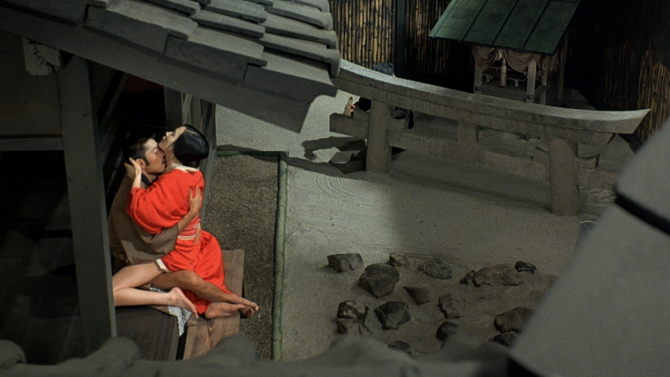
Sexual Sense and Sensibility
In the Realm of the SensesMarch 19, 2017In the Realm of the Senses has been called eroticism, a sharp political statement, an arthouse film, pornography, as well as a searing drama, and, it is likely that it has been defined as being so many other things as well. Like most boundary pushing pieces of art, it transcends the ability to label it as just one of these descriptive terms, combining all of them to create a unique and ever controversial piece of cinema. Released in 1976, it was only able to be made in the first place thanks to it being a Japanese/French co-production (listed as a French enterprise) – the unfinished film had to be shipped out of Japan and into France to avoid issues with strict Japanese censorship laws (it was processed and edited in Europe because of it). Banned in most countries upon first release (with many only lifting it completely in the 1990s and 2000s) – though it showed at numerous film festivals (the Cannes Film Festival had to orchestrate thirteen screenings due to demand), In the Realm of the Senses is still censored in Japan to this day.
-
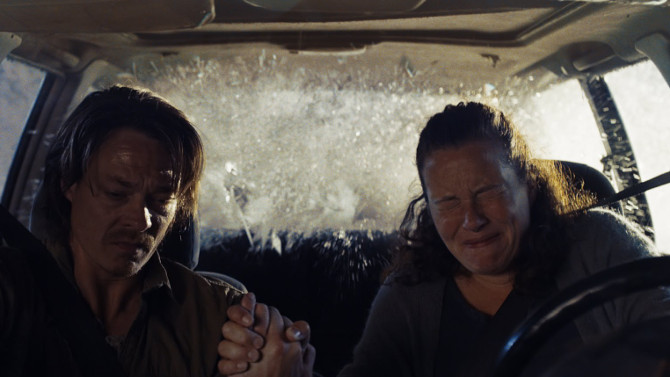
Ride Out the Wave
The WaveMarch 14, 2017Disaster movies live and die by their clichés. What brings people into the seats are the doom-laden spectacles, though it is precisely these over-the-top depictions that often overshadow the human element that is oh-so-important in every one of these genre pictures. It is a tightrope to walk, with features from the past decade or so like The Day After Tomorrow, 2012 and Pompeii wholly missing the point. A more realistic film that still delivers an intense natural disaster, but is rooted in the family that it portrays, is the 2015 Norwegian movie The Wave. Instead of ‘go big or go home’, writers John Kåre Raake and Harald Rosenløw-Eeg, along with director Roar Uthaug (who has been given the reigns of the Tomb Raider reboot starring Alicia Vikander) decide to take a more focussed, local, ‘home’ driven perspective, setting their story in a picturesque, almost otherworldly little fjord nestled in the heart of Norway. A small, tightknit community lives in the impressive locale; it takes in nearly as many tourists as the amount of villagers living there.
-
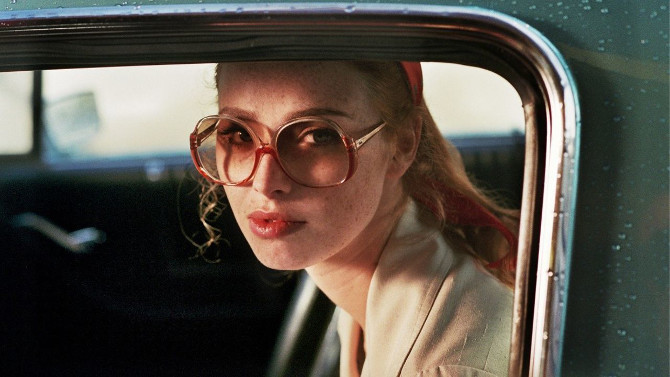
A Trip Down Memory Lane
The Lady in the Car with Glasses and a GunMarch 10, 2017Though The Lady in the Car with Glasses and a Gun provides viewers with a pretty good idea of what the basic plot may be about, it is much more difficult to pin down. The French film, directed by Joann Sfar, is rather divisive, the type of love it or hate motion picture that is rarely made in this day and age. A beautifully visual dreamscape of a film, it pays tribute to surrealist movies of both the silent era as well as the sixties and seventies. Think Belle de Jour and Valerie and her Week of Wonders. It is also somewhat like a neo-noir, as well as an old school mystery thriller, à la Diabolique or Vertigo. Sfar utilizes a bevy of shots, angles, split-screens and other pieces of cinematic trickery to draw us in. It is like watching something made by Brian De Palma, Luis Buñuel and Alfred Hitchcock – clear aspects of each director can been seen, creating a certain visual aesthetic (we may have to throw in a little Guy Ritchie to boot). It bounces around in your head, bringing to mind horror (gothic and Giallo), fantasy, crime, drama, while also having a sort of fetishist vibe – on top of all of the other things mentioned above.
-
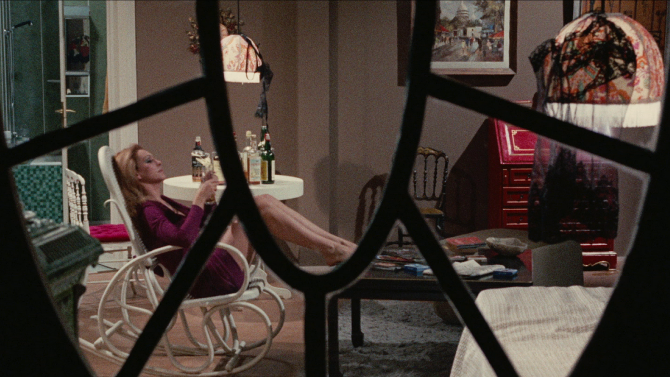
A Red Herring a Day Keeps the Eye Doctor Away
Death Walks on High HeelsMarch 7, 2017Maybe some of you have come across the term Giallo before. A type of Italian thriller that bubbled up in the sixties, it became very popular in ‘The Boot’ at the beginning of the 1970s. Filmmakers and screenwriters fused noirish murder mystery and tense thrills – usually with high doses of violence and more than suggestive nudity to create a crime or horror leaning story that could both scare and titillate its audience. Think of it kind of like when pulp fiction meets slasher film. One example that actually shows ‘some’ restraint in both of the above categories is Luciano Ercoli’s 1971 motion picture, Death Walks on High Heels. With definite connections to Alfred Hitchcock (Vertigo, Psycho) and many other thrillers of the past, as well as bringing to mind the 80's work of Brian De Palma (specifically Dressed to Kill and Body Double), the sordid tale follows a sultry stripper by the name of Nicole Rochard (credited as Susan Scott, a model who used the stage name instead of her original Spanish one, Nieves Navarro).
-
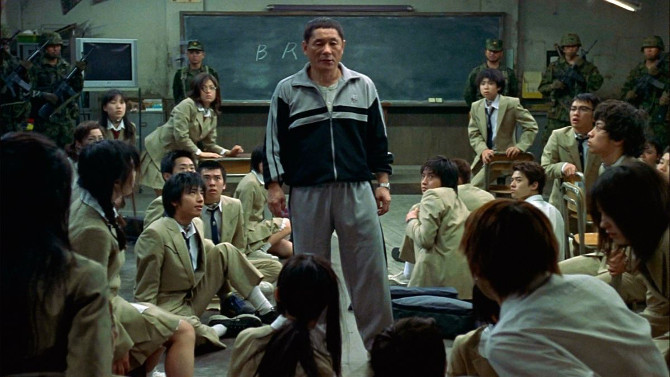
The Final Countdown
Battle RoyaleMarch 3, 2017A violent dystopic vision of the future, Kinji Fukasaku’s 2000 feature film Battle Royale sets up a scenario in which adults do not trust children – as a lack of jobs, student protests and many other ominous happenings have led to the government passing the controversial BR Act. Selecting one class each year, the students will be transported to an uninhabited island where they will have to duke it out until only one teen is left alive. A more intense, visceral example of The Hunger Games, it is set up to quash the idea of rebellion, dissidence and youthful exuberance – a horrific example of a totalitarian government with no scruples when it comes to curtailing the behaviour of its people.