 Films That Matter
A Deadly Good Time
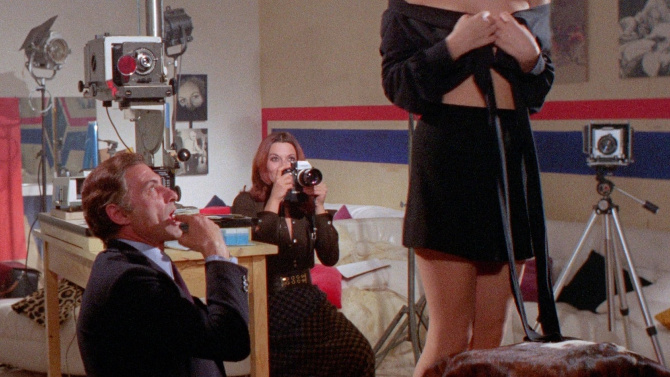
A slightly more obscure giallo released during the heyday of the craze, co-writer/director Silvio Amadio’s Smile Before Death (1972) is a psychological mystery thriller that certainly pushes the boundaries of the already boundary-pushing Italian genre. Amadio starts with a wild opener, as wealthy Dorothy Emerson (Zora Gheorgieva) is found brutally murdered by an unknown assailant... with it promptly being classified as a suicide by the incompetent police, this then turns into a slow burner of sorts.
-
On His Venetian’s Secret Service
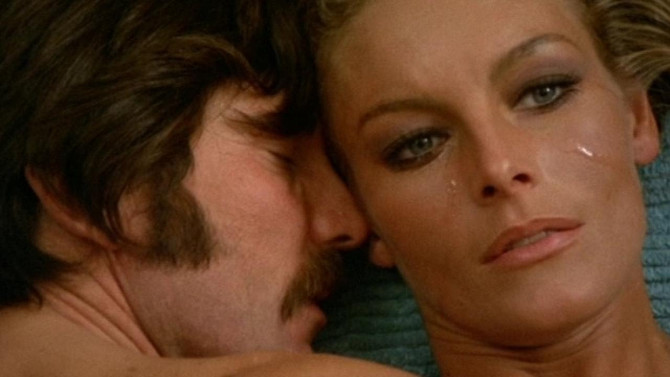
Who Saw Her Die?February 13, 2020Like a copycat killer, it is somehow unusual and rather suspicious that anytime a good film idea hits production, it seems like there is another similar project coming down the pipeline. . . sometimes referred to as ‘twin films’, countless examples exist – White House Down and Olympus Has Fallen, Hitchcock and The Girl, The Prestige and The Illusionist, Friends With Benefits and No Strings Attached, Darkest Hour and Churchill, The Descent and The Cave (anyways, you get the idea). Another intriguing example finds the horror classic Don’t Look Now having a doppelganger in the 1972 Aldo Lado directed giallo Who Saw Her Die? – though don’t jump to conclusions as to which one is the knock-off. Released a year prior to the 1973 feature, Who Saw Her Die? also finds itself set in the eerily beautiful city of Venice, where a couple is dealing with the death of their child. With numerous similarities, like a water-set funeral and an intimate sex scene, and though the set up and settings are similar, in many ways, they are separate entities.
-
Star Pick with Robert Sheehan
 Rough RoughDogmanJanuary 17, 2020
When I first started watching the excellent British series Misfits (somewhat scarily, about a decade ago), I was completely impressed with their lineup of talented young stars (all playing delinquents forced to do community service – who also happen to have superpowers). I expected many of them to go somewhere, and I have not been disappointed – Joseph Gilgun is arguably the most entertaining part of the American show Preacher (as Cassidy); Iwan Rheon scared millions of viewers as the vile Ramsay Bolton on Game of Thrones; Antonia Thomas is a main player on the hit series The Good Doctor (as Dr. Claire Browne); while my favourite character on the series was brought to vivid life by Robert Sheehan (who played the hilarious Nathan). A man of many dimensions, I then followed him to the Irish series Love/Hate, a role that showed his range as a very serious young man working in the Dublin underground crime scene. Also, over the years, he has had some promising roles in films such as The Mortal Instruments: City of Bones, The Messenger, Geostorm, Mute, Mortal Engines, and, currently has found his groove in North America on the acclaimed Netflix series The Umbrella Academy.
-

Chan Fan 2
Police Story 2January 5, 2020A sequel that picks up almost immediately where its predecessor left off, Police Story 2 finds our likeable officer, Chan Ka Kui (Jackie Chan) in a rather precarious position. . . reprimanded for his blatant destruction of the mall (in order to catch the villains at the end of the previous feature), not only is he demoted, but he also learns that all of his hard work was for naught – for drug kingpin Mr. Chu (Yuen Chor), who was supposed to spend life behind bars, has been released by a trifecta of doctors who have claimed that he only has three months left to live. Yet, this is only the beginning. . . throw in a spiralling out of control blackmailing case (in which a company’s holdings are being bombed), and more issues between Ka Kui and his spunky girlfriend May (Maggie Cheung), and we can easily say that he has his plate full.
-

Witchy Woman
Black SundayOctober 14, 2019Watching Mario Bava’s first credited directorial effort, Black Sunday (1960), is like experiencing those magical Universal monster movies from the 1930s and 40s for the first time. . . with a palpable atmosphere and a rich grounding of very specific lore (that would influence future films for decades to come – much like vampire lore, the crucifix still plays a crucial role), this fantastical tale of witchcraft cannot be easily forgotten. Opening with the gruesome genesis scene (a sort of flashback to the seventeenth century) that will carry the movie, a stunning witch has been cornered along with her servile lover Igor Javutich (Arturo Dominici). . . the clerics, along with the pitchfork and fire wielding townsfolk, know of only one way to vanquish the evil foe – to first pierce her face with a mask version of an iron maiden and then burn her at the stake. . . but, soon after accomplishing the first task, a rain like no other scatters the horde (as if the storm itself was summoned by Satan), the priests forced to bury the pair separately with a number of safeguards in place.
-
Raid to Perdition
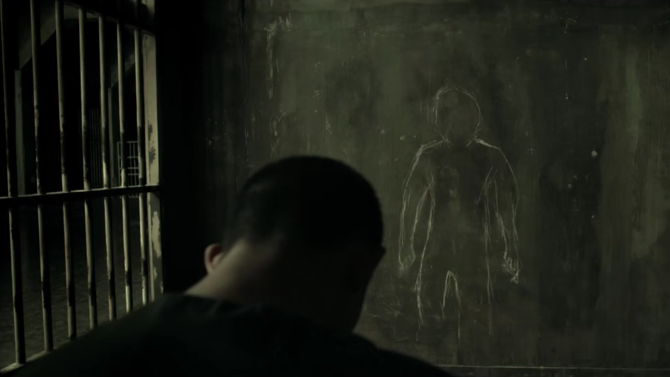
The Raid 2August 3, 2019If you’ve ever wondered what it would look like if fifty savage prisoners attempted to attack a single man in a prison stall, then 2014's The Raid 2 might just be for you. Before moving on, to let you in on how they shot the scene, a simply genius technique is used where the stall walls are on hinges – so that the handheld camera can get in and around the developing action. Written, edited, and directed by Gareth Evans, this Indonesian import is a sequel to 2011's The Raid: Redemption (also created by Evans), starting up a mere two hours after the previous film finished. Miraculously, you really do not need to see the original, as this story is easy to catch on to, despite its complexity when compared to the 2011 feature. If Redemption was shot in the style of a non-stop action video game, its sequel is as if John Carpenter (Escape From New York) and David Cronenberg (A History of Violence) came together with Martin Scorsese to create a twisty story along the lines of The Departed.
-
Star Pick with James Phelps
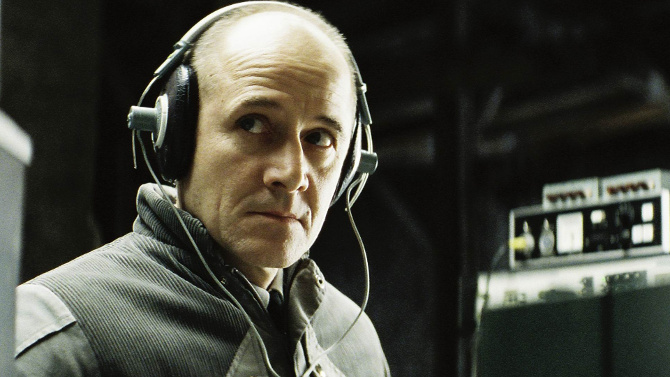
 Hear HearThe Lives of OthersJuly 23, 2019
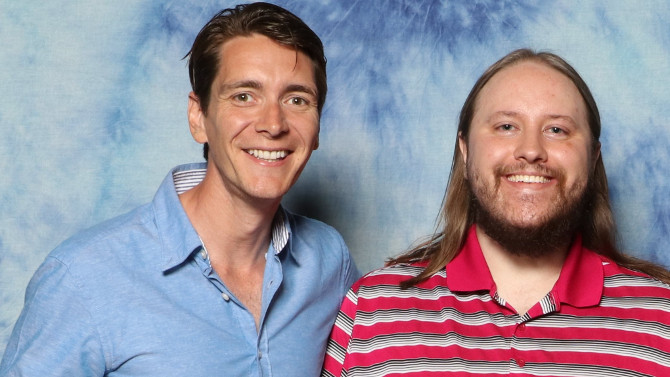
With a mischievous twinkle in the eye, much like their iconic onscreen characters, James and Oliver Phelps are the living embodiment of the Weasley twins. Quick, witty, and playful with their words, their banter is infectious. Perhaps it is no surprise, as they are, in reality, twins, but they feed off of each other like no other. . . entertaining, to say the least. For those of you who may have been living in a cupboard under the stairs for the past few decades, James and Oliver play Fred and George Weasley, the older twin brothers of Harry Potter’s best friend Ron. A vital part of one of the most successful franchises in film history, they bring so much levity as the loveable Hogwarts’ pranksters, often claiming some of the most entertaining moments in many of the pictures.