 Films That Matter
A Deadly Good Time
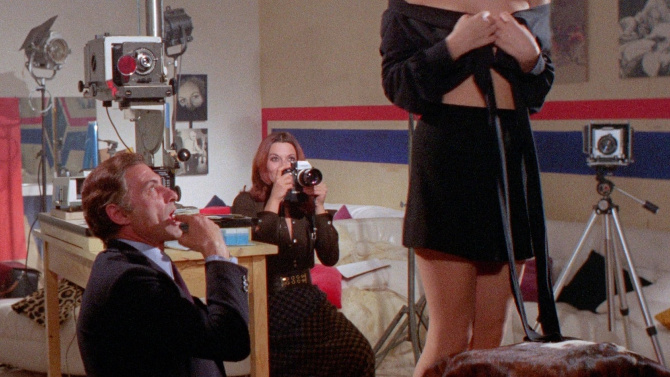
A slightly more obscure giallo released during the heyday of the craze, co-writer/director Silvio Amadio’s Smile Before Death (1972) is a psychological mystery thriller that certainly pushes the boundaries of the already boundary-pushing Italian genre. Amadio starts with a wild opener, as wealthy Dorothy Emerson (Zora Gheorgieva) is found brutally murdered by an unknown assailant... with it promptly being classified as a suicide by the incompetent police, this then turns into a slow burner of sorts.
-
Parisi Place
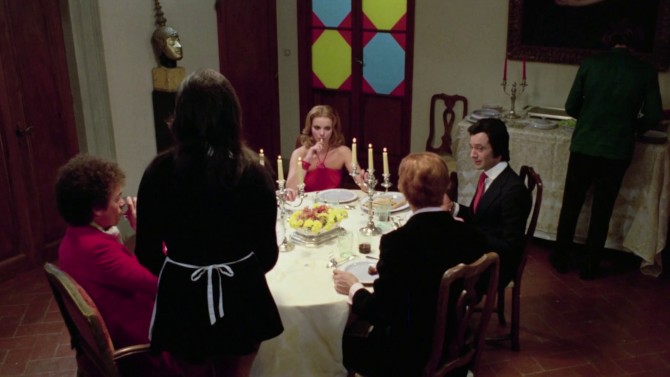
The Police Are Blundering in the DarkOctober 8, 2020And suddenly, a new contender arises. . . and by that I mean for all-time great giallo titles. Evoking the very essence of the Italian genre, 1975's The Police Are Blundering in the Dark, directed by one-and-done film maker Helia Colombo, may not have the sheer audacity of a title along the lines of Your Vice is a Locked Room and Only I Have the Key, or the more macabre imagination of Death Walks on High Heels, but it is murder mystery cool personified. With the police only arriving for the final few minutes of the film (making it all a bit misleading). . . the title is actually in reference to a newspaper headline highlighting the incompetence of the fuzz in rural Italy. With four nude models having recently been murdered (by way of scissors or some other sharp instrument) – oh, the humanity!!! – all roads somehow lead to the Parisi estate.
-
Silent Knife, Deadly Knife
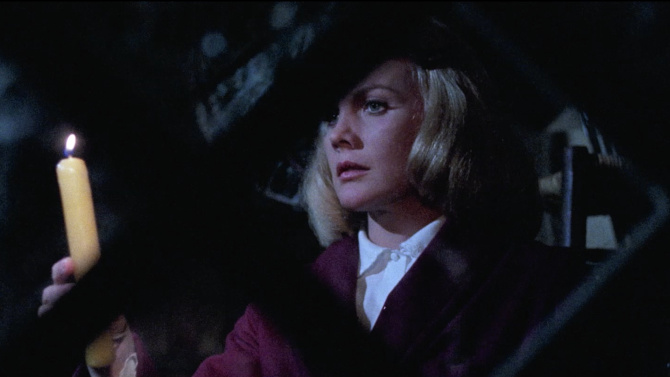
Knife of IceSeptember 10, 2020A giallo that mostly forgoes the prototypical violent splatters and liberal amounts of nudity for a good old fashioned Agatha Christie style murder mystery, 1972's Knife of Ice, also sometimes known as Dagger of Ice and The Ice Pick (memo: ice does not play any part in this motion picture), is the fourth and final time Italian film maker Umberto Lenzi (Seven Blood-Stained Orchids) and American actress Carroll Baker (Baby Doll; The Game) would work together. Baker stars as Martha Caldwell, a woman who has been mute since she was thirteen (it all stems from the fact she was rescued by her parents during a horrid train crash, only to then witness them burn to death – in many ways, the occurrence has stunted her at that very age). Opening with a fantastic sequence in which she attempts to conquer her fears by waiting at the train station for her incoming cousin, Jenny Ascot (Evelyn Stewart – The Psychic), it very much sets the mood – a tense, classical style intro (somewhat reminiscent of the many works of Hitchcock) that makes us feel for our struggling main character.
-
Inlet Outlet
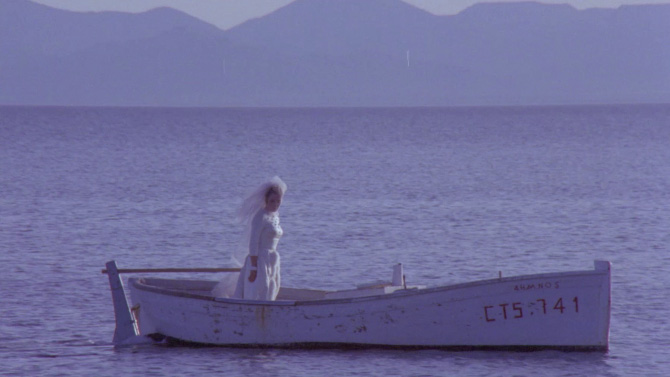
Bahía BlancaAugust 24, 2020It is always an intriguing prospect to watch the one film that doesn’t fit into a genre film maker’s oeuvre. For The Master of Suspense – Alfred Hitchcock, it was the screwball comedy Mr. and Mrs. Smith (circa 1941 – no, he was not alive to direct the Brad Pitt/Angelina Jolie vehicle in 2005), for Martin Scorsese, the master of the crime movie, it has to be the children’s film Hugo, and for Jesús Franco, the creator of stylish exploitation B pictures packed with sex and violence, 1984's Bahía Blanca fits the bill. The master of pumping them out fast, this was Franco’s tenth of ten movies made in 1984. . . a time when the independent industry was losing their avenue with exploitation flicks (and Franco’s famous touch of softcore was being eliminated by cinema being divided into either adult or mainstream), as Hollywood was learning how to create higher budget slasher flicks that blew these little pictures out of the water – meaning that, the writer/director found himself self-producing a lot of his own films (often disappearing or finding their way onto sub-par VHS – like this rarely seen picture).
-
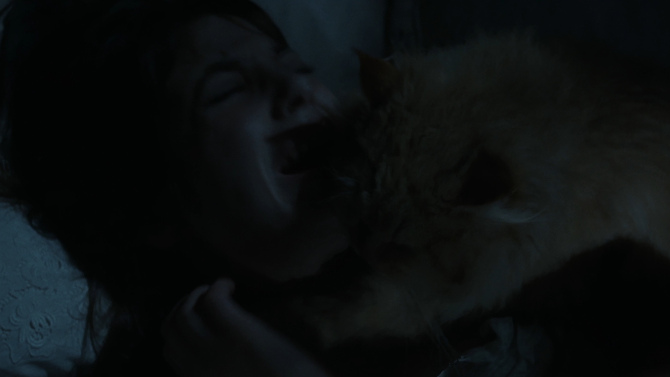
Cat Me If You Can
Seven Dead in the Cat's EyeAugust 11, 2020Expect some lowlifes in the highlands – after all, don’t they say, ‘expect less rather than moor, and you won’t be disappointed’; also, look for some individuals who put the clan in clandestine. Another warning, when dealing with crypts, loch it up and throw away the key. . . okay, enough with all of this wacky wordplay and welcome to one of those intriguing gialli that uproots from their native Italy to a foreign destination (if you haven’t yet guessed Scotland, my kilty pleasure of quirky puns was for naught); namely, Seven Deaths in the Cat’s Eye (1973). Directed by Antonio Margheriti (though you will see his English name, Anthony M. Dawson, in the credits), we are transported into the gothic world of the Scottish countryside alongside Corringa (Jane Birkin), a young woman that is part of the ancient family of MacGrieff – though MacGuffin might be a better name with all of the trickery found in the plot. Making the trip to her clan’s ancestral home (actually a gothic castle named Dragonstone), what she doesn’t know is that a murder has been committed in the cavernous basement of the abode (a location that would make Bruce Wayne jealous).
-
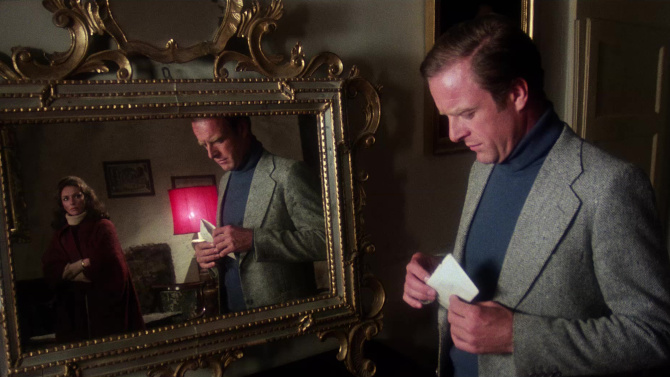
Giallo-Vision
The PsychicJuly 24, 2020A fascinating combination of Edgar Allan Poe’s “The Cask of Amontillado” and “The Tell-Tale Heart” infused with the daunting question of ‘can you change your own fate?’, Lucio Fulci’s The Psychic (1977) – at least in the US (in its native Italy: Seven Notes in Black. . . other title iterations include Murder to the Tune of the Seven Black Notes and Death Tolls Seven Times), is a parapsychology tinged giallo nonpareil. Virginia Ducci (Jennifer O’Neill) is haunted by the second sight. . . something she horrifically learned when she could sense her mother committing suicide when she was just a young girl. Having moved on from that traumatizing early childhood experience, the English woman has married a wealthy, frequently traveling Italian businessman, Francesco Ducci (Gianni Garko), moving from her native UK to picturesque Italy.
-
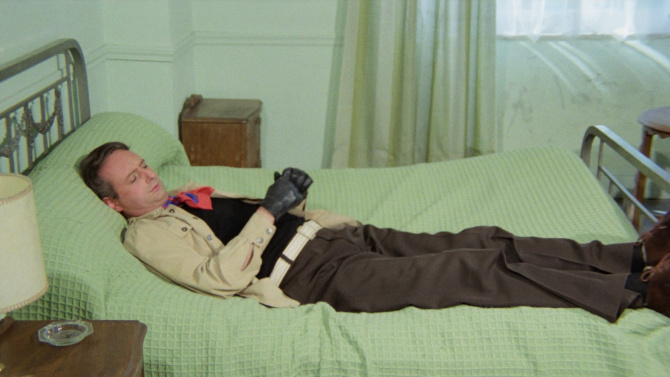
Fatal Subtraction
TraumaJuly 5, 2020A Spanish film inspired by the Italian giallo craze, 1978's Trauma (in Spanish: Violación fatal), directed by León Klimovsky, opens in a rather fascinating way – a writer, Daniel (Heinrich Starhemberg), dressed in an overly flamboyant outfit, including an ascot (think of a pudgy, slightly nerdier middle-aged version of Fred from Scooby-Doo), drives to a secluded bed and breakfast. . . wait a minute, he’s also wearing a pair of black gloves like the killers always do in these types of movies. . . could solving the mystery be this easy, or does the ascot negate said gloves? Finding his way down a dirt road to a most picturesque historic home (that sits beside a serenely calm lake), inside he meets Veronica (Ágata Lys), the frustrated young woman who runs the establishment. Burdened with the management of the place while also caring for her crippled husband in the attic (a man who we mysteriously never see, but can be heard when he gets into fits of rage), she finds little solace in the peaceful calm and tranquility of the locale. . . though she does enjoy spending time with her new guest (and making antique-looking figurines that she is very possessive of).