 Films That Matter
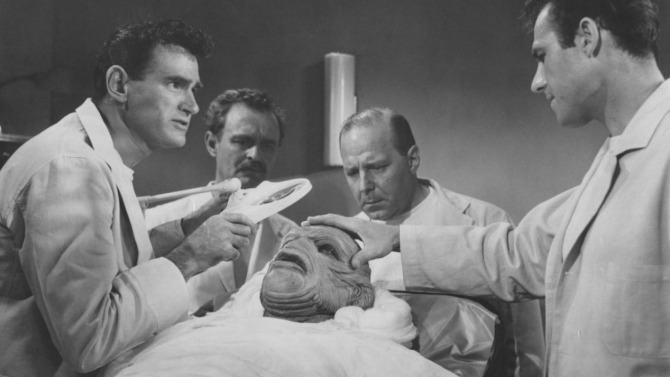
What Could Have Been: The Creature Walks Among Us
The third and final movie in The Creature from the Black Lagoon franchise, The Creature Walks Among Us (1956) was released just a year after the sequel and two after the original – clearly aiming to capitalize on the popularity of their horror creation... but sadly, it is better known as the last classic monster movie filmed by Universal. Directed by longtime assistant director John Sherwood (for the first time in the head chair thanks to some good words from Jack Arnold who directed the previous two), the story this time straddles the line between the original feature and a nature versus nurture premise that makes for a very different monster movie.
-
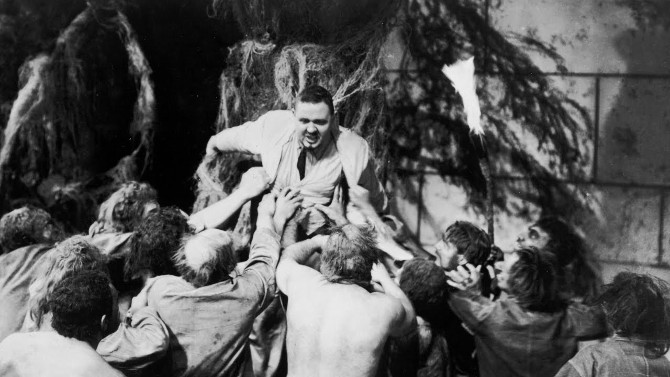
No Man is an Island
Island of Lost SoulsOctober 28, 2016Adapting H.G. Wells’ novel "The Island of Doctor Moreau" for the screen, Paramount’s 1932 film Island of Lost Souls is not nearly as well known as the Universal horror pictures that were released around the same time (Dracula, Frankenstein, The Invisible Man), though it most definitely should be. Though H.G. Wells despised the picture and its overt horror elements (which he felt got in the way of the true message of his book), it has become known as the premier adaptation of the classic novel – though it was banned three times in Britain for its depiction of vivisection. Adapted by Waldemar Young and Philip Wylie, and directed by Erle C. Kenton (The Ghost of Frankenstein, House of Frankenstein, House of Dracula), the cautionary tale follows shipwrecked survivor Edward Parker (Richard Arlen) as he is picked up by a trading vessel. Treated by a dour doctor, Montgomery (Arthur Hohl), the newly resuscitated man discovers an odd array of animals on the ship.
-
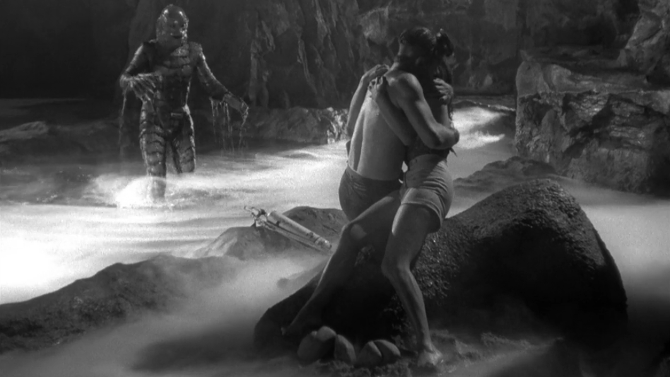
Creature Feature
Creature from the Black LagoonOctober 23, 2016The last of the great monsters to come out of Universal’s iconic horror era – that ran from the 1920s through the 1950s (following in the footsteps of Dracula, Frankenstein, The Invisible Man, The Wolf Man, as well as many others), The Creature from the Black Lagoon has captured the hearts and minds of people over the past six plus decades. Seen as being a forebear to films which have people dealing with some sort of unknown or super-animalistic type creature (think Alien, Predator or Jaws), director Jack Arnold’s 1954 horror flick developed the formula for this style of films success. Set in the heart of the Amazon, the leader of a geology expedition, Dr. Carl Maia (Antonio Moreno), stumbles upon an earthshattering discovery.
-
Go Go Godzilla
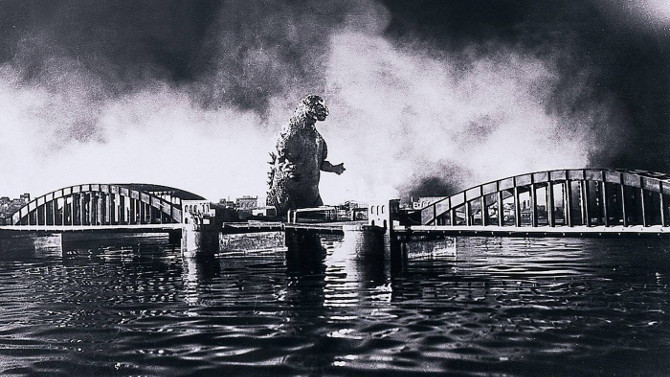
GodzillaOctober 13, 2016From a modern perspective, it may not be immediately recognizable that the classic 1954 monster movie Godzilla was, in many ways, a product of its time. Highlighting the anxiety of the nuclear age at the height of The Cold War, the gargantuan reptile first appears after a hydrogen bomb test in the middle of the ocean. Even this occurrence that starts off the film is based on reality, as the United States tested a giant nuclear weapon on March 1st, 1954, under the code name Castle Bravo. Fishermen, who were outside of the radius, were hit by the fallout from the blast, being covered with copious amounts of coral and radioactive ash. One man died following the event, creating an onslaught of international press that questioned these tests (though, other articles impugned the men on the vessel, suggesting that they were spies).
-

Conjuring Up an Excellent Sequel
The Conjuring 2October 9, 2016It is rare that a sequel can match the quality of the first motion picture. Whether it is an effort to outdo the original, or simply an attempt to cash in on the popularity of the primary offering, it usually comes off as less original, with the story feeling lackluster – often blandly regurgitated. Yet, one film that is able to match its predecessor is James Wan’s 2016 horror flick The Conjuring 2. Written once again by Carey and Chad Hayes, along with director Wan and David Leslie Johnson, the story picks up with the spectre-hunting married couple, Ed (Patrick Wilson) and Lorraine Warren (Vera Farmiga) dealing with their most famous case, the Amityville house. Lorraine sensed a horrible presence in that home, with the ominous figure resembling some sort of demonic nun. During this vision, she witnesses the death of her husband at the hands of the spook.
-

It’s the Time of the Season for Horror
CronosOctober 2, 2016Guillermo del Toro has quickly elevated himself to the level of super-stardom. The horror leaning director crafts loving stories that revolve around the monsters that haunt our nightmares, concocting vivid worlds that both touch our hearts as well as stop them – using stunningly crafted eerie atmospheres and shocking spectacles to succeed. So, I thought that I would reflect back on the director’s first motion picture, 1993's Cronos. Written and directed by the horror maestro, the film contains many of his staples that we have come to know and love – including rich characters, gothic horror elements, a fix of Ron Perlman, as well as countless other things.
-
Sink or Swim
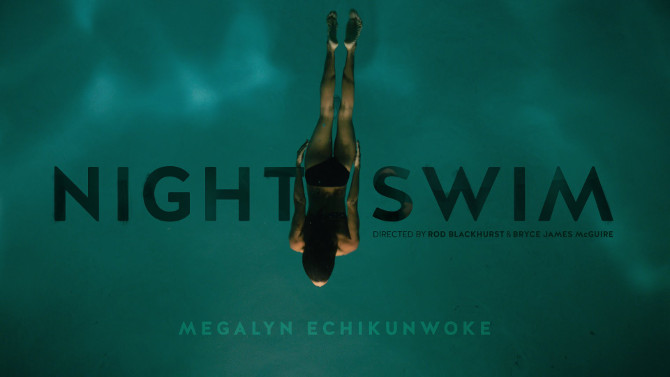
Night SwimSeptember 2, 2016Tomorrow, the St. Lawrence International Film Festival will be putting on a special gala (in Potsdam, NY) where they are screening the Audience Award winner (for best Narrative Picture) from the Tribeca Film Festival – the dramatic horror movie Here Alone. One of the best little glitches that occurred at last years St. Lawrence International Film Festival was when I sat awaiting the showing of The Corpse of Anna Fritz. Instead of the foreign flick beginning, the projectionist mistakenly began to screen Here Alone director Rod Blackhurst’s 2014 short film Night Swim. Thankfully, the festival worker did not stop the compact flick, allowing it to play out before starting the full length feature.