 Films That Matter
What Could Have Been: The Creature Walks Among Us
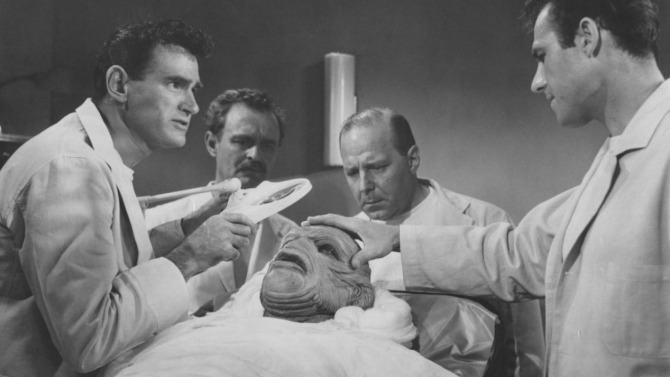
The third and final movie in The Creature from the Black Lagoon franchise, The Creature Walks Among Us (1956) was released just a year after the sequel and two after the original – clearly aiming to capitalize on the popularity of their horror creation... but sadly, it is better known as the last classic monster movie filmed by Universal. Directed by longtime assistant director John Sherwood (for the first time in the head chair thanks to some good words from Jack Arnold who directed the previous two), the story this time straddles the line between the original feature and a nature versus nurture premise that makes for a very different monster movie.
-
How to Stave Off Your Midday Hunger
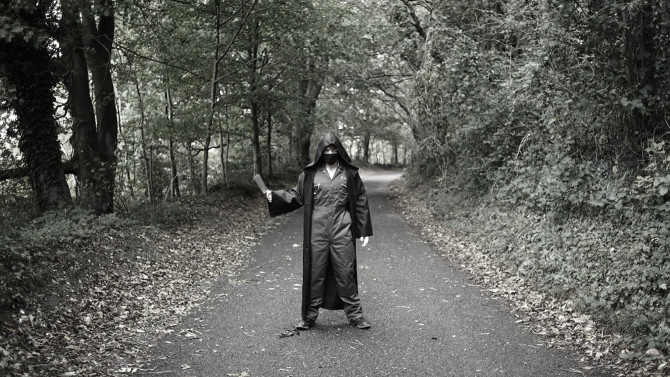
HangryDecember 19, 2017Hangry: bad tempered or irritable as a result of hunger; also the title of the most recent short film from UK Indie writer/director Daniel Harding. Fusing classic horror elements with a modern twist (and adding a few dashes of macabre humour), a posh British couple, Clarey (Sophie Dearlove) and Boyd (Neil James), are taking a trip away from the stresses of their big city life, though, along the way, get lost in the countryside. Both a bit peckish, a surly, ornery attitude begins to seep into their conversation – I am quite sure we have all been there before.
-
Weather Warning in Effect
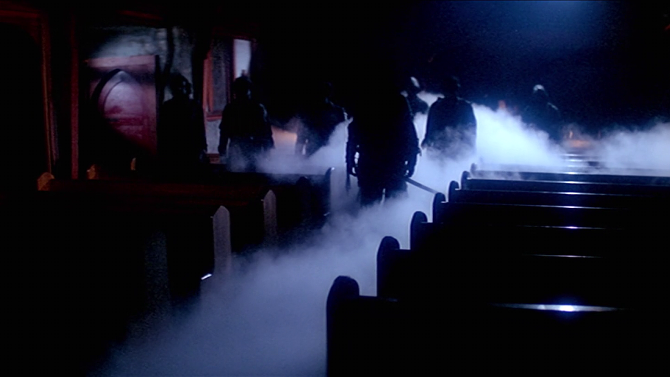
The FogNovember 14, 2017There is something alluring about ghost tales being told in the darkness of the night. . . the way in which John Carpenter’s 1980 horror thriller The Fog opens – with a grizzled seafarer (John Houseman) recounting (to a group of wide-eyed children) the story of a ship of sailors who died in a horrific manner off of the coast of their small town one hundred years earlier. Building off of the success of his hit from two years earlier, Halloween, Carpenter once again shows his skills at developing an immersive world – this time creating a realistic ocean-side town packed with intriguing personas (in both films, he does so with a very limited budget). The locale, Antonio Bay, California, is celebrating its one hundredth anniversary, something the townsfolk are very proud of, especially Kathy Williams (Janet Leigh), one of the organizers of the festivities.
-
It’s Halloween
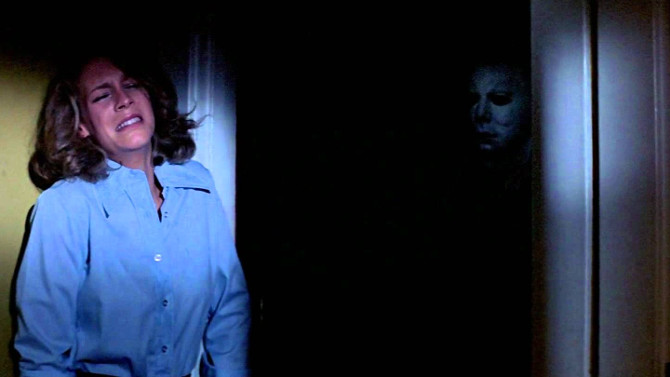
HalloweenOctober 31, 2017The penultimate movie to watch on October 31st, John Carpenter’s 1978 motion picture Halloween is the king of the slasher horror genre, fusing a villain of pure evil with suspenseful subtlety that keeps the viewer on the edge of their seat. Co-written by John Carpenter and Debra Hill (who also produces), the simple yet effective story begins with a young Michael Myers murdering his sister on Halloween night, 1963, in Haddonfield, Illinois. Committed to the Smith’s Grove Sanitarium, the Myers home, even fifteen years later, sits empty, dilapidated and believed by most community members to be haunted.
-

Missed the Bloody Cut: 2017
October 29, 2017As you can likely imagine, I go through quite a few horror movies every October. . . and not every one I watch meets my strict criteria and earns a review. But, that is not to say that these films may not interest you, so, instead of letting them fall behind in the forest for the proverbial psychopathic serial killer, I’ve decided to start this new blog feature in which I will provide you with the good, the bad and the ugly on those horror flicks that just missed the bloody cut. 2017's A Ghost Story, written and directed by David Lowery, is arguably one of the more creative and unique iterations on a spectre in some time. A deep philosophical rumination on love, life, death, loneliness, time and ghosts, it takes the rare position of showing the ghost’s point of view. Less a typical horror story and more along the lines of a fantasy drama, the movie stars Casey Affleck and Rooney Mara as the two leads. Kind of a spoiler, but not really, Affleck dies early on, and, instead of moving on, he feels like he has unfinished business, and returns to live a pale existence of what life once was.
-

Car Wars
Dead End Drive-InOctober 27, 2017Come with me, and you’ll be, in a world of pure Ozploitation. Had you going there, didn’t I?. . . you thought I was going full Willy Wonka, but rather, I am transporting you to a very different landscape, that of the Australian exploitation film. Growing out of the R rating after it was instituted (as well as helped by new tax cuts), this Australian New Wave rose out of the 1970s and 80s (a little later than its American counterpart), and is a broad term that refers to no specific genre, encompassing horror, comedy, sexploitation, post-apocalyptic, dystopic and so much more – though it does slant the traditional norms of culture at the time. It is hard to argue that the Mad Max franchise, directed by George Miller, would not be the best known example of this type of movie.
-
Star Pick with Lee Meriwether
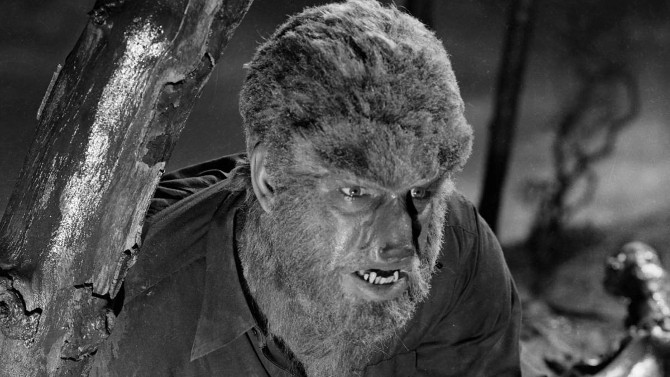
 Feeling Wolfish?The Wolf ManOctober 25, 2017
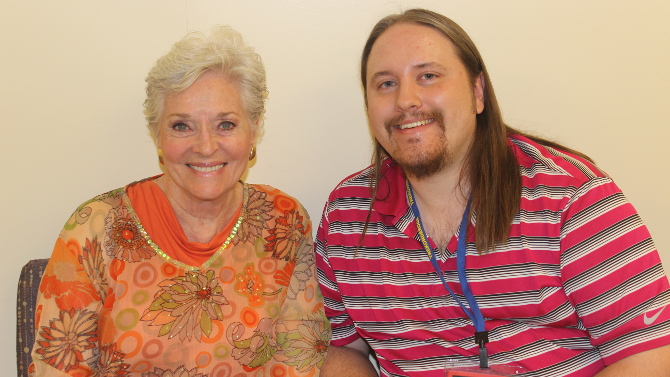
It was an absolute pleasure sitting down with Lee Meriwether at Trekonderoga, the Ticonderoga, New York, convention that is all things Star Trek, this past August. An icon in the industry for the sixty plus years, Meriwether won Miss California in 1954, following it up by winning the Miss America pageant in 1955, the first year it was televised. Joining the Today Show soon after, it did not take long for her to nab her first major role in the 1959 sci fi horror flick 4D Man. Splitting time between television and the silver screen, she made guest appearances or had recurring roles on shows such as Dragnet, Leave It to Beaver, The Jack Benny Program, The Man From U.N.C.L.E., Perry Mason, The Fugitive, The Time Tunnel (all thirty episodes), Mission: Impossible, and of course, Star Trek – playing the mysterious Losira in the 1969 episode, “That Which Survives”. On the film front, Meriwether took over the role of Catwoman from Julie Newmar for Batman: The Movie (the first feature film, though there were two serial features created in the 1940s), also making two appearances as Lisa Carson soon after on the Batman series, she also starred opposite Andy Griffith in Angel in My Pocket, as well as John Wayne and Rock Hudson in the western The Undefeated, both motion pictures were released in 1969.