 Films That Matter
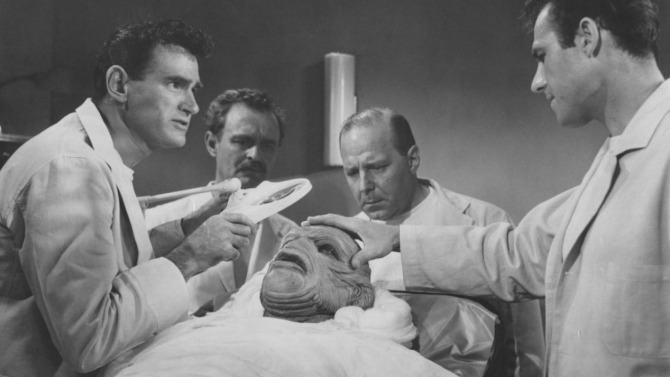
What Could Have Been: The Creature Walks Among Us
The third and final movie in The Creature from the Black Lagoon franchise, The Creature Walks Among Us (1956) was released just a year after the sequel and two after the original – clearly aiming to capitalize on the popularity of their horror creation... but sadly, it is better known as the last classic monster movie filmed by Universal. Directed by longtime assistant director John Sherwood (for the first time in the head chair thanks to some good words from Jack Arnold who directed the previous two), the story this time straddles the line between the original feature and a nature versus nurture premise that makes for a very different monster movie.
-

I Remember Mamá
MamáMay 25, 2018I love these types of stories. In 2008, Argentinian Andy Muschietti wrote and directed a two minute, thirty five second short film along with his producer sister Barbara, entitled Mamá. Catching the eye of horror maestro Guillermo del Toro, he helped develop an American full length feature (along with producer friend J. Miles Dale – both are now Oscar winners after this past year’s The Shape of Water), which was released in 2013 (a huge success, the flick raked in one hundred, forty six million on just a fifteen million dollar budget). And, just this past year, the siblings ushered in one of the most popular and lucrative horror pictures in some time – It. . . the brother and sister are now pre-producing the much anticipated sequel, slated for a 2019 release. But, it all started with the short. Following two young sisters, Lily (Victoria Harris) and Victoria (Berta Ros), the former wakes the latter from a deep sleep. . . from Lily’s stunned, hapless entrance (never taking her eyes off the open door), we knowing something foul is afoot.
-
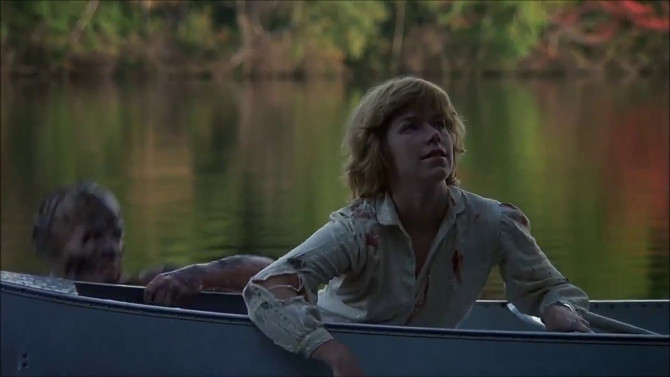
Friday Night Frights
Friday the 13thApril 29, 2018In a mere seven year span, three of the most iconic horror spooks of all-time were created: Michael Myers in Halloween (1978), Jason Voorhees in Friday the 13th (1980) and Freddy Krueger in A Nightmare on Elm Street (1984). Each has spawned a nearly inordinate amount of sequels and remakes: not including the original, nine (and soon to be ten), eleven, and eight, respectively. . . with one of those being a crossover – 2003's Freddy vs. Jason. It is somewhat reminiscent of the creative juices that were flowing in the horror craze of the 1930s and 1940s, when original, folkloric, and literary monsters became the stuff of Hollywood legend – think Dracula, The Invisible Man, Frankenstein, The Wolfman. . . and later (in the 50s), the Creature from the Black Lagoon (all of these films also produced a bevy of sequels). With Halloween already having been reviewed this past Halloween and A Nightmare on Elm Street being planned for this upcoming October (a perfect time to celebrate its thirty-fifth anniversary), Friday the 13th is on the chopping block today. Part of the slasher subgenre, it was released in the period’s Golden Age – 1978-1984, following in the wake of John Carpenter’s successful low-budget horror film.
-

The Sound of Spine-Chilling Silence
A Quiet PlaceApril 20, 2018Baby Driver, Atomic Blonde, Dunkirk. . . three movies over the past year or so that have set a new standard for the way music and sound are used in the context of movies. A Quiet Place continues the recent trend, with its clever use of sound, and the lack thereof, playing an integral role in this very unique horror film. Perhaps the closest thing to a silent movie since Academy Award Best Picture winner The Artist (2011), John Krasinski co-writes and directs this original story. A post-apocalyptic type tale, yet with all the beauty of nature, aliens have invaded the planet, decimating the population and causing fear and chaos to run rampant in the hearts and minds of the secluded populous that is left – the audience is not provided with a glance as to how all this happened, but rather, enters the tale eighty-nine days after first contact.
-

Phantasmagoria
PhantasmApril 17, 2018The English language has so many fascinating and underused words: conundrum, copasetic, and, most importantly, at least to this review, phantasm. . . a term that I would likely not even know if it wasn’t for two distinct sources – the works of Edgar Allan Poe as well as the title of the 1979 horror film Phantasm and its sequels. Defined as a figment of the imagination or disordered mind, as well as an apparition of a living or dead person, Poe often used it in reference to his characters, who wandered around in a fugue state, while writer/director Don Coscarelli visualizes this word, concocting a fantastical dream-like (or should I say, nightmarish) horror landscape. Seen through the eyes of thirteen year old Mike (A. Michael Baldwin), he is a boy who fears so much. Losing his parents to an accident, he constantly trails his older brother Jody (Bill Thornbury), worried that he too will leave him. To flash back for a moment, the movie actually opens with another death, that of a family friend who is killed after climaxing in a graveyard. . . the mysterious Lady in Lavender (Kathy Lester) finishing him off after she is satiated. Made to look like suicide, it is another unpleasant reminder of how death has haunted Mike’s short life. The only other person in their circle is Reggie (Reggie Bannister), a loyal, oft present friend of Jody’s.
-
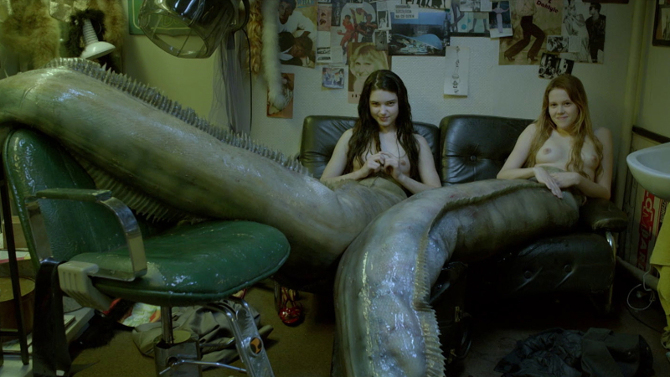
The Mermaids’ Tail
The LureMarch 16, 2018If you’ve ever hoped someone would combine Hans Christian Andersen’s “The Little Mermaid” with touches of David Cronenberg’s psychological sexual thriller Crash (or many of the director’s other iconic horror features) and the quirky colours and music of Willy Wonka & the Chocolate Factory – then you’ve got one interesting imagination. . . and your time is here, as the 2015 Polish horror musical The Lure, directed by Agnieszka Smoczynska, walks this bizarre line. Mesmeric in its colours and direction, some may wonder why make the film a musical. . . though, if you think about it, it makes perfect sense, as these half human/half monster hybrids are like the sirens of Homer’s epic poems, creatures that sing to allure and attract (it gets more gruesome after that) – it is in their essence. Set in Poland in the Communist era 1980s, the story follows mermaid sisters Silver (Marta Mazurek) and Golden (Michalina Olszańska) – they have a yin and yang quality, the former a more compassionate being learning to love, the latter a more violent, dangerous beast – as they make their way into a foreign landscape.
-
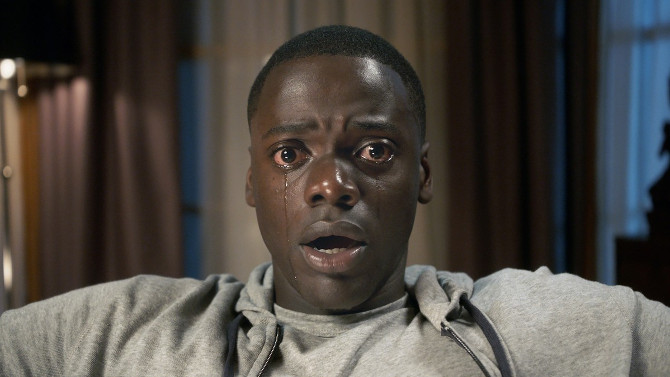
Stir Crazy
Get OutFebruary 11, 2018A rare horror movie to be nominated for Best Picture at the Academy Awards, 2017's Get Out, written and directed by Jordan Peele, fuses its slow-burner tale with creepy atmosphere, relevant social commentary and touches of comedy, making it so much more than just a straight-forward horror flick. With a story somewhat reminiscent of The Stepford Wives, protagonist Chris Washington (Daniel Kaluuya – an Oscar nominated performance) is an up and coming photographer, an African American twenty-something living a fulfilling life in the big city. In a loving relationship with Rose Armitage (Allison Williams) for the past five months, she has decided to bring him home to meet the folks – a weekend trip that is not exactly the most enticing scenario for the man.