 Films That Matter
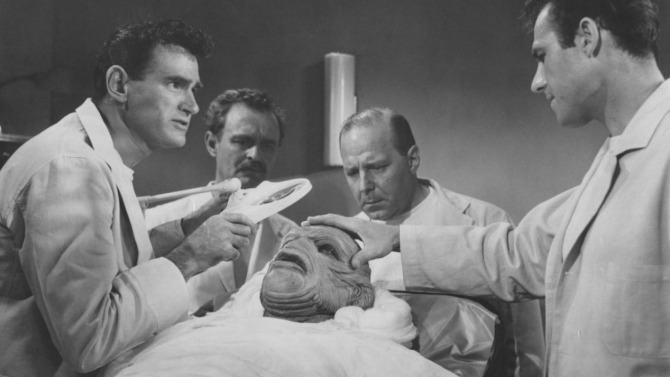
What Could Have Been: The Creature Walks Among Us
The third and final movie in The Creature from the Black Lagoon franchise, The Creature Walks Among Us (1956) was released just a year after the sequel and two after the original – clearly aiming to capitalize on the popularity of their horror creation... but sadly, it is better known as the last classic monster movie filmed by Universal. Directed by longtime assistant director John Sherwood (for the first time in the head chair thanks to some good words from Jack Arnold who directed the previous two), the story this time straddles the line between the original feature and a nature versus nurture premise that makes for a very different monster movie.
-
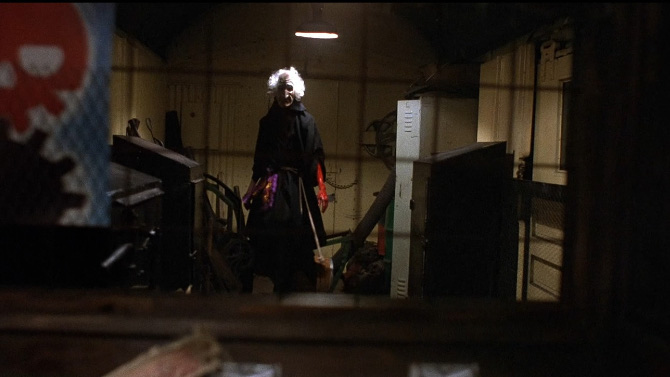
Train Crossing
Terror TrainApril 24, 2020‘Capitalize’ is the word of the day – and boy was it well conceived. Meaning both ‘to take a chance to gain advantage’ as well as ‘to provide with money’, both definitions speak to today’s motion picture. . . for Terror Train (1980) arrived in theatres just two short years after the seminal slasher movie Halloween (right in the heart of the horror boom), taking a somewhat similar premise to the aforementioned movie while also bringing that film’s star, Jamie Lee Curtis, along for the bumpy ride (talk about trying to ‘capitalize’ on the present cinematic situation. . . and, in the end, they basically doubled its limited 4.2 million dollar budget). A Canadian production (in many ways, Canadians were experts at developing these slasher flicks – think of arguably the first of the sub-genre – Black Christmas, as well as Prom Night, My Bloody Valentine, Happy Birthday to Me. . .), recently I reviewed the big budget 1998 James Bond film Tomorrow Never Dies, directed by Roger Spottiswoode. . . what was he doing eighteen years prior? Directing this low budget horror film (his first ever directorial effort).
-
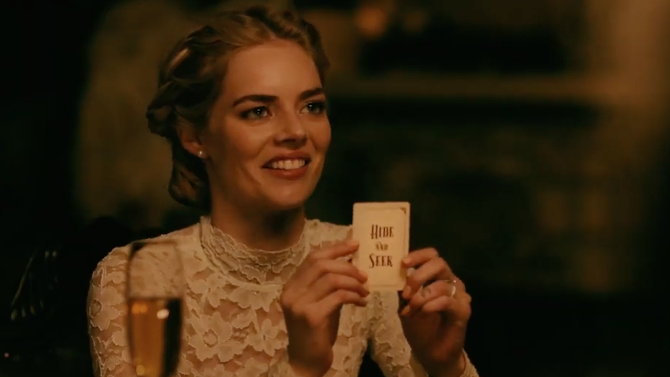
. . . Here I Come
Ready or NotMarch 3, 2020Marriage is not something to be taken lightly. Not only is there the traditional “for better, for worse; for richer, for poorer; in sickness and in health; to love and to cherish; till death do us part. . .”, but with rising divorce rates, it is more important than ever to be confident in your relationship before taking the plunge. Flipping marriage on its head, 2019's Ready or Not is a unique comedy-tinged horror film – a rom com this is not. . . it may also make you rethink those sacred vows. Written by Guy Busick and R. Christopher Murphy and directed by the team of Matt Bettinelli-Olpin and Tyler Gillett (better known as members of Radio Silence – third member Chad Villella is also on hand to executive produce), we are immediately put on our guard as we watch a violent flashback that hints at the unlikely flourishing of a present day couple – foster raised Grace (Samara Weaving) is marrying into the famed Le Domas family – with wealth, traditions, and more than a few dark secrets.
-
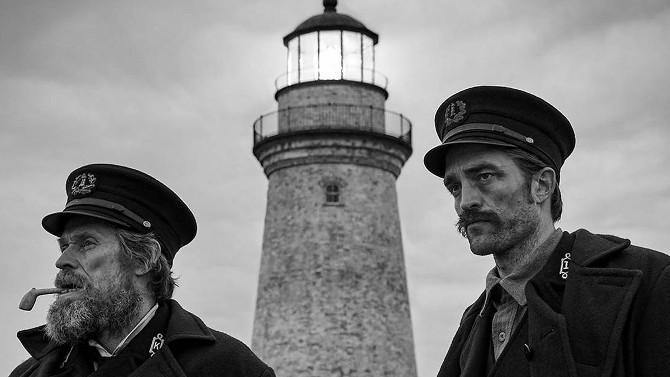
Finders Keepers
The LighthouseFebruary 25, 2020You could quite easily argue that Robert Eggers has created a new sub-genre of horror. His first film, 2015's The VVitch, developed an historically accurate look at seventeenth century America – from the puritanical Calvinist family and authentic-to-the-time language, to painstakingly recreating the period’s buildings, clothing, fences, and, more impressively, cinematography. Built around real fears of the time, the horror comes from what would have gone through the minds of these people in this early America. Eggers follows this up with 2019's The Lighthouse, a nineteenth century-set yarn about two lighthouse keepers stranded on an isle. Forced to build a lighthouse from scratch in Nova Scotia, Canada, the filmmaker also made the bold decision to etch this almost alien world in eerie black and white, furthering the claustrophobia and atmosphere by utilizing 35 mm black and white film, vintage Baltar lenses from the early twentieth century, and a 1.19:1 aspect ratio – meaning that instead of the widescreen we are used to, the picture is basically a square portal into this world. And, like The VVitch, look for intricately made set design, sound, costumes, cinematography and dialogue (expect to hear the word ‘wickie’ quite often – meaning lighthouse keeper, it is a reference to the wick trimming performed on the job).
-

You Better Watch Out…
Better Watch OutDecember 17, 2019If you’ve always thought that the Christmas classic Home Alone was a bit sadistic, you ain’t seen nothing yet. Better Watch Out, co-written and directed by Chris Peckover (the story was conceived by Zach Kahn – who also co-wrote the script), plays like a combination of the above mentioned Chris Columbus directed, John Hughes scribed film, and a twist on the home-invasion horror sub-genre – something along the lines of When a Stranger Calls or The Strangers. A tough sell during the holidays, Better Watch Out really didn’t deliver at the box office, yet, in its three years since its 2016 release, it has slowly built a cult following. Twisty as much as it is twisted, Peckover relishes in this horror-fused Hughes-style world. Set in an upper-middle class home, it could sit on the same cold wintery Chicago street found in the 90s gem.
-

A Shot in the Dark
Lights OutOctober 31, 2019I’ve always been a fan of horror films that leave the monstrous villain lingering hidden in the darkness. . . viewers’ minds bringing forth much scarier visions than what would usually come by way of CGI or makeup. A film that faithfully follows this rule (both literally and figuratively) is the 2016 horror flick Lights Out, directed by David F. Sandberg. Based off of the director’s own 2013 short film of the same name
-

Out of the Pits
RabidOctober 29, 2019Only David Cronenberg’s second feature film (which he both writes and directs), 1977's Rabid continues his precedence for a very unique form of horror, often referred to as ‘body horror’. . . a study in human beings, their fears, apprehensions, an awkwardness revolving around their own (and others’) bodies. Set in and around one of the most unique cities in North America – Montreal, the genesis event finds a couple, Rose (pornstar Marilyn Chambers) and Hart (Frank Moore), getting in a horrific motorcycle accident in the country. Though Hart is beat up, it is Rose that is truly in rough shape. Stranded in a most unpopulated place, they are fortunate that the exclusive Dr. Keloid Clinic for Plastic Surgery (a sort of touch up resort) is nearby. . . taking the severely injured woman in for immediate surgery.