 Films That Matter
What Could Have Been: The Creature Walks Among Us
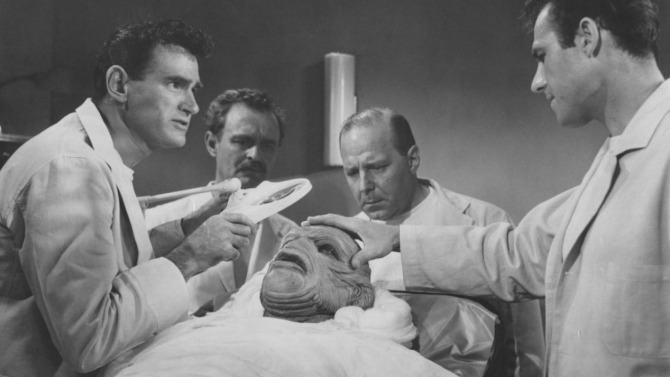
The third and final movie in The Creature from the Black Lagoon franchise, The Creature Walks Among Us (1956) was released just a year after the sequel and two after the original – clearly aiming to capitalize on the popularity of their horror creation... but sadly, it is better known as the last classic monster movie filmed by Universal. Directed by longtime assistant director John Sherwood (for the first time in the head chair thanks to some good words from Jack Arnold who directed the previous two), the story this time straddles the line between the original feature and a nature versus nurture premise that makes for a very different monster movie.
-
Things That Go Bump In the Night
 The NurseWhisperOctober 27, 2019
A double feature brimming with atmospheric terror, The Nurse and Whisper, both released in 2017 by filmmaker Julian Terry (with each running exactly two minutes), revel in the unknown that lies just beyond our vision and understanding. . . The Nurse finds poor little Emily (Aria Walters) – a young girl, alone in a hospital late one night (waiting for her mother to return). With some sort of eye issue, bandages cover her main sense. . . vision gone, her hearing amplifies, picking up what appears to be the sound of a nurse’s cart being pushed into her room – yet, when she calls out for whoever is there, eerily, no answer comes.
-

Slow Mo
EndlessOctober 18, 2019Opening with a quotation from Dr. David Eagleman, “When your death is near, time will seem to slow to a crawl”, writer/director/producer Matt Bloom takes these words to heart, his horror short film Endless (2011) an eight minute hors d’oeuvre shot entirely in slow motion (you don’t see that everyday). Showing every minute detail, what would in reality be a thirty second action scene slows to a crawl, an intense roller coaster ride full of intricate twists as well as dramatic ebbs and flows of mixed emotions. You wouldn’t think that thirty seconds of anything could lead to more ups and downs, but Bloom takes what looks to be a thrilling possible murder scene (like something you would see in Alfred Hitchcock’s Psycho), and tweaks it in a unique way where things are not what they seem.
-

Witchy Woman
Black SundayOctober 14, 2019Watching Mario Bava’s first credited directorial effort, Black Sunday (1960), is like experiencing those magical Universal monster movies from the 1930s and 40s for the first time. . . with a palpable atmosphere and a rich grounding of very specific lore (that would influence future films for decades to come – much like vampire lore, the crucifix still plays a crucial role), this fantastical tale of witchcraft cannot be easily forgotten. Opening with the gruesome genesis scene (a sort of flashback to the seventeenth century) that will carry the movie, a stunning witch has been cornered along with her servile lover Igor Javutich (Arturo Dominici). . . the clerics, along with the pitchfork and fire wielding townsfolk, know of only one way to vanquish the evil foe – to first pierce her face with a mask version of an iron maiden and then burn her at the stake. . . but, soon after accomplishing the first task, a rain like no other scatters the horde (as if the storm itself was summoned by Satan), the priests forced to bury the pair separately with a number of safeguards in place.
-
Circles in the Dark
 WhirlpoolVampyresOctober 12, 2019
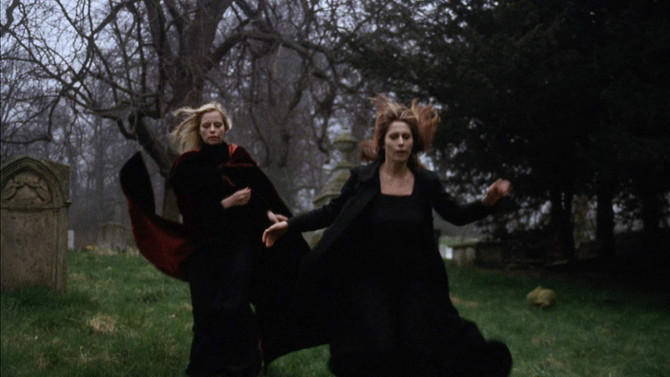
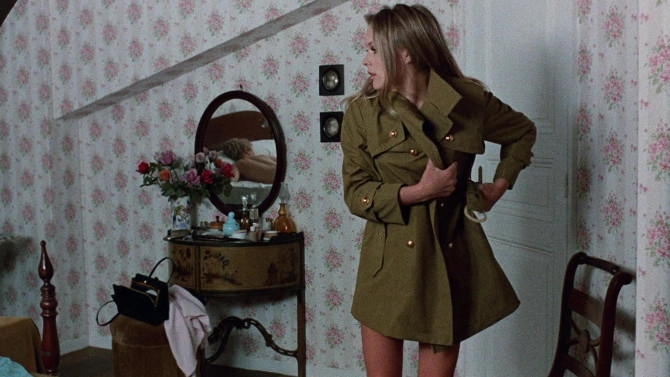
Ushered away by the undercurrent of some uncharted territorial waterway, the mostly unknown films of José Ramón Larraz are a warped ride like no other. Not well known enough to be placed on any chart or map, likewise, they are near inexplicable. . . stuck within the cracks of multiple genres, but not beholden to, or perhaps, even accepted by any one of them. A Spanish filmmaker, the early portion of his career is comprised of his English work – five features shot in the rural British countryside, with the two that bookmark this period being looked at here today, 1970's Whirlpool (a film that was long thought to be lost) and 1974's Vampyres. Comprising many of the same themes, the first thing that stands out within the man’s oeuvre is its atmosphere. . . striking doom and gloom – you almost feel like The Rolling Stones’ tune is echoing their mystery – “I had a dream last night, That I was piloting a plane, And all the passengers were drunk and insane, I crash landed in a Louisiana swamp, Shot up a horde of zombies. . . What’s it all about? Guess it just reflects my mood, Sitting in the dirt, Feeling kind of hurt. When all I feel is doom and gloom, And all is darkness in my room. . .”. Whether you are watching the boggy fall forests that surround a picturesque country home in Whirlpool, or the Hammer-esque, dilapidated mansion, with its side doors guarded by two ominous gryphons in Vampyres, there is something unsettling in every minute detail of the way the auteur builds his narratives.
-

‘The Thing’ On a Train
Horror ExpressOctober 7, 2019With a locomotive that is Agatha Christie’s “Murder on the Orient Express”, passenger cars encompassing John W. Campbell’s “Who Goes There?” (the story that inspired both 1951's The Thing from Another World and 1982's The Thing), a luggage car that is packed to the brim with historical drama, and it all being coupled together by a combination of gothic and Hammer-style horror, 1972's Horror Express, directed by Eugenio Martín, is a suspenseful non-stop trip along the Trans-Siberian Railway. A hodgepodge that seemingly shouldn’t work (the third act even turns into something akin to a zombie movie), this Spanish export somehow melds a variety of genres together to develop an early 20th century set, sci-fi/horror inspired murder mystery with a gothic tinge – I know, quite a mouthful. Following Professor Sir Alexander Saxton (Christopher Lee), a tall mustachioed man with an undeniable presence, the world-renowned anthropologist has discovered a prehistoric half ape/half human hybrid frozen in ice.
-
Like Father, Like Son
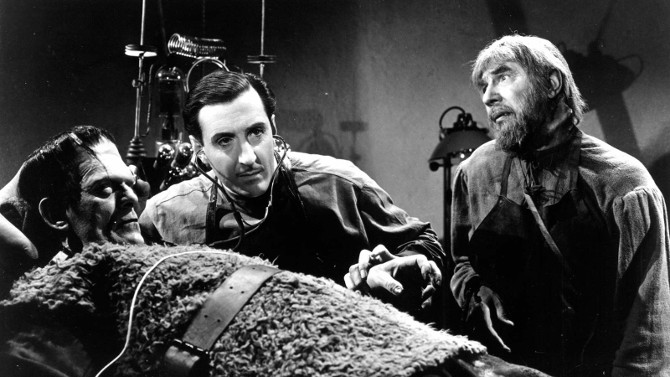
Son of FrankensteinSeptember 29, 2019Celebrating its 80th anniversary this 2019, the Son of Frankenstein (1939), directed by Rowland V. Lee, is the third film in the franchise – following Frankenstein (1931) and Bride of Frankenstein (1935), the last to feature Boris Karloff in the role of the monster, and the first to insert Bela Lugosi as Ygor. . . pairing two of the most iconic horror actors together was a smart move for Universal – the movie was a mammoth hit. All centred on the dramatic, pencil mustached Baron Wolf von Frankenstein (Basil Rathbone – arguably the greatest portrayer of Sherlock Holmes), he is the son of the original mad doctor. . . and is returning home with his slightly twitchy wife Elsa (Josephine Hutchinson) and young son Peter (Donnie Dunagan) – a cute, fear nothing lad whose accent is an eccentric delight, to claim his inheritance – much to the chagrin of the still terrified townsfolk.