 Films That Matter
What Could Have Been: The Creature Walks Among Us
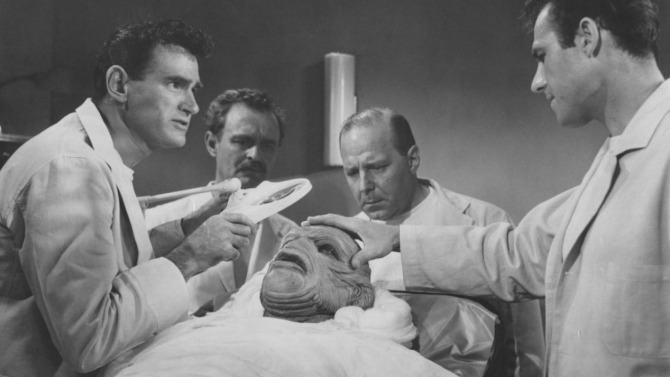
The third and final movie in The Creature from the Black Lagoon franchise, The Creature Walks Among Us (1956) was released just a year after the sequel and two after the original – clearly aiming to capitalize on the popularity of their horror creation... but sadly, it is better known as the last classic monster movie filmed by Universal. Directed by longtime assistant director John Sherwood (for the first time in the head chair thanks to some good words from Jack Arnold who directed the previous two), the story this time straddles the line between the original feature and a nature versus nurture premise that makes for a very different monster movie.
-
Universal House of Horrors
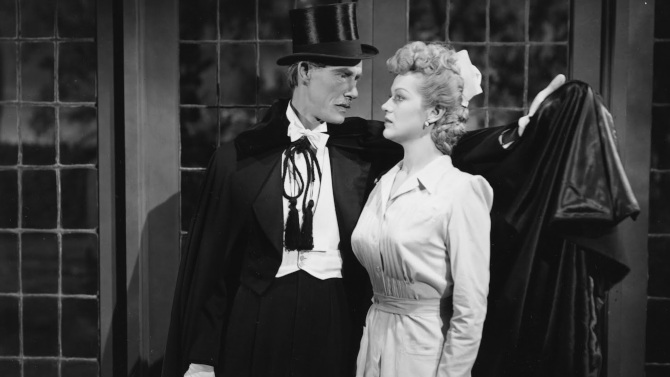
House of DraculaSeptember 27, 2020Celebrating its 75th anniversary this year (2020), 1945's House of Dracula, directed by Earl C. Kenton – Island of Lost Souls), is, in many ways, the last of the classic Universal monster movies. Although Abbott and Costello Meet Frankenstein and the three Creature from the Black Lagoon features would follow, this would be the final horror specific film that would centre upon their three most iconic monsters – Dracula, Frankenstein, and the Wolf Man (I apologize in advance for slighting the Invisible Man). Despite its slightly misleading title, all of the horror hijinks actually take place in and around the gothic castle of Dr. Franz Edlemann (Onslow Stevens), a surprisingly athletic older man (in reality, 43 years old) renowned for his dynamic and forward thinking form of medicine. Drawing the attention of Count Dracula (John Carradine), hiding behind the moniker of Baron Latos, and the perhaps more tortured than ever before Lawrence Talbot, a.k.a. the Wolf Man (Lon Chaney Jr. – the only actor to play the same monster every single time he appeared onscreen for Universal) – this time porting a mustache, both have sought him out – seemingly looking for a cure to their respective torturous affliction. Talk about quite the situation. . . Dracula moves into the basement, while Wolf Man takes residence in one of the upstairs bedrooms – not so sure if this a remedy for a good night’s sleep!
-
Fade to Black
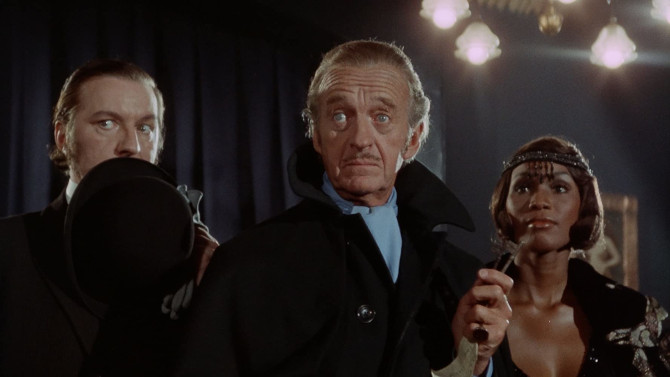
Old DraculaSeptember 25, 2020If you are looking for something different in the world of vampires, odds are, no matter how outrageous your vampiric fantasy, it has already been done. Above and beyond the widely known Universal and Hammer features, we’ve seen whiny teen vampires – that’s Twilight, bloodsuckers in Alaska – 30 Days of Night, an African American creature of the night – Blacula, the dangers of a ravenous armpit that loves to feed on humans – Rabid, vampires in space – Lifeforce, mechanical bug bites that transform you into the undead – Cronos, cape wearers doing kung fu – Kung Fu from Beyond the Grave, and then we have today’s feature, 1974's Vampira (a.k.a. Old Dracula). . . its secondary title an attempted American cash-in after the release of Young Frankenstein.
-
Missed the Bloody Cut: 2020 (Part 1)
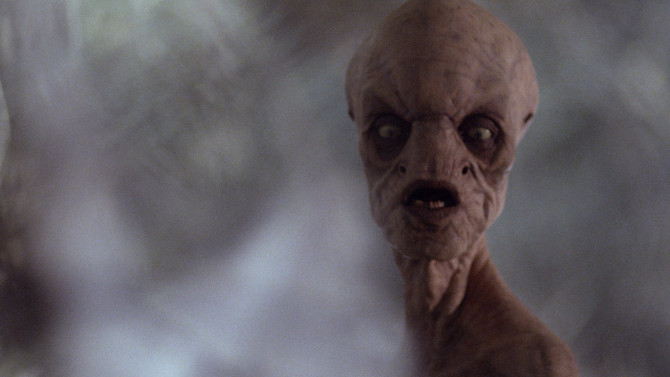
September 21, 2020A tradition every October here on Filmizon.com, I’ve decided that I would highlight some of the horror movies that did not meet my strict criteria (a rating of 7.0 or higher). . . as I realized that they are still entertaining films (horror fanatics may enjoy) that do not deserve to be locked away in an attic, never to be seen again – and that they are definitely worth a watch (just maybe not several re-watches).
-
What Could Have Been: Wacko
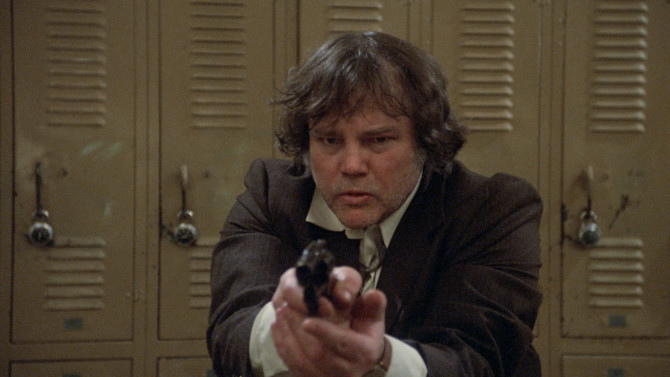
July 27, 2020Eighteen years before Scary Movie ruthlessly parodied countless horror tropes (leading to four sequels that varied from hilarious to unwatchable), there was an original spoof film that prodded at the intricacies of the horror genre, 1982's Wacko, directed by Greydon Clark. In a way comparable to Mel Brooks’ High Anxiety (I know what you’re thinking – how?), Brooks and his team fell into the trap of spending more time trying to honour and satirize Alfred Hitchcock’s motion pictures instead of forming a workably entertaining story. Similarly, the most fun you’ll have watching this disjointed effort is looking for the references to other horror movies – and less so the product as a whole.
-
For the Birds
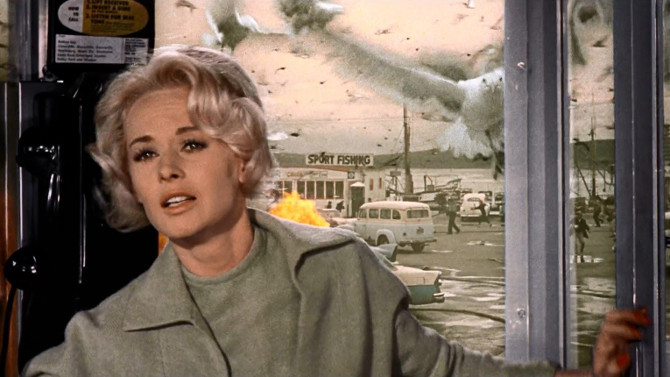
The BirdsMay 12, 2020Alfred Hitchcock was always looking for a good challenge – a way to test the boundaries of film, as well as wow his audiences. In 1944, he built a gripping thriller set in the smallest of locations. . . on a Lifeboat. Four years later he challenged himself to shoot murder mystery Rope (again in one location) to look like a single continuous take – due to limitations of the time, it was actually done in ten lengthy takes. In 1954, he tried his hand at 3D. . . though many think of this as a modern day thing, Dial M for Murder fits right within this kitschy novelty’s golden age (1952-54). Then, to get past censors, he reverted to black and white for 1960's Psycho. Yet one of his biggest challenges came with 1963's The Birds (a story loosely based upon Daphne du Maurier’s novel of the same name) – not simply because it would be a complicated film to make, but because it was made without any music (actually, it was his longtime musical collaborator Bernard Herrmann who suggested this). After lengthy years of working under the Motion Picture Production Code (aka, the Hays Code), its grip was finally starting to waver – though it would last until 1968, Hitchcock finally had a little more freedom to amp up the edginess.
-
What Could Have Been: Malabimba
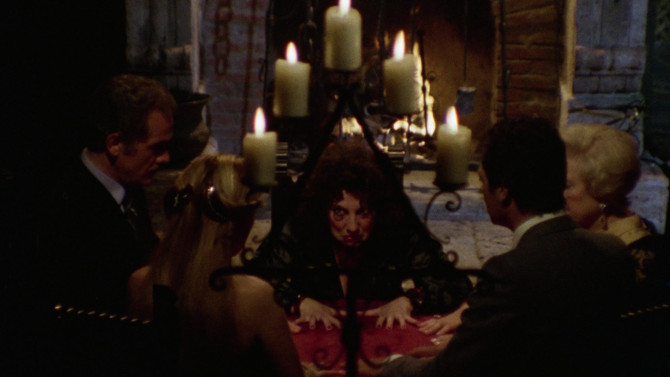
April 29, 2020Like The Exorcist hopped up on a lethal combination of steroids and Viagra, 1979's Malabimba, directed by envelope pushing Andrea Bianchi (for a reminder of his more well known work, think of his playfully edgy 1975 giallo Strip Nude for Your Killer), is an Italian motion picture not for the faint of heart. . . or you, like one of the characters in the film, might find yourself stone cold. Of course, reading this, I’m sure most will think that this is some sort of poorly done, sleazy exploitation piece attempting to capitalize on the aforementioned horror classic. And though the second sentiment is wholly true, the former is most definitely not so.