 Films That Matter
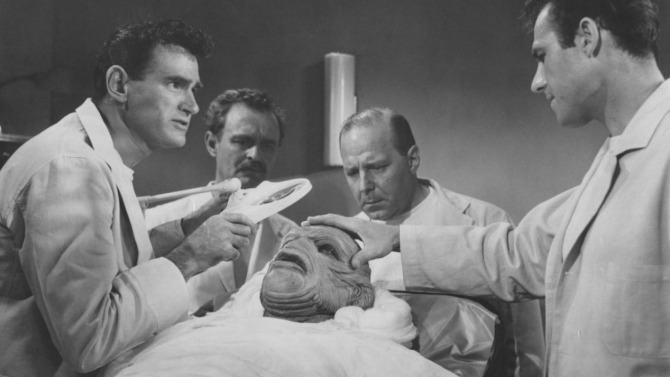
What Could Have Been: The Creature Walks Among Us
The third and final movie in The Creature from the Black Lagoon franchise, The Creature Walks Among Us (1956) was released just a year after the sequel and two after the original – clearly aiming to capitalize on the popularity of their horror creation... but sadly, it is better known as the last classic monster movie filmed by Universal. Directed by longtime assistant director John Sherwood (for the first time in the head chair thanks to some good words from Jack Arnold who directed the previous two), the story this time straddles the line between the original feature and a nature versus nurture premise that makes for a very different monster movie.
-

Crash of the Titane
TitaneMarch 1, 2022Titane, Julia Ducournau’s second feature film (and the winner of the Palme d’Or at the Cannes Film Festival in 2021), is a bit like a cinematic car – with the disfigured metallic body of David Cronenberg’s Crash, the scary powerful engine of John Carpenter’s Christine, and an interior reminiscent of the essence of French cinema itself (with a hint of late Hitchcock experimentation), this vehicle displays quite the unique package. Living in some sort of dreamscape (that often lingers in a more nightmarish realm), Ducournau embodies the piece with a fantastical essence – like a sleep-induced vision, much of the narrative seems rooted in reality, yet with delusory elements that make us question the supposed corporeality of the story.
-
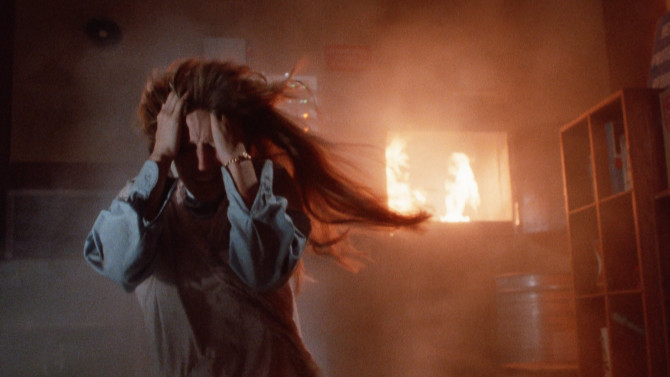
Missed the Bloody Cut: 2021 (Part 4)
October 31, 2021The fourth and final Missed the Bloody Cut horror selection of this year, here are some more horror movies that did not meet my strict criteria (a rating of 7.0 or higher). . . but are still entertaining films (horror fanatics may enjoy) that do not deserve to be ignored like the old haunted murder mansion on the block – and that they are definitely worth a watch (just maybe not several re-watches).
-
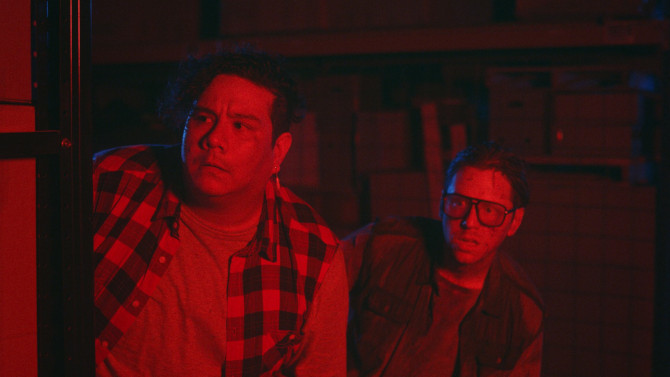
Calling All Demons
We Summoned a DemonOctober 29, 2021Reveling somewhere between cheesy 80s horror flick and Abbott and Costello buddy comedy slapstick, the 2017 short film We Summoned a Demon, written and directed by Chris McInroy, is six minutes of pure horror comedy goodness. Following a pair of less than cool guys, Kirk (Kirk C. Johnson) and Carlos (Carlos Larotta), they are really pulling at straws. . . as they’ve decided to attempt a satanic ritual to make the former a slick talking pick-up artist (of course, it’s all about getting a girl). After a ‘slight’ blood mishap, they inadvertently summon a glowing yellow eyed demon with horns that could qualify as overcompensating (John Orr).
-
Home Is Where the Dark Is
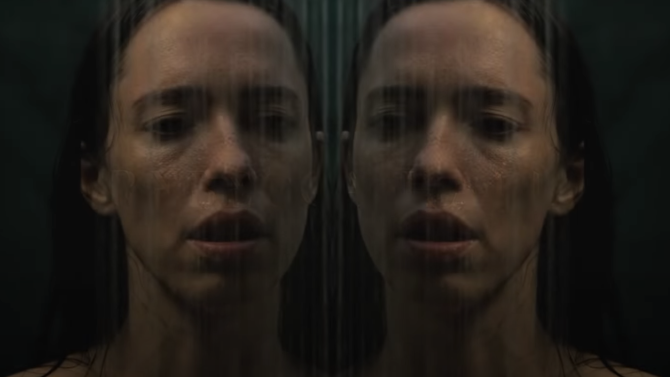
The Night HouseOctober 27, 2021Almost as if Sigmund Freud, Edgar Allan Poe and Alfred Hitchcock got together to make a movie (Roman Polanski could probably be thrown into the group for good measure), 2020's The Night House lives in the realm of the double, the uncanny, as well as the horror found in grief and the chasm of nothingness it can bring with it. Written by Ben Collins and Luke Piotrowski, and directed by David Bruckner, the story follows teacher Beth (Rebecca Hall), the audience joining her immediately after the suicide of her husband, Owen (Evan Jonigkeit). Living in a bluff-top lake house that he himself built (the reflective water perhaps the first indication of the double), she might as well be out at sea. . . though she might not want that, as Owen killed himself on the water. And, when the darkness of night comes, Beth’s world feels like an encased glass tomb.
-
Mi Castle, Su Castle
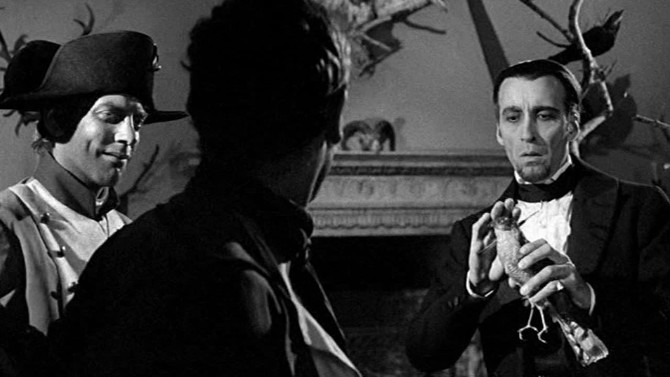
The Castle of the Living DeadOctober 25, 2021Put this piece of advice in your memory banks – if you ever get invited to perform at a location called The Castle of the Living Dead, it might be best to decline the offer. A 1964 low budget horror film co-written and directed by first timer Warren Kiefer, it has stood the test of time thanks to two memorable performers and its real life Italian castle setting. The story of a traveling acting troupe, all is not right. . . for leader Bruno (Jacques Stany) has drawn the ire of harlequin performer Dart – who desperately wants his money up front. Taking umbrage with everything he does, a fight ensues, with bystander and former military officer Eric (Philippe Leroy) thankfully stepping in to stop the close to deadly tussle. With Eric deciding to take over the role of the harlequin. . . though not before Dart casts a deadly threat at Bruno and the troupe, this ominous departure does not sit well with the other members, ingenue Laura (Gaia Germani) and adventurous little person Nick (Antonio De Martino).
-
Missed the Bloody Cut: 2021 (Part 3)
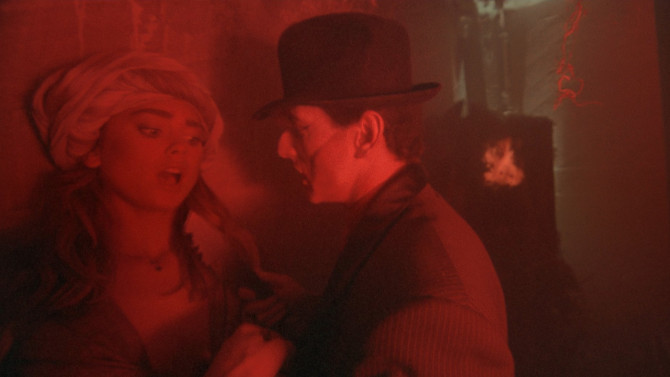
October 22, 2021Part 3 of my Missed the Bloody Cut horror selections, here are some more horror movies that did not meet my strict criteria (a rating of 7.0 or higher). . . but are still entertaining films (horror fanatics may enjoy) that do not deserve to be left behind like an alien who needs to phone home – and that they are definitely worth a watch (just maybe not several re-watches).