 Films That Matter
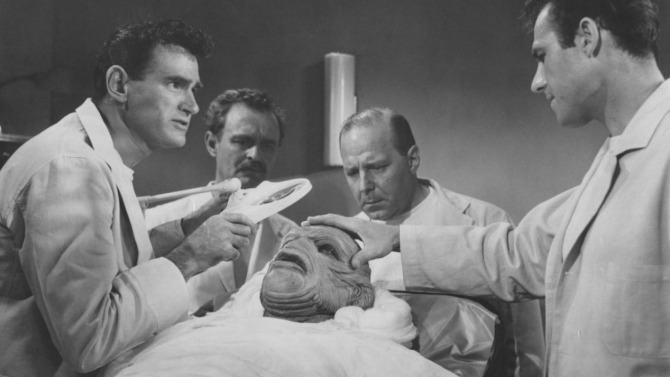
What Could Have Been: The Creature Walks Among Us
The third and final movie in The Creature from the Black Lagoon franchise, The Creature Walks Among Us (1956) was released just a year after the sequel and two after the original – clearly aiming to capitalize on the popularity of their horror creation... but sadly, it is better known as the last classic monster movie filmed by Universal. Directed by longtime assistant director John Sherwood (for the first time in the head chair thanks to some good words from Jack Arnold who directed the previous two), the story this time straddles the line between the original feature and a nature versus nurture premise that makes for a very different monster movie.
-

In a Flash
PolaroidOctober 20, 2017Imagine being wakened by a bright light, not like that of some sort of alien abduction, but rather as if someone was snapping your photo, with the flash on, in the pitch black of your own bedroom. . . well, that is the concept of the 2015 short film Polaroid. Produced, directed, filmed and edited by Alex “Pressplay” Wohleber, it is a vignette of sheer terror. Waking from the bright light and distinct sound of a Polaroid picture being taken, our lead, simply known as Guy (Matt Halpern – also a producer), not only finds himself in a possible robbery situation, but also quickly learns that the electricity in his home isn’t working.
-
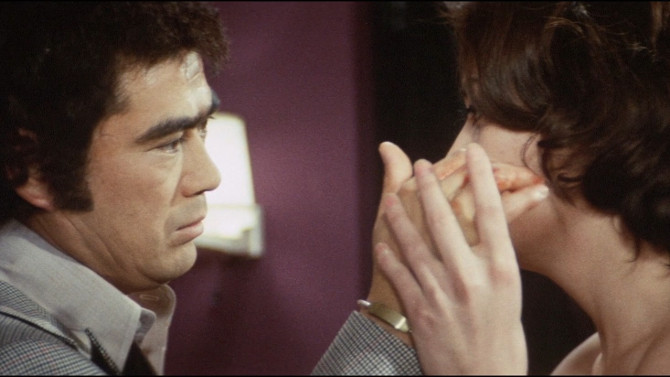
Clap for the Wolfguy
Wolf GuyOctober 17, 2017One of the weirdest mash-ups ever to grace the silver screen, 1975's Wolfguy: Enraged Lycanthrope fuses martial arts action, an investigative crime tale, political conspiracy, sci fi elements, and horror concepts within the box of a B movie exploitation piece. With a title like that, you can probably guess that it is a foreign film, translated to English from Japanese, in this case – these films are often labelled under J-horror. For those linguists out there, you will know that lycanthrope means a werewolf, and Akira Inugami (Shin'ichi “Sonny” Chiba) is the last survivor of a long line of these beasts – the rest of them hunted and killed by those afraid of anything outside of the norm. He uses his wolfish powers to investigate unusual crimes.
-
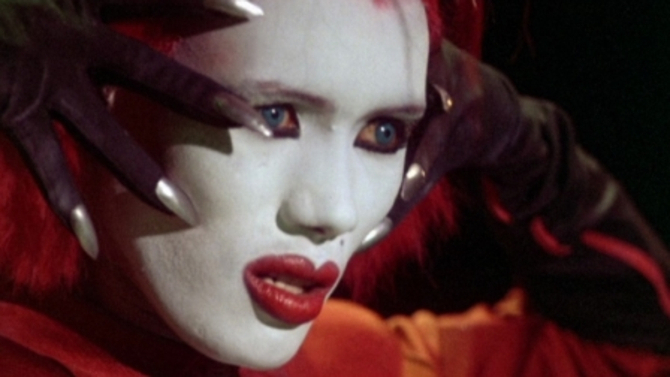
Strip Poker
VampOctober 15, 2017It is likely that this sounds familiar: a movie about a group of people who enter an unusual strip club that ends up being packed with vampires – I would fashion a guess that most film afficionado’s would immediately point to the now iconic Quentin Tarantino penned (and executive produced), Robert Rodriguez directed 1996 horror feature From Dusk Till Dawn. . . though this concept was actually first done a decade earlier in the 1986 horror comedy Vamp. Producer Donald P. Borchers came up with a simple idea, ‘vampire strippers’, and decided to take it to a young filmmaker with only one well respected short film to his name – Dracula Bites the Big Apple, Richard Wenk (now a well respected screenwriter who has penned such films as 16 Blocks, The Equalizer, the remake of The Magnificent Seven and Jack Reacher: Never Go Back), who expanded the idea and took on the role of director as well.
-
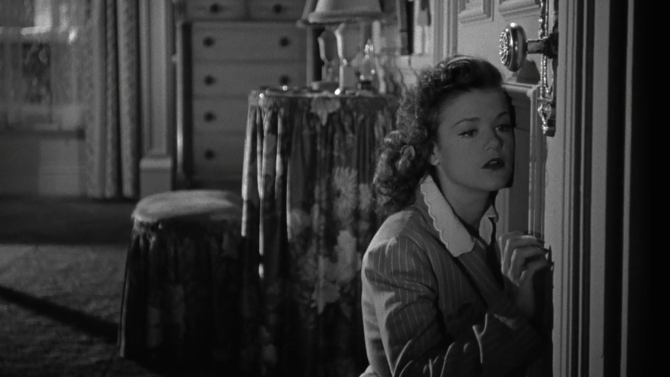
Catnip
Cat PeopleOctober 13, 2017In 1942, RKO Pictures set up a horror unit under producer Val Lewton, a former journalist, novelist and poet who had gone on to become a story editor for David O. Selznick. It was his job to develop low budget horror pictures for under 150,000 dollars, with the studio providing the titles for the films. His first task, the strangely named Cat People, almost seems like a joke. A way for RKO to compete with the popular Universal horror films of the time, Lewton hired writer DeWitt Bodeen (I Remember Mama), director Jacques Tourneur (Out of the Past), cinematographer Nicholas Musuraca (I kid you not, both Out of the Past and I Remember Mama), and composer Roy Webb (Notorious, Marty) – a quality ensemble. And, Lewton supervised everything, the type of producer who would do re-writes on scripts, aid with editing and be involved in every other minute detail of the production process. In a unique twist, the films Lewton created with RKO have become synonymous with him and his distinct style, rather than the directors’, a rare occurrence to be sure.
-

Are You Afraid of the Dark?
Lights OutSeptember 10, 2017A wonderful feel-good story, Swedish director Davis F. Sandberg, now known for his 2016 full length feature debut Lights Out and the currently-in-theatres horror prequel Annabelle: Creation, started as an animator and documentary/short filmmaker. In a dangerous amount of debt back in 2013, he wrote and directed a short film titled, perhaps you’ve guessed it, Lights Out. Released at the Bloody Cuts Horror Challenge Film Festival, it made it to the finals, and won Sandberg the Best Director award. Then, the power of the Internet kicked in, and Lights Out shot from thousands of views to millions – and Hollywood higher ups came scrambling. The man, formerly in financial difficulties, has now become a name to watch in this recent renaissance of the horror genre out of Tinseltown.
-

A Penny For Your Tots
ItSeptember 8, 2017It’s funny how the brain works. As I sat waiting for Andy Muschietti’s It to project onto the screen, I thought of what a disappointment it would be for the crowd if they had misconstrued the title – in for an unwelcome surprise as “I.T.”, the story of an ordinary Information Technology guy who struggles with work on a daily basis, popped up onscreen instead. Thankfully, that was not the case. It is very much a two-pronged film; a coming of age dramedy and a horror flick, the former works extremely well, the latter falls more into the average range. Set in the late 1980s, the town of Derry, Maine (Port Hope, Ontario a perfect stand-in the for the quaint locale that holds multiple mysteries) has six times the national average when it comes to disappearances and murders.