 Films That Matter
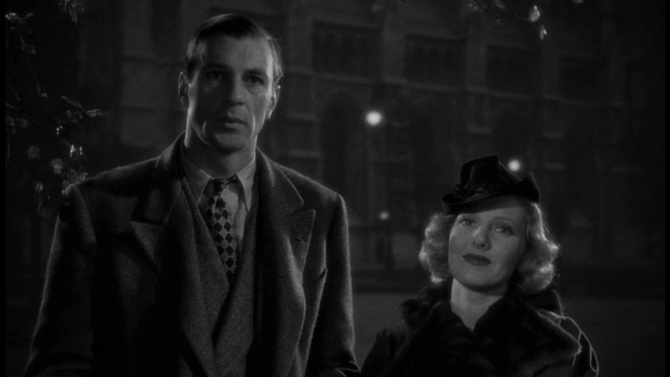
Giving is Receiving
After a middling success with Broadway Bill (1934), Frank Capra wanted to return to the gargantuan success he had with his film released earlier that year, the rare Academy Award winner of the ‘Big Five’, It Happened One Night. Turning pen to paper with his then go to writer Robert Riskin, they worked on developing a tale based upon Clarence Budington’s short story “Opera Hat” – which was turned into serial form in The American Magazine, and it soon became the director’s biggest box office success yet, Mr. Deeds Goes to Town (1936). Certainly part of why Frank Capra’s work would become known as ‘Capracorn’, this feature thrives thanks to its Great Depression setting (which was obviously still a major problem at the time), sweetly sentimental charm, and its belief in a humanist outlook.
-
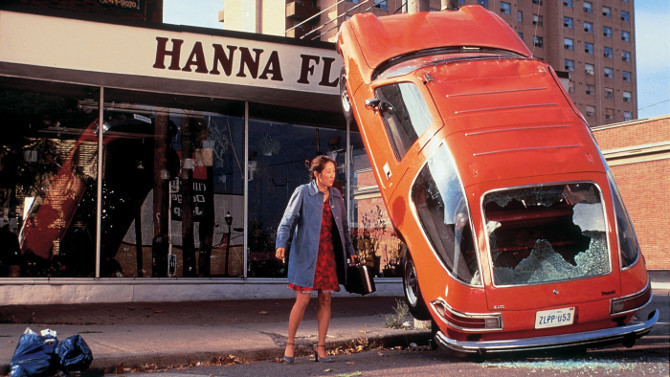
Takin’ Care of Business
Last NightJanuary 6, 2019What would you do if you knew the end of days was nigh? Maybe you’d relish in your memories of the good old times, or revel in the anarchy going on around you. . . perhaps you’d party the night away, then go out in a blaze of suicidal glory just to spite a foregone conclusion? ? ? These are some of the topics covered in the Canadian understated-apocalyptic Indie dramedy Last Night (1998). Written, directed and starred in by Don McKellar (his first feature film; also the scribe of the fascinating picture The Red Violin), he litters Canada’s largest city, Toronto, with not only trash (and a few remaining stragglers), but also a simple melancholic poignancy, a dry and awkward humour that covers up the anguish that the ‘New Year’s Eve-like countdown to the end’ brings with it. McKellar’s take on the “2000, Seen By” project (which had filmmakers looking at the approaching excitement and fears of the Millennium), had him making the wise choice of depicting 2000 as the end of the world (rather than a current fad that would have it feeling passé almost immediately after the fact).
-
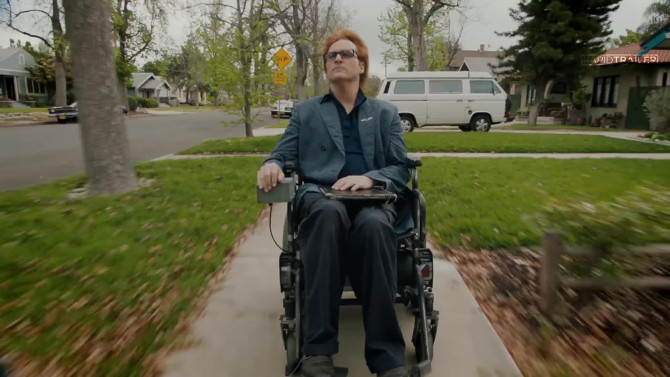
Wheelchair Accessible
Don't Worry, He Won't Get Far on FootAugust 24, 2018Ah, the good old days. . . when you could drive around drunk, blowing chunks out of the window along the way. Of course, I’m being facetious, but this folly-filled sequence, set in an era when this happened more than anyone would like to remember (the 1970s), is a lead in to the first of two cruxes at the centre of the politically incorrect leaning titled feature, Don’t Worry, He Won’t Get Far on Foot (2018) – co-written and directed by Gus Van Sant. Centred on John Callahan (Joaquin Phoenix), the fateful sequence finds him in the passenger seat while said vomiter, Dexter (Jack Black), drives them to their next alcohol-fuelled party – falling asleep at the wheel, the brutal accident leaves Callahan a paraplegic.
-
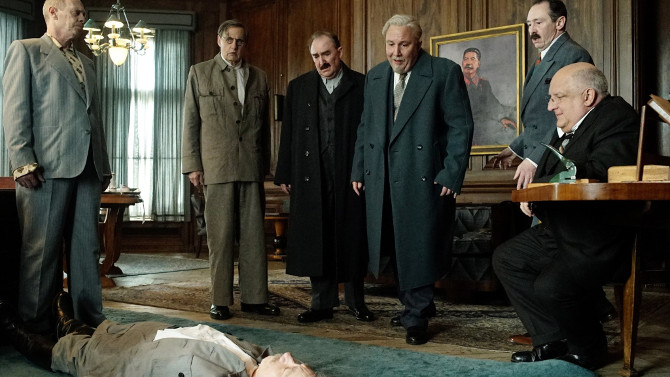
A Communist Plot
The Death of StalinAugust 17, 2018Conniving, chaos, cruelty, and paranoia – four words that aptly describe today’s film. . . and, whose first letters provide a hint as to the setting: that’s right – CCCP. The Death of Stalin, Armando Iannucci’s 2017 comedic spin on the historical event, follows in the vein of his BBC series The Thick of It and HBO show Veep, as well as his film In the Loop, a razor sharp political satire with quick banter, clever wordplay, and a more than interesting topic. Of course, if you know the work of Iannucci, it will be quite obvious that the lexicon of such a film is much more expansive than the four words used to open the piece – fear and power also come to mind. Going hand in hand, it is this power through fear that has Andreyev (Paddy Considine), a theatre manager that has not recorded a broadcast that Josef Stalin (Adrian McLoughlin) now wants a copy of, panicking to keep the band and audience in their seats to do it all over again. . . it is also the same dread that steers Stalin’s guards to stand pat after hearing a thump from within the leader’s room – when in actuality, the dictator is slowly dying, steeped in his own urine. It is this irony, and grey area comedy, that comes from a pitch dark premise – finding an absurd humour in the disturbing story.
-
Spinning a Tale
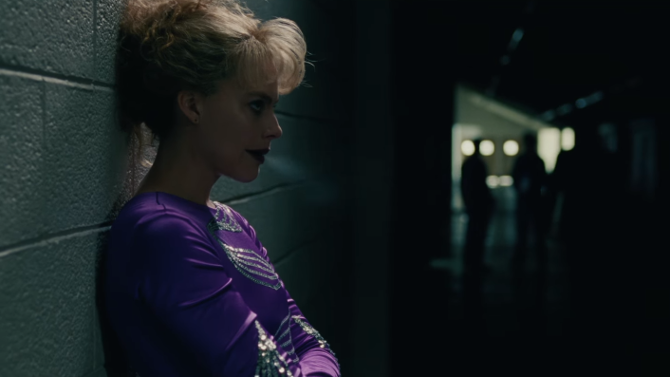
I, TonyaFebruary 23, 2018Like landing a triple axel, figuratively speaking, I, Tonya writer Steven Rogers and director Craig Gillespie (Lars and the Real Girl) conquer the difficult feat of bringing the complicated career of figure skater Tonya Harding to vivid life on the big screen. Relishing in the ‘perception of truth’, Rogers and Gillespie develop a bio-pic mockumentary style approach, each character having their own version of the story. Complex in its narrative direction, multiple persons have their say, sometimes breaking the fourth wall and talking directly to the audience – at one point, Harding (Margot Robbie – Academy Award nominee for Best Lead Actress), gun in hand, makes it quite clear that this portion of the tale never actually happened – a rebuttal to her husband, Jeff Gillooly (Sebastian Stan), and his unflattering perspective.
-
Advertising Gets Results?
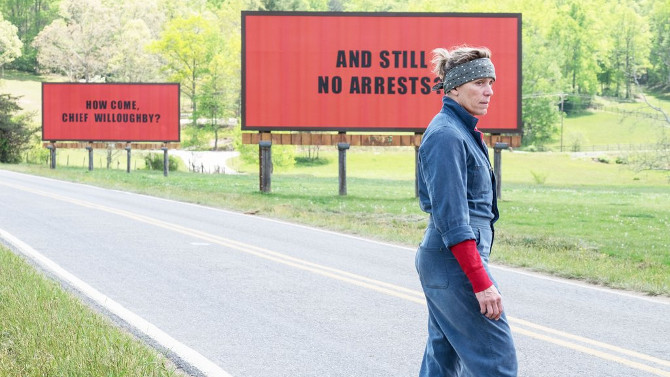
Three Billboards Outside Ebbing, MissouriFebruary 20, 2018Good things come in threes – case in point, Martin McDonagh’s Three Billboards Outside Ebbing, Missouri. His third full length feature, it has earned him his first Best Picture nomination at the Academy Awards (expected to be one of the frontrunners this year), while the motion picture has also garnered its three main performers Best Actress/Supporting Actor nods, and, though it may be a tad of a stretch, when eliminating the four above mentioned Oscar nominations, it has also earned three other chances for the elusive statuette (for Original Score – Carter’s Burwell’s composition brimming with mysterious western melancholy; Original Screenplay; and Film Editing). Interestingly, the film could very well have had another title, “Three Letters from a Sheriff in Ebbing, Missouri” – but more on that later. Bringing to life another fascinating dark premise, McDonagh scribes a heart-wrenching tale of how human beings deal with anger, loss, hate, guilt, grief, injustice, and the seemingly cruel fate of life, yet, as always, combined with his sharp wit – a rare movie that, despite its pitch black subject matter, will have you laughing on and off throughout, much like his earlier gems, 2008's In Bruges and 2012's Seven Psychopaths.
-
Following the Paths of Psychos
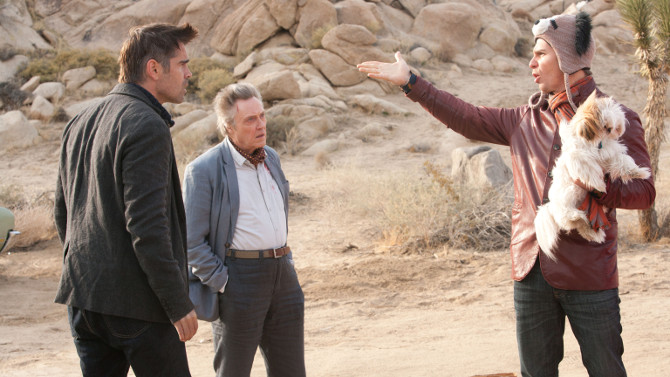
Seven PsychopathsFebruary 6, 2018One of the most originally creative scripts to be found on either side of Ebbing, Missouri, Martin McDonagh’s Seven Psychopaths, released in 2012, is an example of the writer/director’s many talents (twisty nuanced stories, richly drawn characters, beautiful dialogue, and so much more) that have made his most recent effort, hinted at above, Oscar bait this Awards season. With a screenplay that keeps the audience on its toes for quite a while, we are often guessing what we are truly watching. At first glance a meta cinematic commentary on writing a screenplay – Colin Farrell’s Marty has writer’s block, it is perhaps best summed up after he heads out into the desert with his two buddies. . . leading to one of them, Sam Rockwell’s Billy, describing how his treatment of the script should conclude. With Marty in disbelief at its over-the-top violence, the third friend, Christopher Walken’s Hans responds, perhaps somewhat surprisingly, “It’s got layers, you know. . . it’s got. . . It’s got many layers”. Adding another ‘layer’ of meta, we eventually realize that not all that is written on the page is fictional and that we may be watching flashbacks from several characters’ pasts.