 Films That Matter
Giving is Receiving
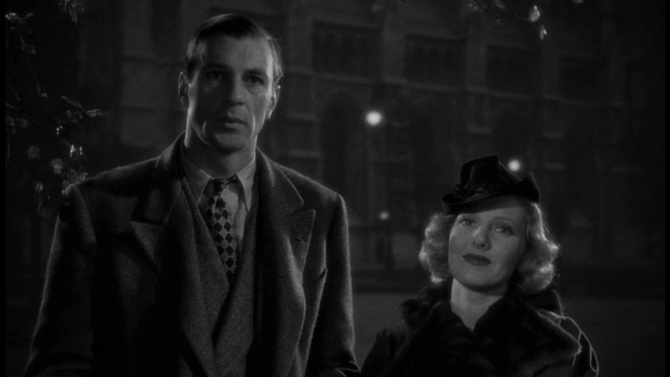
After a middling success with Broadway Bill (1934), Frank Capra wanted to return to the gargantuan success he had with his film released earlier that year, the rare Academy Award winner of the ‘Big Five’, It Happened One Night. Turning pen to paper with his then go to writer Robert Riskin, they worked on developing a tale based upon Clarence Budington’s short story “Opera Hat” – which was turned into serial form in The American Magazine, and it soon became the director’s biggest box office success yet, Mr. Deeds Goes to Town (1936). Certainly part of why Frank Capra’s work would become known as ‘Capracorn’, this feature thrives thanks to its Great Depression setting (which was obviously still a major problem at the time), sweetly sentimental charm, and its belief in a humanist outlook.
-

Another Brick in the Wall
I, Daniel BlakeMarch 26, 2017A trenchant piece of social commentary, I, Daniel Blake could have been a one dimensional film filled with gloomy despair, but in the capable hands of director Ken Loach and first time actor and long time comedian Dave Johns, it is laced with deft, dry, sarcastic humour throughout – making it a relevant, multi-faceted dramedy. Written by Paul Laverty (a regular collaborator with Loach), the modern day tale, which is set in Newcastle, England, follows a fifty-nine year old carpenter named Daniel Blake (Johns), who, as the film begins, is frustratingly dealing with a government employee over the phone. They have denied his claim for ‘employment and support allowance’ – despite the fact that he has had a debilitating heart attack and his doctors vehemently state that he is in no shape to return to work. A wonderful piece of sardonic humour, this opening scene finds the man having to put up with a plethora of unrelated questions that have nothing to do with his particular condition. Highlighting the lack of common sense or logic found in the modern day governmental system, it is somewhat akin to a man continuously banging his head around the rim of a toilet seat (it hurts, is irritating and, in the end, gets you absolutely nowhere).
-
Star Pick with Mark Valley
 Dream WeaverLéoloMarch 21, 2017
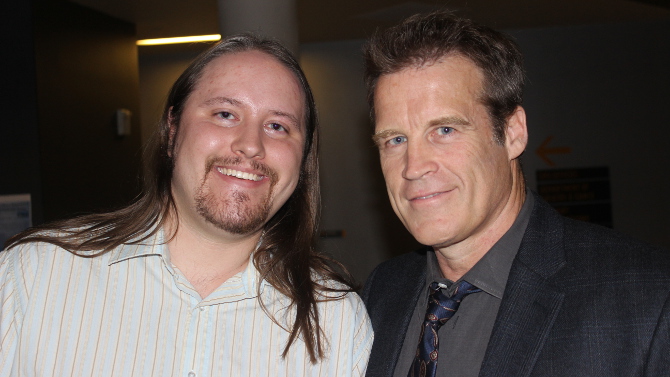
I was fortunate enough recently to spend some time with Mark Valley. The actor has become a major player in the world of television, already having left a lasting impact in what has been termed ‘The Golden Age’ of the medium. Playing major roles on Boston Legal (Brad Chase), Human Target (Christopher Chance), Harry’s Law (Oliver Richard), Body of Proof (Tommy Sullivan), Crisis (CIA Director Widener), CSI: Crime Scene Investigation (Daniel Shaw), and so many other shows, he has developed many unique and intriguing characters over his twenty plus years in the business. If I had to choose one performance that exemplifies his craft, it would be his turn as John Scott in the science fiction drama Fringe – though he only appeared in twelve episodes (in a series that lasted five seasons), his character left a lasting impact that was felt long after his arc was over. Valley is currently working on a new series titled Famous in Love, which premieres next month. Valley has also dabbled in film, most notably in features like The Siege, Stolen, Zero Dark Thirty, Live by Night, as well as voicing The Cyclops in Shrek the Third. A proud Northern New Yorker (born in Ogdensburg), Valley has played an integral part in starting the St. Lawrence International Film Festival, set on both the American (Potsdam and Canton) and Canadian (Ottawa and Brockville) sides of the border. Having a place on the advisory board, the festival is currently expanding online, highlighting short films which deserve kudos each month.
-
O Captain! My Captain!
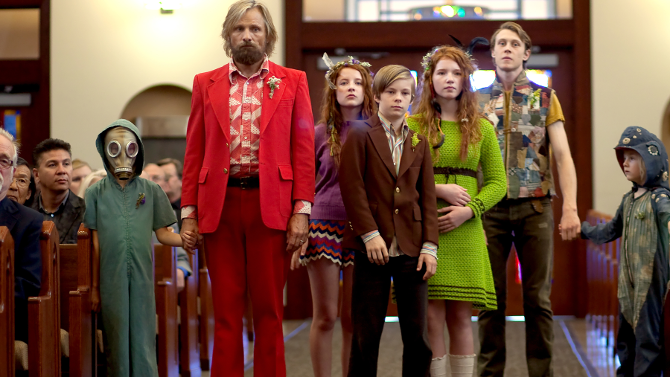
Captain FantasticFebruary 17, 2017I have always been a big proponent of the education system teaching philosophy. When translated from its original Greek root words, we learn that it is best described as the love (philo) of wisdom (sophia), which is very much at the heart of the 2016 film Captain Fantastic – written and directed by Matt Ross. Towards the end of the motion picture, our main character, a multi-faceted father named Ben (Viggo Mortensen), is read a letter from his now deceased wife (her mother thinks he needs to hear it). At one point, she references the term ‘philosopher king’ – a concept adopted by Plato. For those of you who do not know of it, it was these people that he emphasized would rule his perfect utopia. Dedicated to the pursuit of knowledge and living a simple life, their ways were not that of bells and whistles (like most rulers, who live in extravagance and are catered to), but rather, to refrain from such things, educating themselves in the ways of wisdom and understanding the higher forms of knowledge.
-
Star Pick with Hayley Atwell
 Garden State of MindBeing ThereFebruary 14, 2017
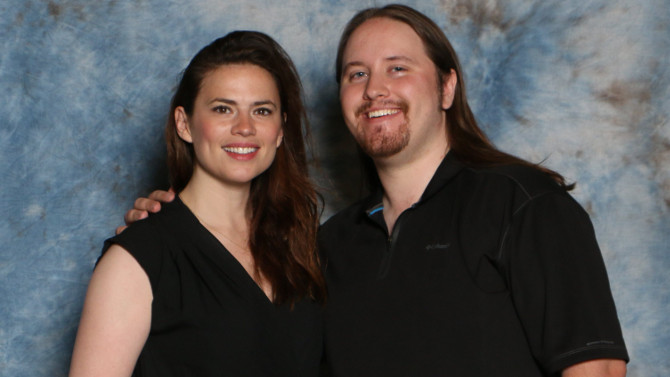
Perhaps more relevant today than it was when it was released, Hal Ashby’s 1979 feature film Being There, based on Jerzy Kosinski’s 1970 novel of the same name (he also wrote the screenplay), speaks to the fickleness of fame – how, by random happenstance, one can be projected into a position of power and ‘celebrity’. Some time back, I spoke to actress Hayley Atwell. A major player in the Marvel universe, she has starred as Peggy Carter in four films, including Captain America: The First Avenger and its 2014 sequel. This spawned the critically acclaimed series Agent Carter, which sadly got cancelled after two seasons. Currently starring on the ABC show Conviction, the British star has also appeared in excellent smaller movies like 2012's The Sweeney and 2008's The Duchess, as well as the entertaining mini-series The Pillars of the Earth. When I posed my favourite question to her (i.e. her favourite film), she had two prompt responses. Speaking of her love of Bette Davis, it is fitting that one of her top films was All About Eve, mostly due to the superb performance from the iconic actress. Secondly, she spoke of the above mentioned Being There. Stating that she loved the book, she originally knew nothing about there being a movie. When she finally saw it, like the novel, it stuck with her, including Peter Sellers’ amazing portrayal as the lead character, making it one of her all-time favourites.
-
What a Great Kid!
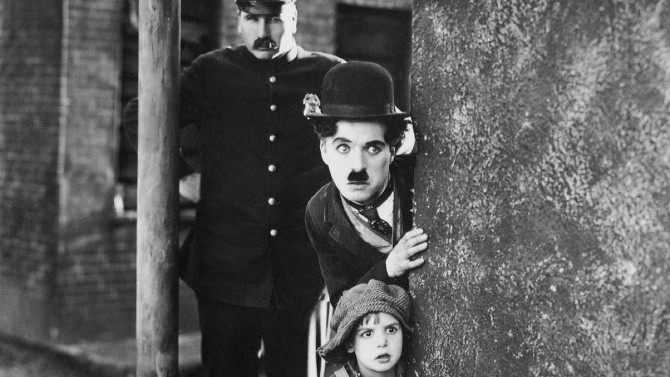
The KidNovember 20, 2016There is perhaps no better synopsis of Charlie Chaplin’s first full length feature film, 1921's The Kid, than that provided by the filmmaker himself. As the motion picture begins, we read the Title Card: "A picture with a smile - and perhaps, a tear". Already an international superstar at the time, Chaplin decided to give his iconic character of The Tramp a full length feature. Taking five and a half months to shoot the film, it once again reiterates just how much of a perfectionist the man was (as movies during this time were nearly never granted this sort of shooting schedule). Similarly, like the rest of his projects, Chaplin writes, directs, produces, acts in and composes the music for this one. The loveable vagabond that is The Tramp (Chaplin) this time finds himself with a baby in hand. A Woman (Edna Purviance), having had a child out of wedlock and with nowhere to turn, leaves her newborn in a wealthy family’s car – hoping that they will adopt it. In a piece of unfortunate happenstance, the car is stolen by a pair of criminals. Dumping the baby at the first possible chance, The Tramp then stumbles upon it in a filthy alleyway.
-
Star Pick with Eliza Dushku
 A Day at the BeachBeachesJuly 5, 2016
Friendship, something we can all hopefully relate to. We all strive to have long-lasting bonds with at least a few people throughout our lifetime. A movie that takes a look at the ups and downs of a lifelong friendship is the 1988 Garry Marshall film Beaches. I recently chatted with actress Eliza Dushku, who has had a fruitful career in the business. In her early teens, she was already procuring roles in relevant titles such as This Boy’s Life and True Lies. She then went on to co-star with Kirsten Dunst in one of her major break-out roles in the cheerleading movie Bring It On.