 Films That Matter
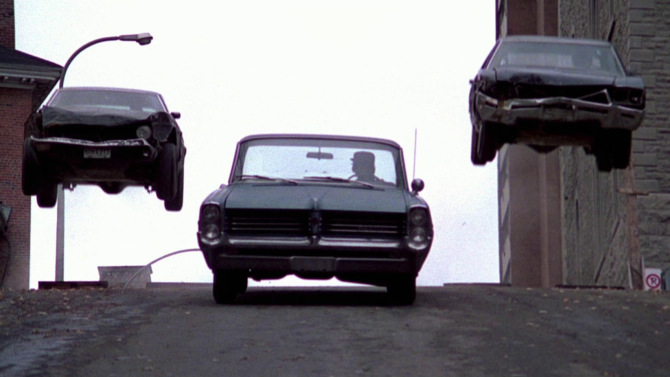
Montreal Magnum
When it comes to car chase scenes, the one that is always highlighted, and for good reason, is from Peter Yates’ 1968 action thriller Bullitt starring Steve McQueen... but some eight years later, the city of San Francisco was replaced by Montreal, Quebec in this little known Italian production with quite the epic speedy sequence of its own, Shadows in an Empty Room (1976), directed by Alberto De Martino. Fusing this touch of Bullitt with a Dirty Harry style storyline – hence why it is called Blazing Magnum in some markets (including the UK), while also including a hint of the ever popular at the time 70s giallo for some murder mystery elements, the narrative follows gritty, hard as nails Ottawa cop Capt. Tony Saitta (Stuart Whitman) as he dispatches some bank robbers in his own city... before getting the tragic call that his much younger sister, Louise (Carole Laure – Sweet Movie), who lives in Montreal, has died under very suspicious circumstances.
-
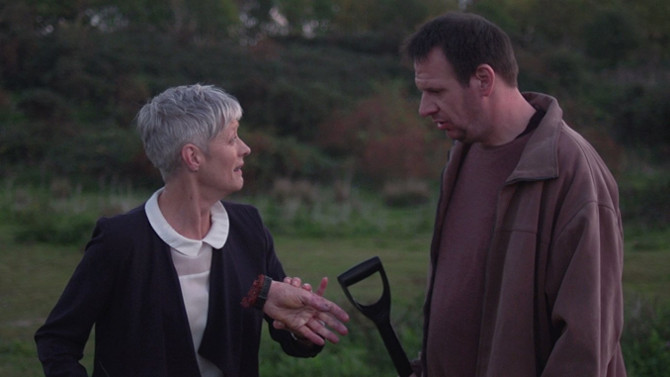
Hand it Over
The Missing HandMarch 20, 2018Don’t you hate when this happens. . . while working outside, you by chance stumble upon a severed hand. It is this absurdist situation that comes to vivid life in writer/director Daniel Harding’s 2016 dark comedy short film The Missing Hand. Right out of the Alfred Hitchcock playbook, think The Trouble With Harry (and, if you do not recall the premise, I’ll let you in on a little secret – Harry’s dead) or Rope, the narrative finds two very different people, Ms. Whitman (Meryl Griffiths) and Trevor (Neil James) walking a plot of land they are thinking of developing. The former – a shrewd, business-driven financier, the latter – an energetic, simple-minded builder; the pair are destined to make a killing on the vacant lot.
-
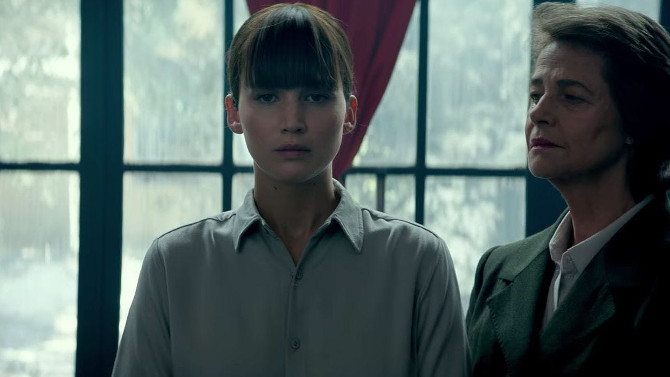
Seeing Red
Red SparrowMarch 4, 2018If it was ever possible for a film to be of the wrong time as well as utterly relevant for its time, Francis Lawrence’s Red Sparrow would be it. Like a hybrid of a 1970's B exploitation pic and Italian giallo thriller (it relishing in its moments of sadism, violence and nudity), at the same moment, it is a worthwhile vehicle for its female lead. Dealing with topics such as rape, revenge, retribution, and politics, its old-school style story-telling (with twenty-first century glossy filter) has likely pushed it to the fringes – with such issues ripping through Hollywood and American politics itself, it may be too close to home for many to enjoy. A motion picture that would have thrived on the drive-in circuit back in the day, it is a twisty (and twisted) Machiavellian tale of spy-craft and game-playing. . . a dog eat dog, cutthroat world. Led by a daring performance from Jennifer Lawrence (reuniting with her Hunger Games director – that is, of films two, three, and four), she plays Dominika Egorova, a prima ballerina in Russia. After a horrible injury, she is left in a precarious position, as she does not have the money to support herself or her sickly mother, Nina (Joely Richardson).
-
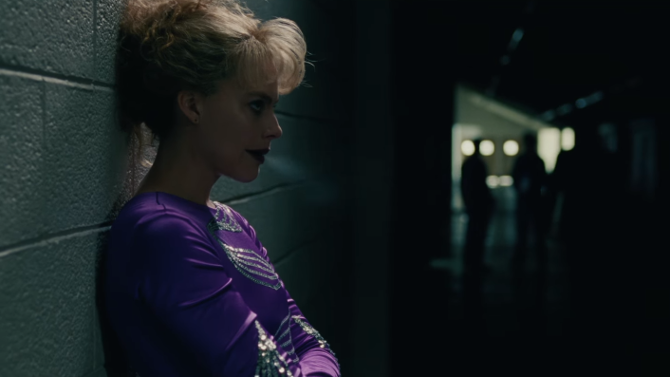
Spinning a Tale
I, TonyaFebruary 23, 2018Like landing a triple axel, figuratively speaking, I, Tonya writer Steven Rogers and director Craig Gillespie (Lars and the Real Girl) conquer the difficult feat of bringing the complicated career of figure skater Tonya Harding to vivid life on the big screen. Relishing in the ‘perception of truth’, Rogers and Gillespie develop a bio-pic mockumentary style approach, each character having their own version of the story. Complex in its narrative direction, multiple persons have their say, sometimes breaking the fourth wall and talking directly to the audience – at one point, Harding (Margot Robbie – Academy Award nominee for Best Lead Actress), gun in hand, makes it quite clear that this portion of the tale never actually happened – a rebuttal to her husband, Jeff Gillooly (Sebastian Stan), and his unflattering perspective.
-
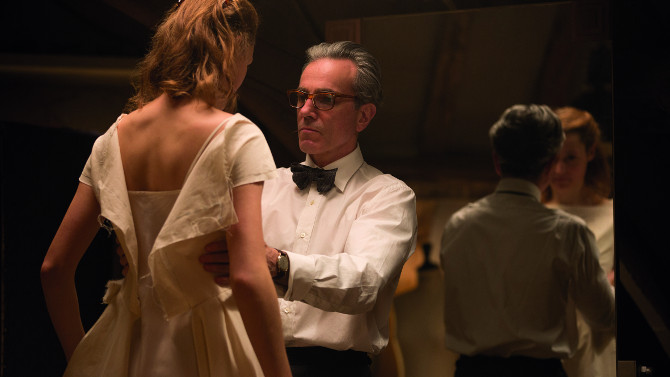
What a Tangled Web We Weave. . .
Phantom ThreadFebruary 18, 2018Perhaps the end of something very special. . . that is, if Daniel Day-Lewis does follow through and retire from acting after his most recent lauded performance in Paul Thomas Anderson’s Academy Award Best Picture nominee Phantom Thread. It is this nuanced role that will bookend a career that has consisted of six deserving nominations and three well earned Oscars (four, if he wins this year). At the heart of this tale of gothic romance (Anderson’s narrative and classic visual aesthetic reminiscent of movies like Rebecca), Reynolds Woodcock (Day-Lewis) is a renowned dressmaker (circa the 1950s), a man who, like his flawlessly tailored clothing (he hides secrets in the work), expects everything to be just perfect. He is peculiar in his cleanliness and rigidity – every hair in its place, absolute quiet at breakfast (his entire day ruined if his stringent routine interrupted). . . obsessive in every which way, including in that he is still haunted by the death of his mother. An example of this fiefdom of rules and attitude – after tea is brought to him at the wrong time, he exasperatingly exclaims, “the tea is going out; the interruption is staying right here with me”.
-
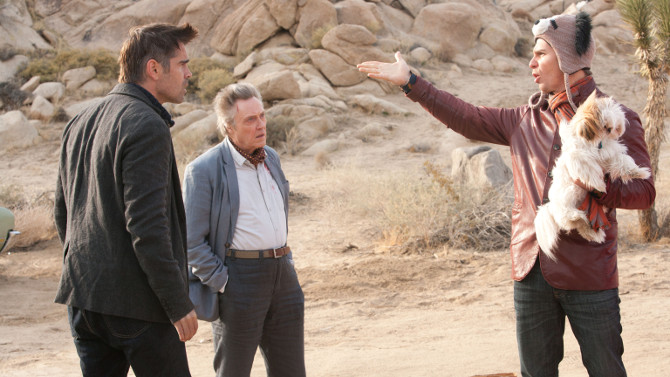
Following the Paths of Psychos
Seven PsychopathsFebruary 6, 2018One of the most originally creative scripts to be found on either side of Ebbing, Missouri, Martin McDonagh’s Seven Psychopaths, released in 2012, is an example of the writer/director’s many talents (twisty nuanced stories, richly drawn characters, beautiful dialogue, and so much more) that have made his most recent effort, hinted at above, Oscar bait this Awards season. With a screenplay that keeps the audience on its toes for quite a while, we are often guessing what we are truly watching. At first glance a meta cinematic commentary on writing a screenplay – Colin Farrell’s Marty has writer’s block, it is perhaps best summed up after he heads out into the desert with his two buddies. . . leading to one of them, Sam Rockwell’s Billy, describing how his treatment of the script should conclude. With Marty in disbelief at its over-the-top violence, the third friend, Christopher Walken’s Hans responds, perhaps somewhat surprisingly, “It’s got layers, you know. . . it’s got. . . It’s got many layers”. Adding another ‘layer’ of meta, we eventually realize that not all that is written on the page is fictional and that we may be watching flashbacks from several characters’ pasts.
-
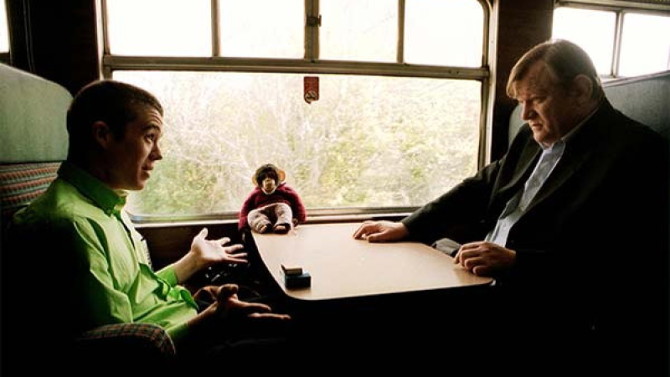
Train Wreck
Six ShooterJanuary 9, 2018There are many actors and directors that I have long championed, one of which is filmmaker Martin McDonagh. More of a household name today than a few days ago, this past Sunday he took home both Best Screenplay and Best Motion Picture - Drama at the 2018 Golden Globes for his film Three Billboards Outside Ebbing, Missouri (the feature also won for Best Actress - Drama: Frances McDormand, and for Best Supporting Actor: Sam Rockwell). First and foremost a British/Irish playwright, McDonagh made his feature film debut in 2008 with the tragically under-seen In Bruges – a movie that will be reviewed on Filmizon.com in due course. This was followed by a 2012 American/British co-production, Seven Psychopaths, another intriguing film. His third is the award winner from Sunday. . . though many probably do not know that McDonagh won an Academy Award back in 2005 for Six Shooter, earning the golden figurine for Best Short Film, Live Action (his true first effort into the foray of film making).