 Films That Matter
Velvet Fog
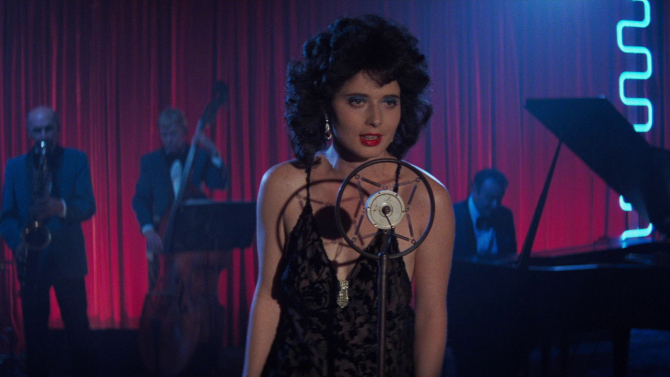
Taking years as he reveled in the eccentric, outlandish neo-noir mystery thriller landscape he was writing, David Lynch then went on to direct his violent, erotic, drug infused crime caper, calling it Blue Velvet (1986) – with the 1963 song of the same name sung by Bobby Vinton being a big influence on the picture. Though set in the time it was made, the suburban Lumberton feels like it is stuck in the 1950s. Airing a vibe that is more than a touch off-putting, there is no semblance of things being in the right – all seemingly out of time and place. The billboards resemble another era, most of the cars are thirty years old, and lounge singers are popular again.
-
Web Sight
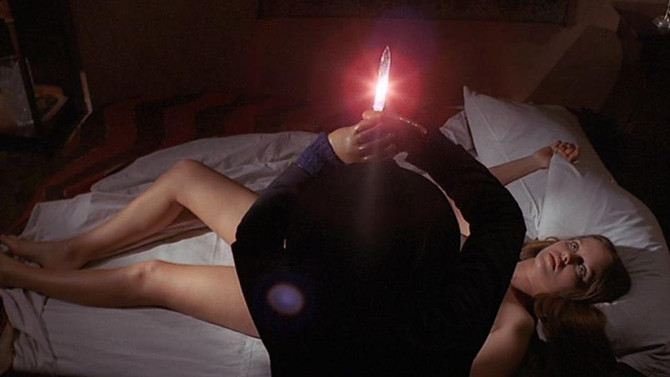
Black Belly of the TarantulaMay 6, 2018For those of you out there that are James Bond fans like I am, you will likely get a bit excited about this one. As I was doing some research on gialli a few weeks back, I stumbled upon 1971's The Black Belly of the Tarantula, directed by Paolo Cavara. Featuring an intriguing cast for Bond afficionados, Giancarlo Giannini (Rene Mathis in Casino Royale and Quantum of Solace), Claudine Auger (Domino in Thunderball), Barbara Bouchet (Moneypenny in the quirky 1967 version of Casino Royale) and Barbara Bach (Maj. Anya Amasova/Agent XXX in The Spy Who Loved Me) all star in this thriller, a unique cast ranging from the movies of Connery and Moore, to Craig and spoof spinoff. Oh, the horror, the horror: a sadistic, psychopathic serial killer, never truly seen (for the longest time, we only view his or her hands – always porting surgical gloves that make them look like plastic), is killing women by way of a most gruesome process. Utilizing acupuncture needles that are tainted with a poison that paralyses the target. . . the victims are poked in the back of the neck – still awake, eyes open wide in fear, they are unable to do anything as the murderer finishes them off in the most macabre ways.
-
Vice Grips
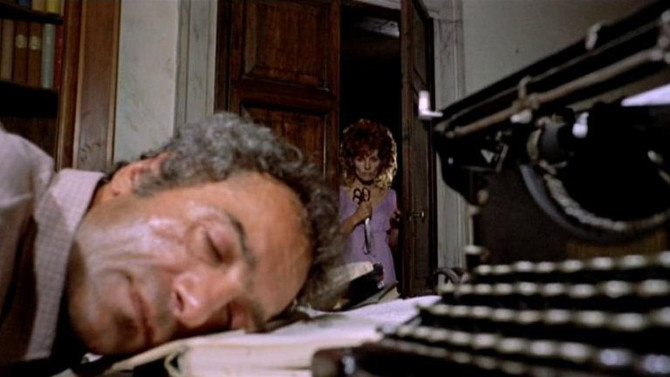
Your Vice Is a Locked Room and Only I Have the KeyMarch 11, 2018Ah. . . Edgar Allan Poe. The original master of suspense (and macabre), with his maniacal revenge plots, twisted love stories and gothic settings, has arguably done more for horror films than any other writer (though some may argue that H.P. Lovecraft excels). This is evident in nearly every frame of the 1972 giallo Your Vice is a Locked Door and Only I Have the Key (the title alone is a classic, it was also released under other titles as well, including Gently Before She Dies, Eye of the Black Cat, and Excite Me!). Loosely based upon Poe’s “The Black Cat”, director Sergio Martino infuses a style reminiscent of Henri-Georges Clouzot’s horror classic Les Diaboliques, making for a unique narrative. Set in an ancient villa, its decay and rot echoing the crumbling marriage inside (this setting will bring to mind several Poe tales, most notably, “The Fall of the House of Usher”), Oliviero (Luigi Pistilli) is a small town celebrity, an author who has had several novels published (though currently has writer’s block). Revelling in the dwindling free love sixties movement, he frequently invites a group of hippies from a local campsite to party with him. Much to the chagrin of his unhappy (and frequently beaten/threatened) wife Irina (Anita Strindberg), the pair are constantly targeting each other (in very different ways).
-
Seeing Red
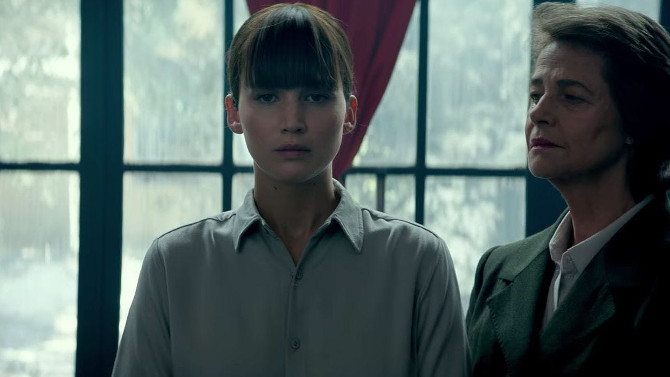
Red SparrowMarch 4, 2018If it was ever possible for a film to be of the wrong time as well as utterly relevant for its time, Francis Lawrence’s Red Sparrow would be it. Like a hybrid of a 1970's B exploitation pic and Italian giallo thriller (it relishing in its moments of sadism, violence and nudity), at the same moment, it is a worthwhile vehicle for its female lead. Dealing with topics such as rape, revenge, retribution, and politics, its old-school style story-telling (with twenty-first century glossy filter) has likely pushed it to the fringes – with such issues ripping through Hollywood and American politics itself, it may be too close to home for many to enjoy. A motion picture that would have thrived on the drive-in circuit back in the day, it is a twisty (and twisted) Machiavellian tale of spy-craft and game-playing. . . a dog eat dog, cutthroat world. Led by a daring performance from Jennifer Lawrence (reuniting with her Hunger Games director – that is, of films two, three, and four), she plays Dominika Egorova, a prima ballerina in Russia. After a horrible injury, she is left in a precarious position, as she does not have the money to support herself or her sickly mother, Nina (Joely Richardson).
-
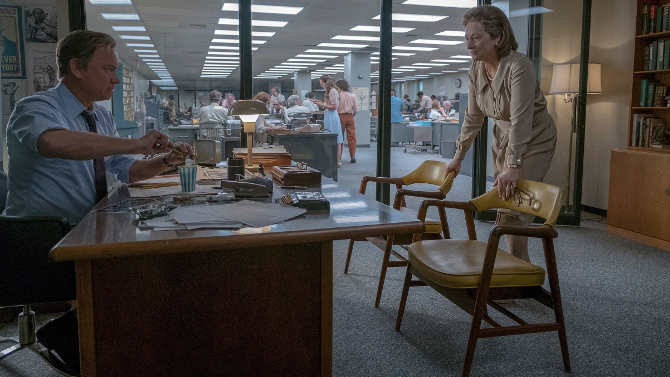
Extra! Extra! Read All About It!
The PostJanuary 31, 2018If you were formulating a modern day all-star cast and crew, you couldn’t do much better than The Post. Directed by the legend that is Steven Spielberg (three time Oscar winner and seventeen time nominee, as well as the recipient of the Irving G. Thalberg Memorial Award for “Creative producers, whose bodies of work reflect a consistently high quality of motion picture production”), Meryl Streep (three time Oscar winner and twenty-one time nominee), Tom Hanks (two time Oscar winner and five time nominee), composer John Williams (five time Oscar winner and fifty-one time nominee), cinematographer Janusz Kaminski (two time Oscar winner and six time nominee), and co-writer Josh Singer (Oscar winner for 2015's Spotlight), it is a veritable who’s who of the industry. Tackling the battle between the Washington Post and Richard Nixon’s government of the 1970s, Streep plays Kay Graham, the somewhat reluctant head of said newspaper. A woman in a man’s world, she has a difficult time transitioning from the non-working socialite wife to decision-making newspaper mogul. Tears always seem like they are soon to come as she clumsily drops things and nervously bumbles her way through this confusing world.
-
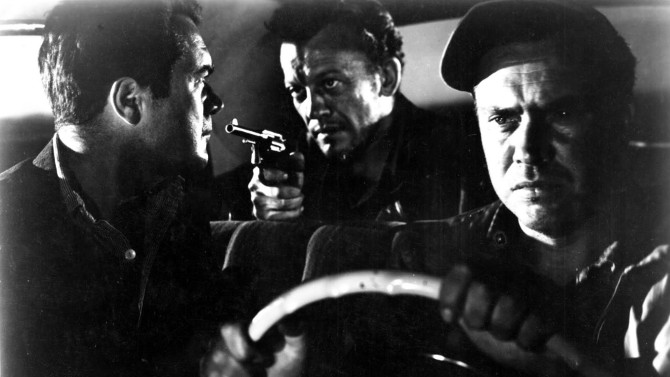
Hitching a Ride
The Hitch-HikerNovember 21, 2017Talk about an opening hook: “This is the true story of a man and a gun and a car. The gun belonged to the man. The car might have been yours – or that young couple across the aisle. What you will see in the next seventy minutes could have happened to you. For the facts are actual.” A perfect film noir introduction, the 1953 crime thriller The Hitch-Hiker, co-written and directed by Ida Lupino, is a seventy-one minute ride down a road you most definitely would not want to travel. In a simpler time (when people still picked up hitch-hikers), Emmett Myers (William Talman – best known as District Attorney Hamilton Burger on Perry Mason) utilizes this mode of transportation to evade the police. . . murdering those kind enough to pick him up. Dumping the body (or bodies) and abandoning the car, his thumb then goes up as he plays the stranded traveller – his two newest would-be-victims are Roy Collins (Edmond O’Brien – D.O.A.; White Heat) and Gilbert Bowen (Frank Lovejoy – In a Lonely Place; House of Wax).
-
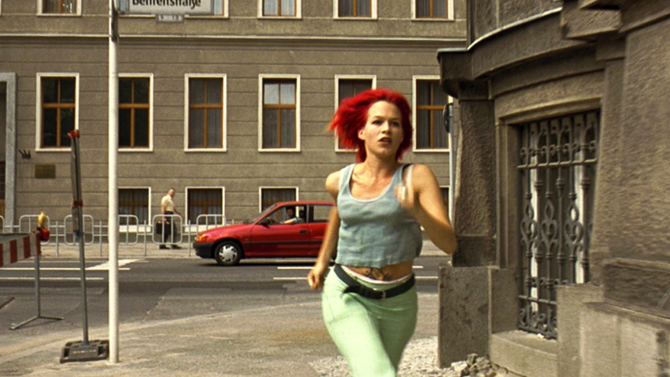
The Sands Run Through this Mind-Bender
Run Lola RunJuly 11, 2017Filmed with a frenetic flair to match its oh-so-frenetic storyline, writer/director Tom Tykwer has us sprinting along with the protagonist in his 1998 hit Run Lola Run. A unique, creative and somewhat out-there premise, this German motion picture is, in a way, reminiscent of Krzysztof Kieœlowski’s Polish film Blind Chance, which was reviewed on Filmizon.com back in June of 2016. Our mind is, simply put, amazing. We make decisions in a split second, and that moment can change our life just as quickly. Dealing with this idea, Tykwer introduces us to Lola (Franka Potente), whose just received a distressing call from her boyfriend Manni (Moritz Bleibtreu). A low-level criminal that is being tested by his boss, Lola was supposed to pick him up after his shady dealings. But, bad luck rears its ugly head (as her Moped is stolen) and Manni is forced to find his own way home. Sneaking onto the subway, he accidentally leaves the one hundred thousand German Deutsche Marks he is transporting on the train, after being nabbed for not purchasing a ticket. Witnessing a homeless man (Joachim Król) picking it up, he knows all is lost. Meeting his boss in only twenty minutes, he is desperate enough to threaten to rob a store just outside of the phone booth he is making the call from.